
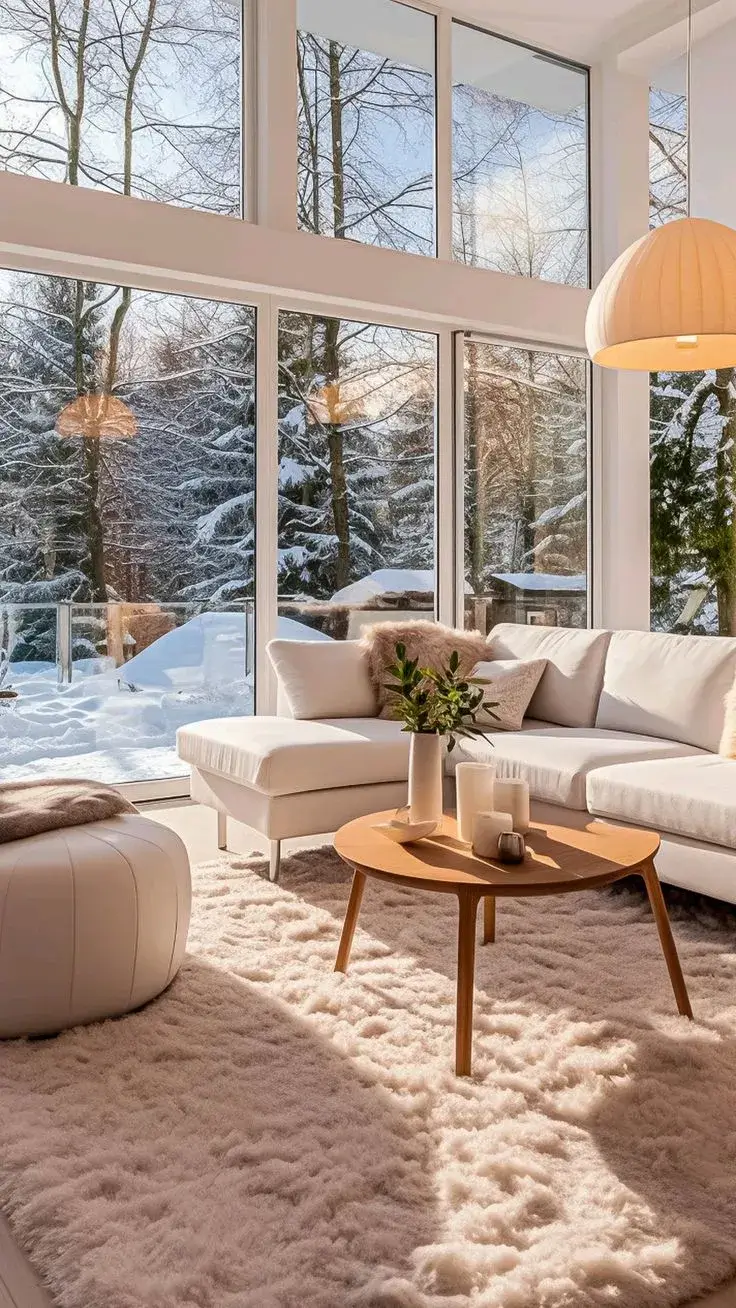
Winter is the season that asks the most of a home. When the days grow shorter and the temperatures drop, the spaces we live in take on a new and more significant role. A home in winter is not simply a place to sleep and eat — it becomes a refuge, a shelter from the cold and the dark, the one place where comfort is not a luxury but an essential need. And the way a home is decorated in winter has everything to do with how deeply it delivers on that promise.
The good news for anyone who loves their home and takes its atmosphere seriously is that a winter refresh is one of the most rewarding decorating projects of the year. It is seasonal in the best sense, not themed in a way that will feel dated in a few weeks, but genuinely responsive to the season’s particular qualities: the quality of winter light, the psychological need for warmth and enclosure, the desire for textiles that feel substantial and real. A beautifully decorated winter home does not look like a holiday display. It looks like a home that has been thought about, tended to, and genuinely lived in.
This guide walks through every element of a sophisticated winter refresh — from the palette and textiles to lighting, scent, and the specific decorating decisions that make the difference between a home that endures winter and one that truly embraces it.
Why Winter Decorating Deserves Its Own Approach
Most seasonal decorating advice focuses on the obvious: swap out summer cushions, add some candles, introduce some greenery. This is a start, but it misses the deeper point about what winter decorating actually does when it is done thoughtfully.
Winter changes the quality of light in a home more dramatically than any other season. The low sun angle in winter months means that natural light enters rooms at a completely different trajectory than in summer, creating long shadows and softer, more diffused illumination even at midday. This shift in natural light changes how colors read on walls, how textures appear on surfaces, and how the overall atmosphere of a room feels to anyone sitting in it.
Understanding this is the foundation of sophisticated winter decorating. Rather than simply adding dark or heavy elements to signal the season, the goal is to work with winter’s particular light quality to create rooms that feel warm, layered, and genuinely inviting — rooms whose atmosphere peaks in the evening, when candlelight and lamp glow take over from the pale winter sun.
Building the Winter Palette
Warm Neutrals as the Foundation
The most successful winter interiors almost always build from a warm neutral base rather than from deep, saturated color. This is not about avoiding boldness or personality — it is about understanding that warm neutrals respond extraordinarily well to both the low winter light of the day and the warm artificial light of the evening, reading as rich and considered rather than flat or cold.
Soft camel, warm oatmeal, aged ivory, and muted clay are the workhorses of a sophisticated winter palette. On walls, these tones create a cocooning warmth that is impossible to achieve with cooler greys or stark white, and they provide the ideal backdrop for the richer accent tones that define the season. Against a warm cream wall, deep forest green reads as lush and botanical rather than corporate; deep rust or terracotta reads as earthy and refined rather than rustic.
Key Principle: Warmth in color is primarily about undertone rather than saturation. A deeply saturated cool grey will always read as cold no matter how dramatic it is. A soft, barely-there warm sand will always read as inviting, regardless of its lightness.
Accent Colors That Signal the Season Without Theming It
Beyond the neutral base, winter accents fall into a few reliable families that consistently read as sophisticated when used with restraint:
- Deep botanical greens: Forest, olive, and moss bring a sense of living, organic presence to a winter room in a way that artificial seasonal decor never can. A single large potted olive tree or a cluster of eucalyptus branches in a ceramic vessel delivers more genuine winter atmosphere than a shelf of seasonal decorations.
- Burnished metallic tones: Aged brass, warm bronze, and antique gold (rather than the colder silver or chrome of other seasons) catch the warm light of winter evenings and add a subtle richness to surfaces without demanding attention. These are the tones of candleholders, mirror frames, side table legs, and the small hardware details that quietly elevate a room.
- Deep berry and plum: When used in textiles rather than on walls or large surfaces, these tones add a richness that is distinctly seasonal without being literal. A single velvet cushion in deep burgundy on a neutral sofa does more for a room’s winter atmosphere than an entire seasonal color palette applied too broadly.
Textiles: The Heart of Winter Decorating
Layering as a Design Strategy
If there is one principle that separates a winter home that feels genuinely warm from one that merely looks seasonally appropriate, it is layering. Layered textiles create visual richness, physical warmth, and a sense of generous hospitality that no other decorating approach can replicate with quite the same ease.
- In a living room: Layering looks like a sofa with both fitted cushions and an additional, more loosely arranged throw draped over one armrest. It looks like a rug layered over a larger flatweave, or a velvet cushion stacked in front of a linen one. The effect is not cluttered — it is abundant, in the specific way that the most inviting rooms in the world tend to be.
- In a bedroom: Layering means an additional blanket folded at the foot of the bed, a second pillow in a different but complementary texture behind the primary sleeping pillows, and a small sheepskin or plush rug precisely positioned beside the bed.
These additions take no architectural skill and cost very little relative to their impact on how the room feels to actually be in.
The Right Textiles for Each Room
Not all winter textiles work equally well in all rooms. The key is matching the textile’s visual and tactile weight to the function and traffic of the space.
- Chunky knit throws and heavyweight wool blankets: These belong primarily in the living room and bedroom, where they will be used and appreciated.
- Linen and cotton in deeper, warmer tones: In a dining room or kitchen, heavy knits feel out of place. Here, tighter tailored wovens add warmth visually without the bulkiness that would read as incongruous in a more functional space.
- Velvet: This is the winter textile with the highest impact-to-effort ratio. A single velvet cushion cover, a small velvet stool, or velvet curtain panels can shift the atmosphere of an entire room toward something more formal and considered. Velvet absorbs and reflects light simultaneously, which is why it responds to candlelight and lamp glow with a depth and richness that flat fabrics simply cannot match.
- Faux fur: Best used as an accent rather than a feature. A small faux fur throw on an armchair, or a faux fur cushion among a collection of other textures, adds a luxurious note without the visual excess of too many fur elements in one space.
What to Remove as Much as What to Add
A winter refresh that only adds new elements without editing existing ones often ends up feeling too full and too heavy rather than warm and inviting. As a general principle, summer and transitional textiles — thin cotton throws, bright or pale cushion covers, lightweight linen curtains — should be stored away when the winter textiles come out. This rotation keeps the room feeling intentional rather than accumulated.
Lighting: The Most Powerful Tool in Winter Decorating
The Problem With Most Winter Lighting
The single most common reason an otherwise well-decorated living room still feels cold and uninviting in winter is the lighting. Specifically, it is the problem of overhead lighting used as the primary or sole light source in the evening. A single overhead light, regardless of its bulb temperature, creates a flat, even illumination that flattens shadows, removes depth from surfaces, and produces an atmosphere that reads as functional rather than cozy — closer to an office than a home.
The fix for this is not expensive, requiring no renovation and no professional help. It requires only the understanding that winter evenings call for multiple light sources positioned at different heights, and that warm bulb temperatures are non-negotiable in a living space.
Building a Winter Lighting Scheme
The goal in a winter lighting scheme is to create pools of warm light at different heights throughout a room, rather than an even wash of illumination from a single source. This means a floor lamp in one corner, a table lamp beside the sofa, and where possible, small accent lights — a picture light, a plug-in sconce, a battery-operated lamp on a bookshelf — that add an additional warm glow and contribute to the layered, inhabited quality of the space.
Every bulb used in a living space in winter should be warm white, with a color temperature of 2700K or below. This single change is the highest-impact, lowest-cost improvement available to any winter interior. The difference between 2700K and 4000K in an evening living room is the difference between a room that feels welcoming and one that feels like a medical waiting room.
Candles as a Design Element
Candles serve a different function from electric lighting, and in winter it is a particularly important one. The flame of a candle produces a light that moves — it flickers, it responds to air currents, it creates shadows that shift and change throughout the evening. This animation is something that no electric light source can replicate.
For winter decorating purposes, candles are most effective when grouped rather than scattered:
- A cluster of three or five candles of varying heights on a dining table.
- A tray of pillar candles on a coffee table.
- A pair of tall tapers in elegant holders on a mantelpiece.
These clusters create a visual focal point and a genuinely warm atmosphere in a way that single candles placed randomly around a room do not. From a purely visual perspective, unscented pillar candles and beeswax tapers are among the most elegant and versatile decorating tools available.
Home Fragrance: The Invisible Layer of Winter Ambiance
Why Scent Matters More in Winter
Scent is the most underused element in interior decorating, and winter is the season in which it makes the greatest difference. The reason is partly physiological — we spend more time indoors with windows closed, making the ambient scent of a space more concentrated — and partly psychological, since scent is processed directly by the emotional centers of the brain.
A home that smells extraordinary on a cold winter evening — warm, complex, slightly woody or resinous, with a background of something soft and sweet — communicates deep care and intentionality. It signals a sophistication of sensory awareness that guests notice and respond to without necessarily knowing why.
Building a Winter Scent Wardrobe
The most effective winter fragrances draw on the same olfactory vocabulary as the season itself: wood smoke, resin, spice, dark fruit, beeswax, and warm mineral notes. These are the notes found in the best winter luxury candles — sandalwood, frankincense, oud, black amber, cedarwood, clove, and fig — and they share a common quality of warmth and depth.
A winter scent wardrobe is not a single candle burned in every room. It is a considered collection of two or three complementary fragrances that together create a coherent olfactory identity for the home:
- Signature Scent: A warm, grounding blend for the main living areas.
- Calming Scent: Something lighter and softer (like lavender, amber, or vanilla) for the bedroom.
- Herbal/Fresh Scent: A clean note (like rosemary, thyme, or cedar) in the kitchen and bathroom where heavier oriental fragrances would feel out of place.
Placement Tip: A candle or diffuser placed near an active air current — a doorway, a hallway, or the path between a kitchen and a living room — will disperse its fragrance throughout adjacent spaces, creating a more ambient, pervasive scent experience than a candle placed in a static corner.
Winter Greenery: Living Elements That Transform the Season
The Case for Natural Over Artificial
Natural greenery in a winter home is one of the most powerful decorating tools available. Its power lies in the specific contrast it creates: living green in a season associated with bare branches and grey skies carries an emotional resonance that dried or artificial elements cannot replicate. It suggests life, vitality, and a connection to the natural world when winter weather encourages withdrawal from it.
The most sophisticated approach to winter greenery is botanical rather than decorative, meaning that the greenery is chosen for its natural beauty and organic quality rather than for its holiday-themed associations.
Specific Greenery Choices for Winter
- Eucalyptus: Perhaps the most versatile winter green, working as a long-lasting cut branch in a vase, as garland material draped along a mantelpiece or bookshelf edge, or as a loose arrangement combined with dried seed heads and berries. Its silver-green color pairs beautifully with warm metallics, and its subtle, crisp scent contributes to the home’s fragrance.
- Pine and Fir Branches: These bring a distinctly seasonal presence that is distinct from generic winter greenery. Used in moderation — a single branch in a tall vase, or a small gathering of branches in a low ceramic vessel — they read as sophisticated and botanical rather than literally festive.
- Potted Evergreen Plants: These offer the advantage of permanence and the particular satisfaction of caring for a living thing through the winter months. A large, well-established snake plant, a lush pothos, a compact olive tree, or a dramatic fiddle-leaf fig all bring visual presence and genuine life to a winter room in a way that cut greenery, however beautiful, cannot sustain over the full length of the season.
Room-by-Room Winter Decorating Guide
Living Room: Create the Warmest Room in the House
The living room is the heart of winter decorating. It is the room that sets the tone for the entire home’s seasonal atmosphere, and the room where the investment of time and thought pays the highest dividends.
- Audit the Lighting: Before changing any textile or adding any decorative element, ensure that the living room has at least three warm light sources at different heights. Once the lighting is right, every subsequent decorating decision will look better.
- Ground the Space: Introduce a substantial area rug if the existing floor covering runs cool or hard. In winter, the floor is felt as much as seen, and a warm, generously sized rug under the seating area changes both the visual and physical temperature of the room significantly.
- Curate the Sofa: Layer the sofa with cushions in varying textures — linen, velvet, knit — in a palette that is warm but not uniform. Three textures on a sofa look curated; one texture looks like a showroom set. Add a substantial throw in a heavyweight material, folded casually over one arm rather than neatly stacked, which communicates use and inhabitation.
Bedroom: A Winter Sanctuary for Rest
The bedroom in winter has one primary decorating goal: to feel like the most restful, enveloping room in the home. Every decorating decision should serve that goal.
- Layer the Bedding: An additional lightweight quilt beneath the duvet, or a wool blanket folded at the foot of the bed, creates both physical warmth and the visual richness of layered textiles. Choose pillow covers in materials that feel as good as they look — linen, cotton sateen, or a soft percale rather than synthetic blends that look fine in photographs but feel wrong against the skin.
- Address Window Treatments: Thin curtains allow cold to radiate from the glass throughout the night, making the room physically colder and visually more austere. Heavyweight linen, blackout-lined velvet, or generously sized cotton curtains that puddle slightly on the floor change both the thermal and visual quality of the room fundamentally.
- Focus Underfoot: Place a small rug precisely at the bedside. The first and last physical contact with the floor each day in winter is the moment when a plush rug underfoot most clearly makes its case. This is a small, affordable addition with a disproportionately large effect on the feeling of the room.
Dining Room: Set a Table That Invites Lingering
Winter is the season when a beautifully set table matters most, because winter meals are the meals that tend to become occasions — longer, more candlelit, more deliberately convivial.
- Ditch the Overhead Wash: Supplement or replace a standard overhead pendant with candles on the table to reduce dependence on overhead illumination alone. A dining table lit primarily by candles and only secondarily by overhead light has an entirely different quality of intimacy.
- Soften the Surfaces: Introduce a table runner in a warm-toned linen or woven textile rather than a full tablecloth. This is more contemporary and more versatile, allowing the table’s natural material to remain visible while adding warmth and texture to the setting. Cloth napkins rather than paper, even for casual meals, add a quality to the table that is well worth the minor laundry effort.
- Keep Centerpieces Simple: A small centerpiece arrangement — a few eucalyptus branches in a simple vase, a cluster of candles at different heights, or a low bowl of seasonal fruit — is enough to make the dining table feel intentional and prepared without requiring professional floral expertise.
Common Mistakes in Winter Home Decorating
Going Too Heavy Too Quickly
The most common error in winter decorating is overcorrecting — introducing so many dark, heavy, or dense elements at once that the room ends up feeling oppressive rather than cocooning. A room that is too dark, too full, and too uniformly heavy in texture does not read as warm and inviting; it reads as claustrophobic. The principle of restraint applies to winter decorating as much as to any other design discipline.
Forgetting About Daytime
Winter rooms are often decorated with the evening in mind — the candles, the lamps, the layered textiles. But these rooms still need to function and feel welcoming in daylight. If the winter decor overwhelms the natural light that is available, the room will feel gloomy during the day and only come alive after dark. Winter decorating should enhance both the room’s daytime character and its evening atmosphere.
Neglecting the Scent Entirely
A room that looks beautiful but smells of nothing in particular is missing a significant dimension of winter atmosphere. Even a single quality candle placed thoughtfully can change how a room is experienced by everyone who enters it. This is one of the easiest and most affordable upgrades available to any winter interior.
Choosing Cool Tones for Warmth
Grey, white, and blue-toned color palettes can look striking in editorial photography, but in practice, cool-toned winter interiors consistently fail to feel warm regardless of how many textiles are added or how many candles are lit. The warmth of a room in winter is primarily determined by color temperature — on walls, on textiles, and in lighting — and no amount of heavy or cozy material will compensate for a fundamentally cool underlying palette.
Conclusion
A beautiful winter home is not built from a single dramatic gesture or a complete seasonal overhaul. It is built from a series of considered, compounding choices: a warmer bulb in a floor lamp, a throw in a better material folded over a sofa arm, a candle in a fragrance that makes the room smell like somewhere you want to stay.
These are small decisions, individually. Together, they create the particular quality of a home that has been genuinely thought about and genuinely prepared for the season — a home that does not merely endure winter but offers everything that winter, at its best, is capable of providing.
Take one room at a time, starting with the lighting. Everything else will follow more naturally than you expect.