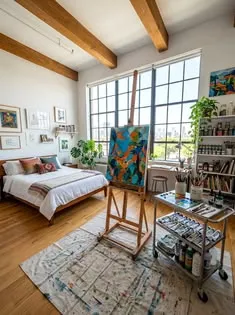
The contemporary urban dwelling, characterized by its limited physical footprint, presents a persistent challenge for design-conscious residents seeking to maximize utility and personal expression. Many apartment and condominium dwellers grapple with an underutilized spare bedroom—a space that frequently devolves into an unintentional catch-all for miscellaneous storage boxes, seasonal wardrobes, and general overflow rather than operating as a functional extension of the home.
This layout stagnation highlights a profound need for innovative, apartment-friendly structural hacks that can pivot a room between two wildly different identities: a highly productive, creatively liberating art studio and a serene, luxurious guest retreat.
      [ THE MULTIFUNCTIONAL SPATIAL SPLIT ]

     CREATIVE STUDIO ENGINE:            SERENE GUEST RETREAT:
     ┌────────────────────────┐        ┌────────────────────────┐
     │ ■ High-Output Lighting │        │ ■ Layered Ambient Glow │
     │ ■ Wipe-Clean Textures  │   VS   │ ■ Plush, Soft Linens   │
     │ ■ Ergonomic Worksurfaces│       │ ■ Concealed Clutter    │
     └────────────────────────┘        └────────────────────────┘
For the mature homeowner or content creator, this room transformation represents more than just a spatial layout change; it is an exercise in “quiet luxury” and intentional living. The ambition is to craft an inspiring workspace for painting, styling, crafting, or content production that can instantly tuck its messy creative mechanics out of sight when a visitor arrives, offering them a pristine, comforting oasis.
Achieving this balance requires moving beyond basic decor adjustments to execute sophisticated, non-permanent spatial engineering.
The Dynamic Hybrid Layout: Navigating the Core Design Friction
The central tension of a hybrid room lies in its competing needs. An art studio thrives on open workspaces, raw light, exposed tools, and easy-to-clean materials that tolerate creative chaos. A guest bedroom demands the exact opposite: an uncluttered, peaceful environment with soft textures, concealed storage, and a restful acoustic atmosphere.
Failing to reconcile these needs results in a space that feels either like a cold, messy workshop with a bed thrown in, or a stiff guest room where you cannot paint freely without worrying about the carpet.
The “Inherited Storage” Bottleneck
Before introducing any studio infrastructure or hosting elements, you must resolve the “inherited storage problem.” Spare bedrooms typically accumulate sentimental belongings, old papers, and secondary household items over time.
Transforming the room into a seamless sanctuary requires aggressively purging this clutter or transferring it to dedicated, out-of-sight storage systems elsewhere in the home. Reclaiming the room’s physical volume is a non-negotiable step to establishing a functional artistic workspace and a genuinely welcoming retreat.
Apartment-Friendly Structural Hacks for Spatial Delineation
When major structural demolition or permanent framing is impossible due to rental agreements or condominium HOA guidelines, you must treat your furniture and non-permanent fixtures as architectural elements.
These layout strategies allow you to alter the physical geometry of a small space without drilling into structural wall studs or tearing up floor plates.
1. Architectural Sliding Panel Systems
Instead of relying on heavy fabric curtains that can visually shorten a room, install top-mounted, heavy-duty tension tracks or non-damaging compression tracks to hang sliding panels.
Using lightweight, semi-translucent materials like frosted acrylic panels, shoji paper screens, or woven cane dividers allows ambient natural light to penetrate deep into both halves of the room while creating an explicit physical barrier between the studio workspace and the sleeping area.
2. High-Vertical Modular Storage Dividers
Position tall, double-sided modular shelving units perpendicular to a long wall to form a structural partition. By packing the lower levels of the shelves with heavy art supply bins and leaving the upper eye-level shelves open or styled with elegant ceramics and books, you create a distinct architectural room split.
This design hack yields an optimized, private creative workstation on one side, while providing a clean, decorative backdrop for a guest bed on the other.
The Furniture Alchemy: Dual-Purpose Engineering
The baseline of any high-performance, small-footprint hybrid space is furniture that can quickly change its shape and function. Every piece of furniture brought into the layout must earn its keep by serving at least two distinct purposes.
   [ THE VERTICAL WORK-TO-SLEEP CONVERSION ]

   ┌────────────────────────────────────────┐
   │ DAYTIME: Studio Desk Mode               │
   │ [ Extended Countertop Worksurface ]     │ ◄── Easel, Paints, and Palettes
   ├────────────────────────────────────────┤
   │ NIGHTTIME: Guest Retreat Mode          │
   │ [ Fold-Down Smooth Murphy Bed Matrix ] │ ◄── Conceals Desk; Reveals Mattress
   └────────────────────────────────────────┘
- The Desktop Murphy Bed Matrix: A premium Murphy bed system equipped with a cantilevered, integrated desk mechanism is an excellent solution for a small layout. When the bed is folded up against the wall, the wide horizontal workspace remains completely level, allowing you to leave your current art projects or sketches undisturbed on the desk surface as the mattress lowers directly over it.
- The Drop-Leaf Convertible Counter: For messier artistic mediums like oil painting, sculpture, or ceramic work, use a mobile, heavy-duty kitchen island or an architect’s drop-leaf drafting table. This unit can expand to support wide-format canvases or drop down into a compact credenza when your guest checks in.
- The Ottoman Sub-Storage Matrix: Replace standard lounge chairs or footstools with oversized, tailored storage ottomans upholstered in wipe-clean, high-end materials like performance leather or treated bouclé. These pieces act as elegant seating for a visiting guest while secretly housing heavy bottles of paint, rolls of canvas, or fresh bed linens inside their deep interior compartments.
Structural & Non-Structural Zoning Matrix
To design a highly balanced, small-footprint floor plan with absolute precision, evaluate your zoning options using this comparative layout matrix:
| Transformation Method | Primary Creative Benefit | Guest Comfort Level | Spatial Footprint | Rental Reversibility |
| Recessed Murphy Desk Bed | Clears massive floor area during peak daylight painting hours. | High (Accommodates a standard, supportive mattress). | Ultra-Minimal (Uses vertical wall depth). | Medium (Requires securing structural safety brackets into studs). |
| Perpendicular Storage Partition | Keeps tools close at hand; creates a true physical room divider. | Medium-High (Blocks direct view of the creative zone). | Moderate (Takes up 12 to 18 inches of floor width). | High (Freestanding modular units require zero drilling). |
| Sliding Frosted Panel Tracks | Deflects messy splatters; manages view lines elegantly. | High (Provides explicit visual and spatial privacy). | Minimal (Sits on a thin ceiling or wall track). | High (Can be installed via heavy-duty compression hardware). |
| Convertible Drop-Leaf Credenza | Supplies an expansive workspace that quickly folds down. | High (Hides ongoing artistic projects completely). | Low (Compresses against the wall when closed). | High (Standard premium freestanding furniture piece). |
| Mobile Storage Carts | Allows messy tools to be rolled directly into a closet. | High (Removes creative chaos entirely from the room). | Flexible (Can be tucked out of sight instantly). | High (100% mobile caster-based utility). |
Lighting Engineering: Tuning the Emotional Atmosphere
A hybrid space requires two completely different lighting profiles. An art studio demands ultra-bright, color-accurate task lighting so you can judge paint values and fine textures correctly. Conversely, a guest bedroom requires low, soft, warm ambient light layers to encourage deep relaxation and rest.
       [ THE DUAL-PROFILE LIGHTING STACK ]

   STUDIO SETTING (Color Accuracy):      GUEST SETTING (Relaxation):
   ┌────────────────────────┐          ┌────────────────────────┐
   │ 💡 Daylight LED Track  │          │ 💡 2700K Warm Bulb      │
   │ 💡 High CRI (95+) Bulb  │    VS    │ 💡 Dimmable Sconces    │
   │ 💡 Direct Task Focus   │          │ 💡 Soft Ambient Glow   │
   └────────────────────────┘          └────────────────────────┘
1. High-CRI Linear Track Lighting
Install slim, surface-mounted linear track lighting along the ceiling center line, using fixtures that can be plugged directly into standard wall outlets via discreet cord covers.
Equip the track with high Color Rendering Index (CRI of 95 or greater) LED spotlights tuned to a neutral daylight temperature of 4000K to 5000K. Direct these high-output spotlights toward your easel, workbench, or product styling zone to create an shadow-free, color-accurate studio space.
2. Low-Level Secondary Dimmer Networks
To instantly transition the space into a soothing guest room, install warm-white (2700K) smart bulbs or plug-in fabric sconces next to the sleeping area.
When hosting, turn off the bright studio track lights entirely and rely on dimmable accent lighting, low-set floor lamps, and bedside lighting layers to cast a warm, cozy glow across the room, completely hiding the technical details of the creative zone.
Materiality: Blending Practical Protection with Sophisticated Style
To maintain a truly luxurious feel, the materials chosen for your studio surfaces must be incredibly durable and easy to clean, yet sophisticated enough to blend with high-end interior styling.
   [ THE VALUE-DRIVEN SURFACE STRATIFICATION ]

   ┌────────────────────────────────────────┐
   │ SURFACE 1: Interlocking Matte Luxury   │ ◄── Wipe-Clean, Protects Flooring
   ├────────────────────────────────────────┤
   │ SURFACE 2: High-Performance Quartz     │ ◄── Resin-Proof, Acid-Resistant Counter
   ├────────────────────────────────────────┤
   │ SURFACE 3: Performance Linens / Bouclé │ ◄── Stain-Resistant, Inviting Textiles
   └────────────────────────────────────────┘
- The Floor Envelope: Protect your apartment’s hardwood or carpet from paint drips and scuffs by overlaying a large, interlocking layer of matte luxury vinyl tile (LVT) or a heavy, wipe-clean designer floor mat in a neutral stone pattern. This provides a clean, worry-free foundation for your studio work that can be easily lifted and removed if you ever relocate.
- The Textile Balance: Choose performance fabrics—such as stain-resistant velvets, crypton linens, or treated bouclés—for any soft furnishings or seating in the room. These textiles repel ink, water, and oil splatters, allowing you to work with complete freedom while keeping the furniture looking pristine and inviting for your overnight guests.
Frequently Asked Questions
How do I keep art supplies and creative mess completely hidden when guests arrive?
The most efficient approach is utilizing modular, closed-cabinet vertical storage systems or mobile studio carts with locking casters. When a guest arrives, roll your active palette, brushes, and open paints directly into a deep storage closet or lock them behind elegant cabinet doors, leaving only clean, decorative surfaces exposed.
What type of flooring material is best for an apartment art studio?
If you are working over existing apartment hardwood or rental carpet, lay down a durable, liquid-resistant barrier like a premium, oversized silicone work mat or interlocking luxury vinyl planks. This setup provides an easy-to-clean, non-absorbent surface that protects your deposit while looking cohesive and intentionally styled.
How can I prevent paint fumes or creative chemical odors from bothering my guests?
Prioritize working with low-odor, non-toxic mediums like acrylics, watercolors, or water-mixable oil paints. Additionally, place a true HEPA air purifier equipped with an activated carbon filter directly in the room to continuously capture and neutralize volatile organic compounds (VOCs) and chemical scents.
Can a Murphy bed really support a comfortable mattress for overnight visitors?
Yes, modern, premium Murphy bed frames are engineered to hold standard, thick memory foam or pocket-coil mattresses. Unlike traditional sofa beds, they do not rely on thin, folding foam pads over uncomfortable metal bars, ensuring your guests enjoy a deeply restful, luxurious night of sleep.
How do I balance natural light for painting without making the room too bright for a sleeping guest?
Install a dual-layer window treatment system. Use a sheer, light-filtering privacy shade to diffuse harsh, direct sunlight into soft, shadow-free illumination for your daytime artistic work, and pair it with a secondary set of blackout drapery panels to ensure total darkness for your guests at night.
What is the best way to control sound echo in a small room filled with storage units?
To prevent a small, hard-surfaced room from feeling loud and echoing, incorporate soft acoustic dampers that serve double duty as beautiful decor. Hang floor-to-ceiling fabric window curtains, lay down a thick wool area rug over your floor protectors, and decorate the walls with stretched canvas art or woven wall hangings.
Conclusion
Transforming a modest apartment spare bedroom into a seamless hybrid art studio and guest retreat is entirely possible through disciplined spatial zoning and smart, non-permanent furniture engineering. By prioritizing vertical storage dividers, dual-purpose Murphy desk systems, and high-performance, wipe-clean materials, you can bypass the need for costly permanent renovations.
Integrating a dual-profile lighting system ensures you can transition the space at a moment’s notice—shifting from a bright, focused creative laboratory into a soft, tranquil sanctuary that wraps your guests in complete comfort and quiet luxury.
Seamless Sanctuary Blueprint:
- Audit Room Clutter: Clear out any legacy storage items to fully reclaim the room’s square footage.
- Install Non-Permanent Zoning: Use tall, freestanding modular shelving or sliding track panels to divide the floor plan.
- Invest in Multi-Use Furniture: Deploy a Murphy bed with an integrated desk or a drop-leaf crafting credenza to maximize efficiency.
- Separate Your Lighting Profiles: Pair high-CRI daylight track lighting for studio work with dimmable, warm accent fixtures for hosting.
- Protect Your Surfaces: Use removable floor guards and performance fabrics to protect apartment finishes while maintaining a sophisticated, high-end look.