The contemporary desire for expansive, free-flowing living spaces often encounters a fundamental tension: the aspiration for openness, particularly for entertaining, versus legitimate concerns regarding structural integrity, the potential loss of cozy intimacy, and the challenge of managing visual clutter. Many homeowners envision a sophisticated environment where guests can mingle effortlessly, yet they express apprehension about a “grown-up” approach to open concept design that balances aesthetic appeal with practical functionality.
This dilemma sets the stage for a strategic framework that moves beyond generic renovation advice, offering a pathway to elegant transformation without compromising the essential character of a home.
     [ THE ENTERTAINING SPATIAL BALANCING MATRIX ]

     THE WALL-BOUND BOUNDARY:           THE UNEDITED DEMOLITION:
     ┌────────────────────────┐        ┌────────────────────────┐
     │ ❌ Isolated Host       │        │ ❌ Echoing Noise Chaos │
     │ ❌ Choppy Guest Traffic│   VS   │ ❌ Zero Intimate Zones │
     │ ❌ Blocked Sightlines  │        │ ❌ Cavernous & Cold    │
     └────────────────────────┘        └────────────────────────┘
The objective is not merely to clear out partition walls indiscriminately, but to curate an atmosphere of intentional calm and cultivated style. By transitioning from isolated, choppy rooms to a deliberately zoned blueprint, you can transform your dwelling into a serene social hub. This approach achieves “luxury without excess,” promoting a design philosophy rooted in careful proportion, intelligent sightlines, and material restraint to build a cohesive, refined aesthetic.
Embracing Elegant Flow: Crafting an Entertaining-Ready Layout Without Losing Intimacy
Addressing common spatial pain points is foundational to any successful open-concept renovation. The primary fear often revolves around identifying load-bearing elements and managing structural implications, which can deter homeowners from pursuing even minor modifications.
Beyond structural concerns, acoustics present another significant hurdle; echoing sounds and a loss of acoustic privacy in an enlarged space are frequently cited worries. Moreover, the challenge of maintaining warmth and a sense of enclosure in an open layout is pervasive, as many homeowners wish to avoid a cold or clinical feel.
   [ THE REFINED GUEST CIRCULATION ZONE ]

   =============================================
   [ KITCHEN BAR STATION ] (Prep / Serve)        <── Seamless Hosting Interaction

   =============================================
   [ TRANSITIONAL CLEARANCE ] (42-Inch Flow)    <── Unobstructed Traffic Flow

   ┌─────────────────────────────────────────┐
   │ [Anchored Lounge]     [Acoustic Rug]    │ <── Intimate Conversational Hub
   └─────────────────────────────────────────┘
The “Entertaining-First” Hosting Paradigm
An “entertaining-first” approach frames structural changes entirely around enhancing the host-guest dynamic. By focusing on how modifications can improve guest circulation, facilitate natural conversation flow, and optimize serving logistics, the framework transcends simple cosmetic upgrades.
For example, creating a wide opening between a kitchen and a dining area allows a host to remain connected with guests while preparing food, simultaneously improving service efficiency. This intentional focus ensures that every design decision contributes directly to a superior hospitality experience, transforming a house into a true hub for social engagement.
The Art of Subtle Non-Structural Delineation
An effective strategy for an open-concept design that prioritizes both flow and intimacy involves the subtle delineation of zones. Instead of relying on rigid architectural barriers, a sophisticated design employs elements such as premium area rugs, strategic lighting layers, and thoughtful furniture arrangements to create distinct yet connected spaces.
- Visual Anchoring: A beautifully woven, low-pile rug can anchor a living lounge area, establishing its functional boundaries without blocking light.
- Illumination Mapping: Dropping architectural pendant lighting over a dining table or island counter defines a specific zone within the larger open plan, providing visual separation without obstructing sightlines.
This methodology emphasizes creating sophisticated visual separation rather than reintroducing the very walls being removed, offering a dynamic and adaptable spatial experience.
The Sophisticated Renovation Blueprint: A Structural Decision Framework
Achieving an open-concept living space that maintains both elegant flow and intimate zones for entertaining requires a meticulous decision framework, moving beyond indiscriminate demolition.
   [ THE CRITICAL STRUCTURAL TRIAD ]

                 /\
                /  \     FUNCTIONALITY: Spatial Utility & Guest Foot Traffic
               /────\
              /      \   STRUCTURAL INTEGRITY: Engineer Review & Beam Placement
             /────────\
            /          \ AESTHETIC INTEGRITY: Architecture Style & Character Preservation
           └────────────┘
1. Structural Integrity and Feasibility
The initial phase necessitates a thorough assessment of your home’s framing system, prioritizing safety, structural physics, and local building codes.
- Load-Bearing Identifiers: Load-bearing walls support the structural weight of the floors or roof above them. Removing them demands professional engineering calculations, structural temporary shoring, and the installation of a hidden or exposed structural header beam (such as a steel I-beam or laminated veneer lumber).
- Non-Load-Bearing Realities: Non-load-bearing partitions offer more flexibility for removal or alteration. However, even these partitions frequently house critical electrical circuits, plumbing drops, or HVAC ductwork, necessitating careful on-site inspection by qualified contractors to avoid costly relocation complications.
2. Character-Sensitive Openings over Demolition
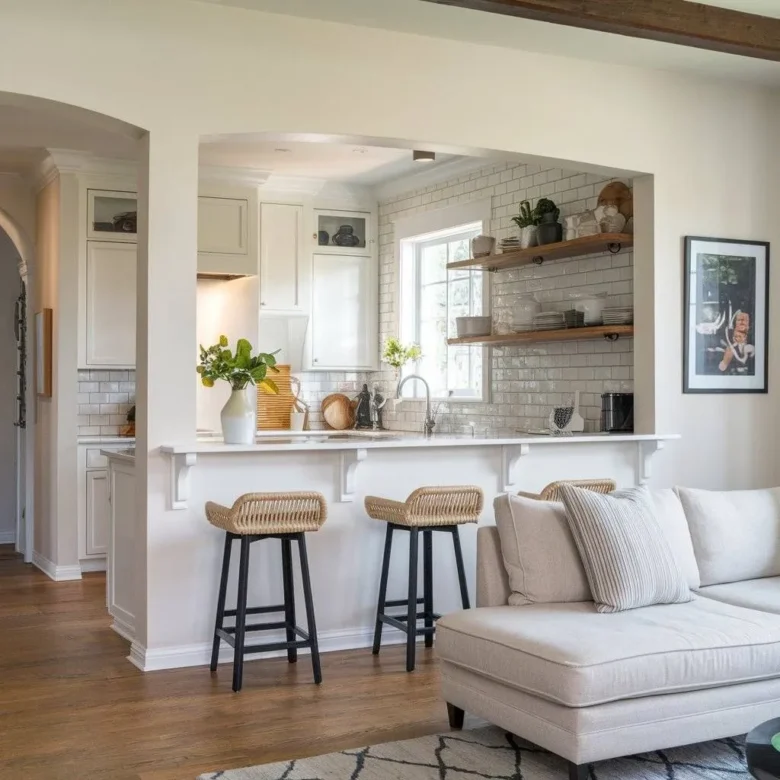
To preserve the inherent charm of established properties, homeowners can deploy character-sensitive renovation techniques rather than full wall removal. Consider installing partial openings, gracefully arched transitions, or strategic wide openings that maintain architectural headers.
These approaches cultivate a sense of openness without sacrificing the distinct character often found in established homes, allowing for the creation of unique focal points such as built-in shelving, glass partitions, or decorative columns. Such elements define transitions between spaces, offering subtle visual cues that guide guests through the home without the abruptness of fully exposed areas.
Structural & Non-Structural Zoning Matrix
To apply these spatial delineation principles with absolute precision, utilize this structured renovation framework to guide your layout planning:
Layout Optimization Framework
| Intervention Method | Primary Spatial Benefit | Acoustic Control Level | Structural Load Impact | Ideal Entertaining Application |
| Full Wall Removal | Maximum physical flow; panoramic sightlines across zones. | Low (Allows maximum sound travel). | High (Requires structural engineer review & beam). | Connecting a dark kitchen directly to a primary dining/living room. |
| Partial Wall Opening | Maintains framing lines; connects host to guests seamlessly. | Medium (Blocks low-level sound transfer). | Medium (May require architectural header support). | Creating an open kitchen breakfast bar counter overlooking the den. |
| Arched Doorways | Preserves historical charm; defines distinct room zones. | Medium-High (Contains sound within room curves). | Low to Medium (Replaces standard door casings). | Framing a transition between a formal entry foyer and the lounge. |
| Architectural Columns | Suggests a boundary line without blocking any light. | Low (Minimal physical barrier). | Structural (Can hide load-bearing vertical posts). | Breaking up an elongated, narrow living/dining space grid. |
| Integrated Half-Walls | Offers furniture backing; hides lower counter clutter. | Medium (Directs sound bounce upward). | Low (Usually built as non-bearing knee-walls). | Separating a casual media viewing room from a formal dining space. |
Advanced Spatial Engineering: Acoustics, Materiality, and Visual Illusions
Opening up an interior floor plan alters more than just sightlines; it fundamentally changes the environmental dynamics of the home. Managing sound and scale is crucial to maintaining a luxurious feel.
1. Sound Management and Environmental Controls
Open spaces inherently allow sound to travel further, which can create a chaotic, echoing atmosphere during a lively gathering. Implementing sound-aware design principles is essential to foster a calm and conversational environment.
   [ THE ACOUSTIC DAMPENING STACK ]

   ┌────────────────────────────────────────┐
   │ LAYER 1: Plush Low-Pile Wool Area Rugs │ <── Dampens Floor-Level Footsteps
   ├────────────────────────────────────────┤
   │ LAYER 2: Heavy Custom Linen Drapery     │ <── Absorbs Window Glass Echoes
   ├────────────────────────────────────────┤
   │ LAYER 3: Tactile Woods / Upholstery    │ <── Softens Mid-Level Sound Waves
   └────────────────────────────────────────┘
To break up sound bouncing off hard surfaces, integrate soft materials into the design layout:
- Floor & Window Dampening: Deploy plush, high-density area rugs to mute foot traffic, and hang heavy, full-length custom linen drapery panels to absorb echoes bouncing off window glass.
- Acoustic Elements: Furnish the space with upholstered pieces, matte natural woods, or wall coverings that capture sound waves. Additionally, integrate custom acoustic wall panels disguised as large-scale art pieces or architectural features to discreetly control ambient noise.
2. High-End Material Continuity
Material selection plays a pivotal role in unifying an expanded open plan. A curated palette featuring warm whites, rich natural wood tones, and matte finishes evokes a sense of understated luxury and comfort.
   [ THE VISUAL UNIFICATION LINE ]

   ❌ CHOPPY INTERIOR FLOORS:        O CONTINUOUS LUXURY PROFILE:
   ┌────────────────────────┐        ┌────────────────────────┐
   │ Tile  │ Wood  │ Carpet │   VS   │                        │
   │ (Visual Disruption)    │        │  Continuous Hardwood   │
   │                        │        │  (Unbroken Flow Line)  │
   └────────────────────────┘        └────────────────────────┘
- Unbroken Floor Lines: Specify a single, high-quality flooring material—such as wide-plank hardwood or premium satin-finish engineered wood—to run continuously across all zones. This layout technique blurs spatial boundaries, making the home feel expansive and harmonious.
- Cohesive Fixture Metallic Notes: Carry a consistent metallic accent throughout your fixtures, such as brushed brass, antiqued bronze, or matte black. Applying this finish uniformly across kitchen faucets, cabinet hardware, light fixtures, and wall plates ties the entire layout together into a polished backdrop for hosting.
3. The Illusion-of-Openness for Structural Constraints
For apartment, condo, or co-op dwellers facing strict structural or HOA building regulations, removing walls is often completely prohibited. In these spaces, the design strategy shifts from physical demolition to maximizing the illusion of openness.
- Proportional Scale: Furnish the apartment using low-profile, clean-lined sofas and chairs raised on slender legs to allow light to pass underneath. Avoid heavy, overstuffed furniture that visually chokes tight floor plans.
- Reflective Mapping & Color Unity: Position large, minimal gallery-framed mirrors opposite windows to catch and double the ambient natural light. Maintain a cohesive, desaturated color scheme on adjacent walls to keep the eye moving smoothly across the layout, achieving an airy, expansive feel within the apartment’s existing physical footprint.
Material Perceived Value Comparison
When allocating your renovation budget across an open-concept project, use this material value matrix to understand which structural and cosmetic choices yield the most luxurious look:
Impact of Renovation Selections on Perceived Value
| Project Feature | Standard Selection | Premium Luxury Selection | Architectural Benefit |
| Structural Headers | Dropped drywall soffit beam boxing. | Completely flush, recessed ceiling beam. | Eliminates visual breaks; creates a seamless, high-end ceiling plane. |
| Spatial Flooring | Mixed flooring transitions (tile to wood). | Continuous wide-plank wood with satin finish. | Maximizes the illusion of scale; flows beautifully between zones. |
| Zoning Lights | Randomly scattered generic flush-mounts. | Curated architectural pendants & art wall washes. | Establishes explicit functional areas through targeted illumination. |
| Acoustic Softeners | Minimalist bare walls and hard plastic shades. | Double-layered fabric panels & custom linen drapery. | Drastically reduces background echo for comfortable conversation. |
Frequently Asked Questions
What are the biggest concerns homeowners have about open-concept renovations?
Homeowners are primarily concerned with identifying load-bearing walls and their long-term structural implications. They also worry about dealing with poor room acoustics, such as echo and noise transfer, and losing a sense of warmth, privacy, and intimacy in a larger, completely exposed layout.
How can open spaces be defined without building new walls?
Functional zones can be subtly defined using clever non-structural layout methods. Use large area rugs to anchor furniture groupings, vary lighting types (like placing an oversized pendant over the dining table and soft lamps in the lounge), or introduce architectural elements like columns, partial half-walls, and wide cased openings.
What does an ‘entertaining-first’ approach mean for home renovations?
An entertaining-first approach designs a layout around the social dynamics between a host and their guests. It focuses on improving foot traffic circulation, maintaining open sightlines so the host stays connected while preparing food, and optimizing serving logistics, making the home an effortless space for hospitality.
What is the very first step in considering a wall removal project?
The absolute first step is to hire a licensed structural engineer or a qualified general contractor to determine if the wall is load-bearing or non-load-bearing. They will inspect your home’s framing blueprint and attic structure to ensure the wall can be safely modified without compromising your home’s structural integrity.
How can I make an open-plan space feel cozier and less cavernous?
To cultivate cozy intimacy within an expansive space, use warm, desaturated color palettes and focus on layered lighting instead of harsh overhead fixtures. Introduce character-rich transitions like wide arched openings or partial partitions, and group furniture closely together into distinct conversational pods.
What are effective strategies to mitigate noise in an open-concept layout?
To absorb echoes and quiet an open floor plan, introduce a balance of soft, light-absorbing textures. Layer the room with plush area rugs, hang heavy linen drapery panels, choose upholstered seating over all-leather or wood furniture, and integrate discrete acoustic wall panels disguised as large-scale art.
Conclusion
Transforming an interior layout through an open-concept renovation is far more than an exercise in demolition; it is a careful balancing act between architectural flow and cozy, intimate design. By applying a disciplined, entertaining-first decision framework, you protect the structural stability and historic character of your property while creating an incredibly functional, welcoming space for hospitality.
Grounding your design in unified flooring materials, strategic lighting zones, and rich acoustic textiles ensures your expanded layout avoids a cold, stark feel. Instead, your home becomes a polished, comfortable sanctuary perfectly tuned for grand celebrations and quiet, everyday moments alike.
Renovation Execution Checklist:
- Secure Engineering Approval: Retain a structural engineer to evaluate load-bearing elements before swinging a hammer.
- Design for Fluid Traffic: Maintain a minimum of 36 to 42 inches of open clearance along your primary pathways to ensure effortless guest circulation.
- Map Functional Zones: Use distinct, high-quality area rugs and localized light fixtures to anchor separate lounge and dining areas.
- Plan Your Acoustic Blueprint: Layer in soft, sound-absorbing elements like linen drapes and plush upholstery to manage echoing early in the design process.
- Maintain Material Continuity: Run a single flooring material across all opened rooms to extend sightlines and maximize the illusion of scale.
- Choose Character-Rich Openings: Opt for tailored partial walls, arched transitions, or architectural columns over complete, unedited wall removal to preserve a sense of home intimacy.