The cultivation of an elegant home extends far beyond visual aesthetics; it encompasses an often-overlooked yet profoundly impactful dimension: its olfactory identity. While designers meticulously select furniture, fabrics, and color palettes, the deliberate crafting of a signature home scent remains an underserved aspect of sophisticated interior design. This strategic approach to fragrance moves completely beyond rudimentary air fresheners, which tend to be generic and fleeting. Instead, it positions scent as a fundamental component of a home’s overall character and a direct reflection of its inhabitants’ refined taste.
Adopting a signature scent significantly contributes to the perception of a “grown-up, polished, and uncluttered” space. A well-chosen, subtle aroma profile signals thoughtfulness and attention to detail, creating an atmosphere that feels both curated and serene. This deliberate choice reinforces a mature decorating scheme, transforming a physical structure into a sensory sanctuary.
     [ THE OLFACTORY EQUILIBRIUM ]

     MASS-PRODUCED FRAGRANCE:           ARCHITECTURAL SIGNATURE SCENT:
     ┌────────────────────────┐        ┌────────────────────────┐
     │ ❌ Overpowering Sprays │        │  Continuous Passive Flow│
     │ ❌ Sensory Fatigue      │   VS   │  Zoned Emotional Nodes │
     │ ❌ Conflicting Odors   │        │  Core Overarching Theme│
     └────────────────────────┘        └────────────────────────┘
One of the most persistent frustrations expressed by homeowners and renters alike is the prevalence of overpowering, aggressive scents often associated with mass-produced fragrance products. A sophisticated signature scent directly solves this common problem by prioritizing subtlety over intensity. Instead of a strong, diffusive perfume that dominates a room, a signature scent is designed to be a gentle, consistent presence that complements the environment rather than overwhelming it.
Olfactory Zoning: Expanding the Small Footprint
The strategic deployment of fragrance can serve a crucial functional purpose, particularly valuable for defining emotional zones within smaller living spaces, such as apartments. By associating distinct, complementary scents with different areas, homeowners can subtly demarcate spatial functions and create a sense of expanded purpose.
   [ THE OPEN-CONCEPT APARTMENT SPLIT ]

   ┌───────────────────────────────────┐
   │ [LIVING AREA NODE]                │
   │ Core: Cashmere & Warm Amber       │ <── Cozy, Relaxed [Table]
   │                                   │
   │      ~~ Invisible Transition ~~   │
   │                                   │
   │ [DINING AREA NODE]                │
   │ Accent: Mandarin & Wild Basil     │ <── Fresh, Appetite Stimulating [Table]
   └───────────────────────────────────┘
This olfactory zoning creates perceived boundaries and transitions, effectively making a small apartment feel more spacious, organized, and purposeful. The nuanced variation in scent guides the inhabitant through different moods and activities without adding a shred of physical or visual clutter. Furthermore, a signature scent offers an accessible pathway to achieving “quiet luxury on a real-person budget,” providing an elevated atmosphere without a significant financial outlay.
Architectural Scent Mapping: Designing by Room Function
Crafting a home’s signature scent involves a thoughtful integration of aroma with interior design, ensuring each room contributes to a cohesive yet subtly varied olfactory experience. This process begins with understanding how different scent families can enhance the functionality and mood of specific spaces.
   [ THE MULTI-LAYERED CORE MATRIX ]

                 ┌────────────────────────────────┐
                 │    CORE THEME: SANDALWOOD      │
                 └───────────────┬────────────────┘
                                 │
         ┌───────────────────────┼───────────────────────┐
         ▼                       ▼                       ▼
   [THE BEDROOM]          [THE WORKSPACE]         [THE LIVING ROOM]
   Sandalwood + Lavender  Sandalwood + Bergamot   Sandalwood + Cashmere
   (Serenity & Sleep)     (Focus & Productivity)  (Cozy & Welcoming)
The Bedroom Sanctuary
Bedrooms benefit significantly from calming aromas that promote relaxation, rest, and serenity. Aromas such as lavender, chamomile, sandalwood, and light vanilla can create a serene environment conducive to deep sleep, aligning beautifully with a mature aesthetic that prizes simplified lines and desaturated palettes.
The High-Focus Workspace
Workspaces or home offices require invigorating scents to foster focus, mental clarity, and productivity. Citrus notes like lemon, bergamot, and grapefruit, along with herbaceous fragrances such as rosemary or peppermint, are highly effective in stimulating the mind.
The Communal Living Zones
Entryways serve as the critical first impression of a home and should exude welcoming, clean, and comfortable aromas; fresh linen, soft floral blends, or gentle woody notes are ideal here. Living areas transition beautifully into warm, comforting gourmand notes like amber, cashmere, or light spice to foster a cozy, inviting, and relaxed environment.
Spatial Scent Engineering & Psychological Profiles
To properly map your home infrastructure updates, analyze the psychological profiles and recommended scent nodes across every primary room.
Household Olfactory Architecture Matrix
| Room Target | Recommended Scent Family | Specific Notes / Examples | Psychological Effect | Source |
| Bedroom | Calming, Woody, Soft Floral | Lavender, Sandalwood, Chamomile, Vanilla | Relaxation, Sleep, Serenity | The Psychology of Scent |
| Workspace / Office | Citrus, Herbal | Lemon, Bergamot, Rosemary, Peppermint | Focus, Productivity, Invigoration | The Psychology of Scent |
| Entryway | Fresh, Clean, Light Woody | Fresh Linen, Light Floral, Cedarwood | Welcoming, Cleanliness, Comfort | The Psychology of Scent |
| Living Area | Warm, Comforting, Gourmand | Amber, Cashmere, Light Spice | Cozy, Inviting, Relaxed | The Psychology of Scent |
| Dining Area | Light Spice, Fresh Herbal, Mild Citrus | Basil, Thyme, Green Tea, Mandarin | Appetite Stimulating, Clean, Balanced | The Psychology of Scent |
| Bathroom | Fresh, Aquatic, Clean | Eucalyptus, Mint, Sea Salt, Cotton | Invigorating, Purifying, Clean | The Psychology of Scent |
| Kitchen | Citrus, Herbal, Fresh | Lemon, Basil, Green Apple, Ginger | Uplifting, Cleanse, Energizing | The Psychology of Scent |
Advanced Low-Friction Diffusion & Mechanical Placement
To ensure subtlety and continuous fragrance without sensory overload, selecting appropriate diffusion methods is essential. Rather than relying on sudden, aggressive sprays or constantly burning candles, alternative methods offer a more gentle, safe, and consistent release.
   [ THE AIR-CURRENT ACCELERATOR EFFECT ]

                     [ Natural Air Flow Window ]
                                │
                                ▼
                       ┌────────────────┐
                       │ Reed Diffuser  │
                       └────────────────┘
                                │
         ┌──────────────────────┴──────────────────────┐
         ▼                                             ▼
   [Gentle Room-Wide Scent Dispersion]         [Zero Scent Pooling / Stagnation]
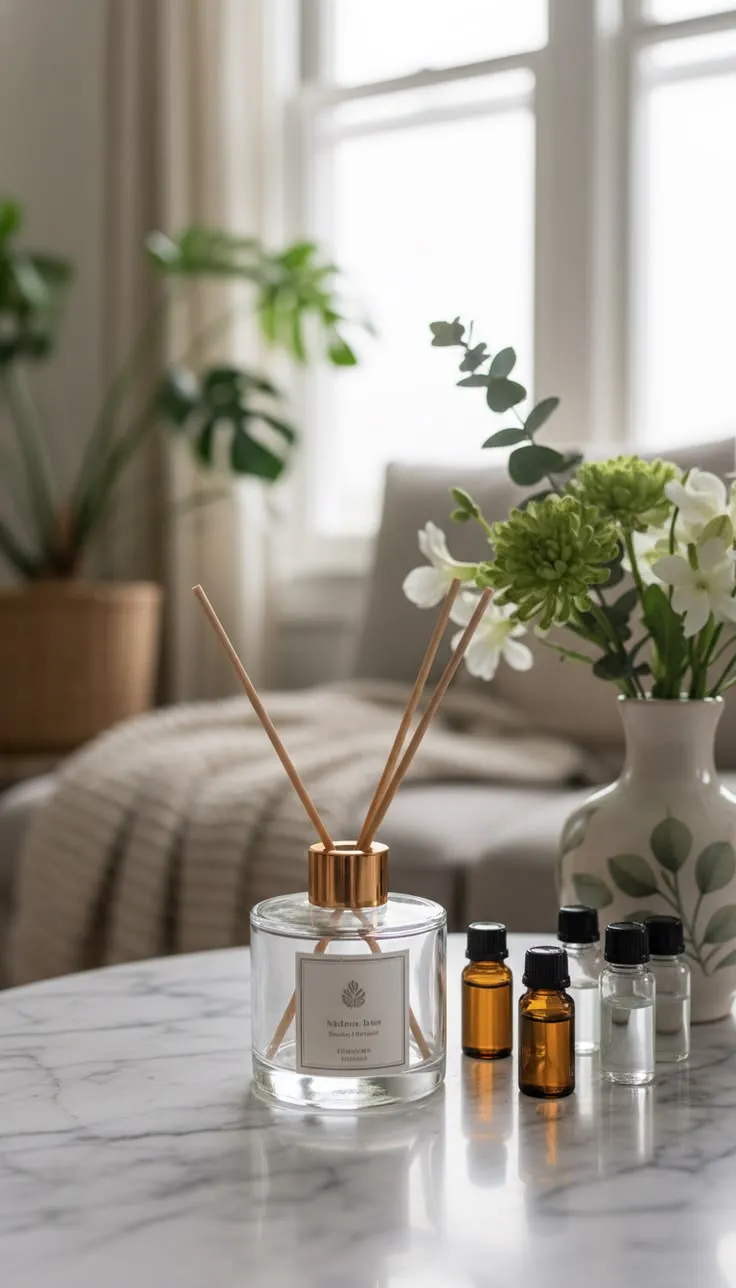
- Reed Diffusers: These systems utilize porous reeds to draw scented oil from a reservoir, dispersing a steady, unobtrusive fragrance into the air indefinitely.
- Adjustable Plug-Ins: Modern plug-in diffusers equipped with adjustable intensity settings provide a controlled, understated aromatic presence without creating clutter.
- Ceramic Diffusers: These utilize gentle, low-friction heat to evaporate essential oils cleanly, supporting an uncluttered and polished environment.
Strategic Mechanical Placement
Maintaining consistency and subtlety requires careful placement of your diffusion devices. Position your diffusers intentionally near active natural air currents—such as close to a window, a doorway, or an HVAC return vent. This strategic positioning leverages ambient airflow to guarantee wide, even distribution throughout the room, preventing the aroma from stagnating or pooling into heavy, thick pockets of scent.
Executing the Cohesive “Home Signature” Framework
Building a highly cohesive home signature involves selecting one single core scent family to serve as your overarching theme, which is then subtly varied across different rooms to prevent sensory monotony.
For instance, you might choose a dominant woody note, such as cedar or sandalwood, as your permanent anchor. This core note is then accentuated or softened with other complementary notes depending on the room’s function:
   [ ACCESSIBLE APARTMENT DEPLOYMENT ]

   ┌────────────────────────────────────────┐
   │ STEP 1: Select One Overarching Core Family (e.g., Woody) │
   ├────────────────────────────────────────┤
   │ STEP 2: Soften with Florals in Rest Zones (Sandalwood + Lavender) │
   ├────────────────────────────────────────┤
   │ STEP 3: Sharpen with Citrus in Work Zones (Cedarwood + Bergamot) │
   └────────────────────────────────────────┘
   ▲ Creates an elegant, unified, non-generic architectural footprint.
Fighting Olfactory Fatigue
To maintain a high-end experience, you must take a proactive approach to combat olfactory fatigue—the natural sensory phenomenon where your sense of smell adapts to constant exposure, rendering a fragrance temporarily unnoticeable to you. Prevent this by routinely rotating your diffusers, shifting placement slightly, changing out complementary accent notes, or temporarily removing a diffuser from a space for a few days. This discipline keeps the home’s scent signature pristine, sharp, and beautifully noticeable to both guests and residents alike.
Frequently Asked Questions
What exactly is an ‘olfactory identity’ for a home?
An olfactory identity is a unique, intentionally curated, and consistent scent profile designed to reflect a home’s specific interior design style and elevate its overall atmosphere. It moves entirely past cheap, temporary air fresheners toward an integrated, mature fragrance strategy.
How can a signature scent help a compact apartment feel larger?
By mapping different, highly complementary scents to separate functional zones—like an energizing citrus blend in your home office area and a deeply calming lavender in your sleep space—you create clear, invisible emotional boundaries. This sensory zoning creates a perception of distinct rooms, expanding the apartment’s overall sense of purpose and space.
Does designing a professional signature scent require a premium budget?
Not at all. Cultivating a cohesive home fragrance profile is an incredibly affordable way to bring an atmosphere of “quiet luxury” into your home without investing in expensive structural remodels or high-end designer furniture.
What is the absolute best way to combat olfactory fatigue in my home?
To keep your nose from getting used to your signature fragrance, routinely rotate your diffusers, change out your accent scents occasionally, or completely remove diffusion devices from a room for a short period. Placing your diffusers directly into paths with active air currents also ensures a gentle, continuous movement that prevents scent stagnation.
Are plug-in diffusers considered too intense or unrefined for an elegant home profile?
Modern plug-in devices featuring fully adjustable intensity controls are exceptionally effective for keeping a subtle, continuous fragrance floating through a room. When set to their lowest operational output and paired with high-quality, non-synthetic oil formulations, they support a highly polished, elegant aesthetic.
How do I seamlessly blend different scents in a wide, open-concept living layout?
The secret is to select fragrance blends that share an identical core theme or underlying base note—such as a warm cedarwood. From there, let the living area carry a cozy variation like amber, while transitioning the open dining zone into a fresher, herbaceous variation like basil. Because they share a single DNA, they harmonize beautifully across the open floor plan without clashing.
Conclusion
Crafting a subtly elegant signature scent for your home transcends simple air freshening, becoming an integral part of sophisticated interior design and personal identity. By thoughtfully selecting scents that align with room function and employing refined diffusion methods, homeowners can create a cohesive and understated olfactory profile that enhances the atmosphere without overwhelming the senses.
Summary Curation Guidelines:
- Prioritize Subtlety Over Volume: Choose subtle, consistent aroma delivery systems over loud, overpowering instant room sprays.
- Map Scents to Function: Tailor your fragrance selections directly to match the primary emotional purpose and mood of each room.
- Deploy Continuous Systems: Utilize passive, steady diffusion tools like reed diffusers, ceramic heaters, or low-setting plug-ins.
- Zone Without Barriers: Use slight, complementary fragrance variations to cleanly split up distinct areas inside open-concept layouts.
- Anchor a Core Theme: Establish a single core scent family as your home’s unifying backbone, then accent it differently across rooms to keep it cohesive yet interesting.