Ever walked into a room and felt instantly calm just by looking at a beautifully arranged bookshelf? That’s the magic of organizing decorative bookshelves. It’s not just about placing books; it’s about creating harmony that speaks to your style and mood.
Many struggle to find the right balance between style and function when setting up their shelves. Overcrowded or sparse shelves can both feel off. How do you strike that perfect balance to make your bookshelf stand out without overwhelming your space?
In this guide, you’ll find down-to-earth, designer-approved tips to curate your shelves with charm and order. Ready to turn chaos into style? Let’s dive in and transform your shelves into a captivating focal point.
Choosing the right bookshelf and location
Choosing the right bookshelf is the first step in organizing decorative bookshelves effectively. The size, style, and material of the bookshelf should complement your room’s décor and meet your storage needs. For instance, a tall wooden bookshelf can add a classic touch, while a metal or glass unit fits a modern aesthetic.
Consider the location carefully. Natural lighting can enhance the visual appeal but avoid direct sunlight that may fade book covers. The space around the bookshelf should allow easy access and prevent overcrowding.
A well-chosen spot enhances both function and style. Think about placing bookshelves near seating areas where people often read or in entryways to showcase your favorite items. Measuring the space beforehand ensures a perfect fit and balance.
Mixing books and decorative objects
Successfully mixing books and decorative objects on your bookshelf adds personality and charm, turning it from mere storage to a style statement. It’s about creating visual interest without making the shelf feel cluttered or chaotic.
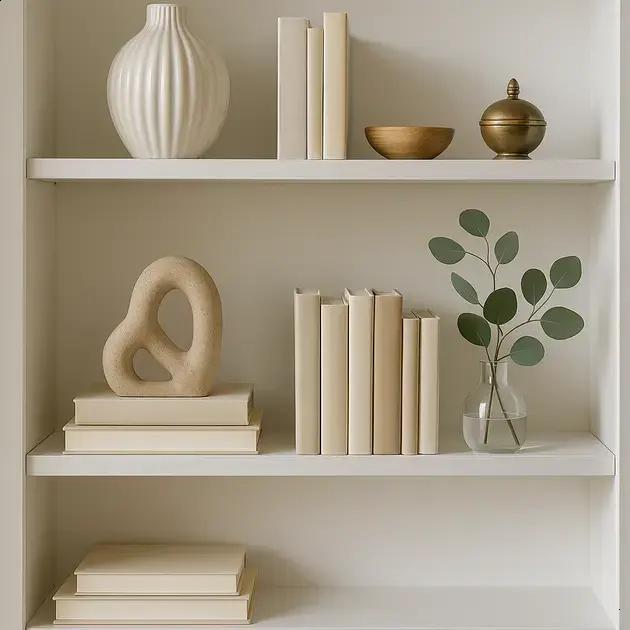
Begin by grouping books in various ways: stacked horizontally to break up vertical lines, or arranged by color or size for cohesion. Between these stacks, place unique decorative objects like vases, framed photos, or small sculptures to add texture and depth.
Balance is key: ensure objects vary in height and size but complement each other. For example, a tall vase next to a low stack of books balances the eye. Avoid overcrowding any single shelf; negative space gives the eye room to rest and highlights your special pieces.
A practical tip is to use decorative bookends that add style while keeping books organized. Consider rotating items seasonally or whenever you want a refreshed look. Mixing in greenery, such as small succulents, also introduces a natural element that softens the display and adds life.
Balancing colors and textures
Balancing colors and textures on decorative bookshelves creates an inviting and dynamic visual display. Choose a color palette that complements your room and stick to it for harmony. Mix matte and glossy finishes, hard and soft materials, to add depth and interest.
Start by grouping items of similar colors together, but spread these groups across different shelves to create flow. For texture, combine smooth ceramics with rough wood or fabric elements such as woven baskets or linen-covered books.
Subtle contrasts enhance appeal; for example, place a soft, plush object near a sleek metal frame to catch the eye. Keep an eye on proportions — too many vibrant colors may overwhelm, while balanced neutrals add elegance and restfulness.
Think of your bookshelf as a canvas where textures and colors interact. Creating balance encourages the viewer’s eye to move naturally across the shelves, appreciating each element without distraction or overload.
Maintaining and updating your shelf display
Maintaining and updating your decorative bookshelf keeps your space feeling fresh and inviting. Regularly dust and clean the shelves to protect books and objects from damage and fading. A soft cloth or a gentle brush works well for this task.
To update your display, rotate items seasonally or whenever you want a new look. Swap out books or decor pieces for fresh colors and textures. This helps prevent the shelf from feeling static or stale.
You might also want to keep a small selection of favorite items stored elsewhere, ready to switch in when desired. This simple practice can transform your room’s mood with minimal effort.
Watch for wear or damage on your books and decor and address it promptly. Reorganize periodically to maintain balance and avoid clutter buildup, ensuring your shelf remains both beautiful and functional over time.