Introduction
Of all the rooms in a home, the bedroom carries a particular kind of pressure that other rooms simply do not. It needs to function as a retreat from the rest of the day, a place where the nervous system can finally exhale, while also reflecting a sense of taste and maturity that feels appropriate for the life being lived in it. It is easy, especially for women who spent their twenties decorating on impulse and on a shoestring budget, to look around their bedroom one day and realize it has not quite caught up to who they have become. The furniture may still work. The walls may still be a perfectly reasonable color. And yet something about the room feels unfinished, more like a place to sleep than a place to actually be.
An elegant, restful bedroom is not built from a single sweeping renovation. It is built from a series of considered choices about what surrounds you in the most vulnerable, unguarded hours of your day, the quality of the linens against your skin, the warmth of the light in the final hour before sleep, the absence of clutter that quietly raises your stress level without your noticing. Sophistication in a bedroom looks different than sophistication in a living room precisely because a bedroom’s primary job is never to impress a guest. Its primary job is to hold you well, every single night, which makes restraint, comfort, and genuine personal taste far more important here than almost anywhere else in the home.
What follows is a practical, room-specific guide to decorating a bedroom that feels both genuinely elegant and deeply restful, the kind of room that looks beautiful in photographs and feels even better at eleven at night when you finally climb into it. Work through it at your own pace, prioritizing whichever section speaks most directly to what currently feels missing in your own space.
The Bed: Where Elegance Actually Begins
The bed occupies more visual and physical real estate than any other object in the room, which means decisions made here ripple outward and influence how elegant or unfinished everything else in the bedroom appears.
- Invest in a substantial headboard. An upholstered headboard in a textured fabric such as linen, boucle, or velvet instantly elevates a bedroom in a way that few other single purchases can match. Choose a headboard slightly taller and wider than feels strictly necessary; generous proportions read as luxurious rather than excessive.
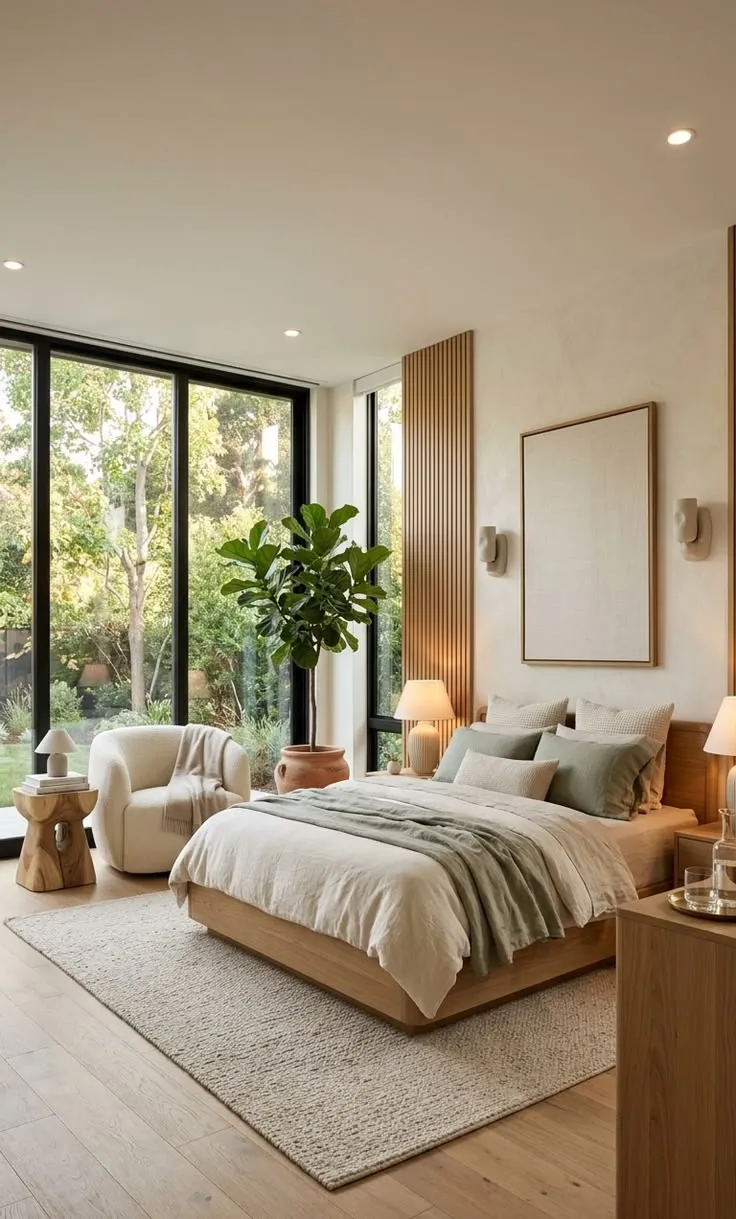
- Layer your bedding with genuine intention. A flat white or cream base sheet, a substantial duvet in a natural fiber, and at least one textured throw or coverlet folded at the foot of the bed create the layered, hotel-like look that signals real care. Avoid matching every textile perfectly; a small amount of tonal variation feels more curated than a uniform set.
- Choose pillow quantity and arrangement deliberately. Two sleeping pillows, two slightly larger Euro shams behind them, and one or two decorative accent pillows in a contrasting texture create a full, considered look without tipping into the overstuffed excess that makes a bed difficult to actually use each night.
Designer’s note: If a full headboard replacement is not realistic right now, a tall, leaning piece of art or a woven wall hanging positioned directly behind the bed can mimic much of the same visual anchoring effect for a fraction of the cost.
Lighting: Setting the Tone for Rest
Lighting matters even more in a bedroom than in most other rooms, because the quality of light in the final hour before sleep has a direct, measurable effect on how easily the body and mind actually wind down.
- Install lighting at three distinct heights. A primary overhead or ceiling fixture for general light, a pair of bedside table lamps or wall sconces at eye level for reading, and where possible, a smaller accent light such as a small lamp on a dresser, together create the layered glow that feels both functional and genuinely warm in the evening.
- Choose warm bulbs exclusively for the bedroom. A color temperature of 2700K or lower throughout the bedroom supports the body’s natural transition into rest far better than cool or daylight-toned bulbs, which can subtly interfere with the production of melatonin in the evening hours.
- Add a dimmer to the primary light source if possible. Being able to lower the overall brightness in the bedroom gradually as the evening progresses is one of the simplest, most effective upgrades for both the room’s atmosphere and genuine sleep quality.
- Consider a small candle or flameless alternative on the nightstand. A candle in a warm, low-key scent, lit briefly while reading or preparing for bed, adds a ritual quality to the evening that artificial light alone cannot replicate.
Color and Texture: Calm Without Being Cold
Bedroom color palettes benefit from even more restraint than the rest of the home, since the goal here is genuine calm rather than visual stimulation. The most successful elegant bedrooms tend to rely on a narrow, warm, almost monochromatic palette executed with real textural depth.
- Build the palette around warm neutrals. Soft taupe, warm oatmeal, dusty clay, and deep walnut brown create a cocooning, restful atmosphere far more effectively than cooler greys or stark whites, which can feel sterile under low evening light.
- Introduce texture generously across textiles. A boucle accent chair, a linen duvet cover, a chunky wool throw, and a soft cotton or jute rug underfoot together create the layered tactile richness that makes a bedroom feel luxurious to actually be in, not just to look at.
- Limit pattern to one or two moments at most. A single patterned throw pillow or a textured woven headboard is usually sufficient; bedrooms with many competing patterns tend to feel busy in a way that works against the room’s core purpose of rest.
Nightstands and Surfaces: Curated, Not Cluttered
Nightstands and dresser tops are usually the first surfaces to accumulate the small, unglamorous clutter of daily life, phone chargers, half-finished glasses of water, stray hair ties, and they are also the surfaces most visible from the bed itself, which makes their styling disproportionately important.
- Limit each nightstand to four or five objects maximum. A lamp, a small stack of one or two books, a small dish for jewelry or rings removed before bed, and perhaps a single small plant or vase is enough to feel intentional without feeling cluttered.
- Hide the practical and unattractive necessities. A small lidded box or fabric-lined drawer insert can contain chargers, lip balm, and other genuinely necessary but visually unattractive items, keeping the visible surface calm and considered.
- Add one object of genuine personal meaning. A small framed photograph, a meaningful trinket from travel, or a single piece of jewelry displayed on a small dish brings real personality to the nightstand without requiring more than one or two items.
Final Layer: Scent, Softness, and Greenery
The final, often overlooked layer of an elegant bedroom involves the senses beyond sight, the way a room smells, the way fabric feels against bare feet getting out of bed, and the subtle life that a single plant can bring to an otherwise still room.
- Choose one signature bedroom scent. A linen spray, a reed diffuser, or an evening candle in a calming, low note such as sandalwood, vanilla, or fig creates a consistent sensory association with rest that the brain begins to recognize over time.
- Add a soft rug specifically positioned at the bedside. Stepping onto a plush rug rather than a cold floor first thing in the morning and last thing at night is a small luxury that disproportionately affects how the entire room feels to actually live in.
- Bring in one or two low-maintenance plants. A snake plant or a small pothos on a dresser or windowsill softens the room and has the added benefit of being among the easiest plants to keep alive in a room that may not always receive ideal light.
Quick Reference: Ideas by Budget and Effort
| Category | High-Impact Idea |
| Low budget, low effort | Switch all bulbs to warm white 2700K, declutter nightstands to five objects |
| Low budget, more effort | Layer in a textured throw, add a leaning art piece behind the bed |
| Medium budget | Add a plush bedside rug, a pair of matching bedside lamps, and a diffuser |
| Higher budget | Invest in an upholstered headboard and quality natural-fiber bedding |
Common Mistakes That Undermine an Elegant Bedroom
- Relying on a single overhead light. This is the fastest way to make an otherwise beautiful bedroom feel clinical in the evening. Always add at least one warm light source at a lower height.
- Choosing bedding purely by trend rather than texture and quality. A genuinely soft, well-made duvet and sheets in a natural fiber will always read as more elegant than a trendy print in a synthetic, lower-quality fabric.
- Letting nightstands become catch-alls. Once a nightstand starts collecting daily clutter, the entire room begins to feel less restful, since it is the surface seen most frequently from the bed itself.
- Skipping window treatments. Bare windows, even with beautiful views, tend to make a bedroom feel exposed and unfinished. Even simple, well-chosen curtains complete the room significantly.
- Ignoring scent entirely. A visually beautiful bedroom that has no considered scent still feels incomplete to the senses; this is one of the easiest and most affordable layers to add.
Conclusion
An elegant bedroom is ultimately a quiet, personal kind of project, one measured less by how it photographs and more by how genuinely restorative it feels to walk into at the end of a long day. Layered warm lighting, textiles chosen for how they feel as much as how they look, a headboard or art piece that gives the bed real presence, and nightstands edited down to only what truly belongs there, together these choices build a room that finally feels like an accurate, grown-up reflection of the person resting in it.
Begin with the lighting, since it changes the emotional temperature of the room more immediately than almost anything else. Layer in the textures next. Edit the surfaces down to what matters. And trust that the most elegant bedrooms are rarely the most decorated ones; they are the ones that feel, the moment the door closes for the night, completely and quietly like home.
Frequently Asked Questions
1. What is the fastest way to make a bedroom feel more elegant without spending much money?
Changing every bulb to warm white at 2700K or below, clearing nightstands down to four or five intentional objects, and adding one substantial textured throw folded at the foot of the bed together create a noticeably calmer, more elevated feeling in a single afternoon.
2. How many pillows is too many on an elegant bed?
A reliable guideline is two sleeping pillows, two Euro shams behind them, and one or two smaller decorative accents, for a maximum of six pillows total on a queen or king bed. Beyond that, most beds become impractical to actually use each night, which works against the room’s core purpose.
3. Is it possible to achieve this look while renting and unable to make permanent changes?
Yes, very effectively. Bedding, lighting, a leaning art piece, rugs, and a diffuser or candle account for the large majority of a bedroom’s perceived elegance and calm, all of which are fully renter-friendly and can move with you to a future home.
4. What color palette works best for a bedroom that needs to feel both sophisticated and restful?
Warm, narrow neutral palettes consistently perform best for this dual goal: think soft taupe, warm oatmeal, dusty clay, or deep walnut, introduced through both wall color and textiles. These tones read as sophisticated in daylight and genuinely soothing under warm evening lighting.
5. What is the single highest-impact purchase for an elegant bedroom?
Most experienced decorators point to either an upholstered headboard or a genuinely high-quality set of natural-fiber bedding as the single highest-impact purchase, since both are seen and felt every single night and affect the room’s atmosphere far beyond their individual cost.