Ever found yourself scrambling for dishes or linens just as guests arrive? It happens more often than you think. Organize a dining room sideboard the right way can save you this stress and elevate your space.
This piece isn’t just storage; it’s part of your entertaining vibe and daily flow. Making it work well means combining beauty with smart function.
Stick with me, and we’ll explore practical steps to make your sideboard a stylish helper, perfect for both busy dinners and elegant parties.
Assess Your Storage Needs and Space
Before organizing your dining room sideboard, it’s essential to assess your storage needs and the available space. Understanding the volume and types of items you want to store will guide your organization plan and ensure maximum efficiency.
Take a close look at what you currently use frequently versus items that are mainly for special occasions. This will help you create designated zones for everyday essentials and decorative or occasional pieces.
Measure the dimensions of your sideboard and surrounding area carefully. Keep in mind clearance for opening doors and drawers to ensure ease of access. Taking accurate measurements helps avoid overcrowding and keeps your space functional and inviting.
Consider the style and structure of your sideboard—whether it has shelves, drawers, or cabinets—and how these features can best accommodate your needs. For example, deeper shelves might be suitable for large platters, while drawers can neatly hold cutlery or table linens.
Try categorizing items by usage, size, and frequency, identifying any space that could be improved with organizers or storage accessories. This assessment lays a solid foundation for a balanced and practical arrangement that supports both elegant entertaining and everyday living.
Sort and Declutter Wisely
Sorting and decluttering your dining room sideboard is a crucial step to create a functional and elegant space. Begin by removing all items and sorting them into categories, such as everyday dishes, special occasion items, linens, and decorative pieces.
Decide what to keep, donate, or discard based on how often you use each item. Items rarely used could be stored elsewhere to free up prime sideboard space.
As you sort, assess the condition of each piece and consider its sentimental or practical value. This process helps reduce clutter and highlights the items that truly deserve display or easy access.
To maintain your organized sideboard, establish regular decluttering routines, such as reviewing the contents seasonally or before major events. This keeps your space fresh and prevents accumulation of unnecessary items.
By thoughtfully sorting and decluttering, you create a balanced blend of practicality and style that supports both elegant entertaining and everyday living.
Create Functional Zones for Easy Access
Creating functional zones within your dining room sideboard is key to easy access and efficient use of space. Divide the sideboard into areas dedicated to specific categories, such as dinnerware, glassware, linens, and serving utensils.
Assigning distinct zones helps maintain organization and reduces clutter, ensuring that items you use most often are within reach.
Think about grouping frequently used items closer to the front or at eye level, while less-used pieces can be stored lower or in less accessible areas. This arrangement supports smooth meal preparation and serving during both everyday dining and entertaining.
Use storage accessories like trays, baskets, or dividers within these zones to keep smaller items neat and prevent shifting when opening cabinets or drawers. For example, a tray dedicated to napkins and silverware keeps these essentials together and easy to grab.
The goal is to streamline your routine by making each zone functional and clearly defined, blending practicality with style to fit your dining habits.
Add Decorative Touches for Style and Warmth
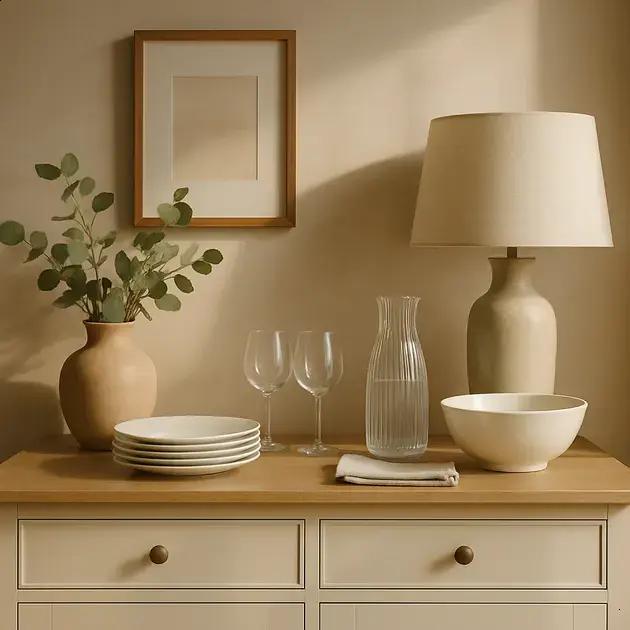
Adding decorative touches to your dining room sideboard transforms it from mere storage to a focal point that enhances the room’s overall atmosphere. Choose items that blend style and warmth, such as elegant vases, candles, or framed photos that reflect your personal taste.
Layering textures and colors can bring depth and interest. Consider pairing smooth ceramics with woven baskets or soft fabrics like a runner or cloth napkins elegantly draped.
Lighting plays a crucial role; a tasteful lamp or cluster of candles can provide both function and ambiance during evening meals.
Balance is key when decorating. Avoid overcrowding by mixing functional items with purely decorative ones, leaving breathing room to maintain a clean and inviting look.
Seasonal accents like fresh flowers, greenery, or themed decor add a dynamic element that keeps your sideboard feeling fresh and aligned with special occasions or changing décor trends.
Bringing it all together
Organizing your dining room sideboard balances style and function, making daily life easier and entertaining more elegant. Thoughtful planning and maintaining order keep your space inviting and practical.
By assessing your needs, sorting wisely, creating functional zones, and adding personal decorative touches, you transform a simple piece furniture into a highlight of your home. This approach enriches your dining experience every day.
With intention and care, your sideboard can support both everyday living and special occasions, offering both beauty and convenience in one place.
FAQ – Organizing Your Dining Room Sideboard
How often should I declutter my dining room sideboard?
It’s best to declutter your sideboard seasonally or before major events to keep it functional and tidy.
What items should I keep on my dining room sideboard?
Keep everyday essentials like plates and glassware within easy reach, and store special occasion items separately.
How can I make my sideboard both stylish and practical?
Create functional zones for easy access, and add decorative touches like vases or candles for warmth and style.
What storage accessories help organize a sideboard?
Trays, baskets, and dividers are excellent for grouping smaller items and keeping things neat and accessible.
How do I decide what to remove during decluttering?
Focus on items you rarely use or that are damaged; consider donating or storing less-used pieces elsewhere.
Can seasonal decor enhance my sideboard’s look?
Yes, adding seasonal accents like fresh flowers or themed decor keeps your sideboard fresh and aligned with occasions.