In contemporary interior design, the home is no longer viewed merely as a machine for living, nor is it treated as a sterile showroom designed exclusively to impress the occasional guest. Instead, the modern home has rightfully reclaimed its historical role as a deeply personal sanctuary—a physical manifestation of one’s lived experiences, refined tastes, and psychological need for comfort.
Nowhere is this shift more critically felt than in the kitchen. Long considered the absolute heart of the home, the kitchen bears a unique architectural burden: it must operate at peak mechanical efficiency while simultaneously acting as the primary emotional anchor for daily family life and casual social connection.
For the mature woman of discernment, navigating the landscape of modern kitchen design can often feel like a series of uninspiring compromises. On one side stands the rigid, unyielding minimalism of “high luxury”—an aesthetic characterized by sweeping sheets of cold, book-matched marble, hidden handleless cabinetry, and stark, monolithic islands that command attention but offer little in the way of domestic warmth or physical comfort. On the other side sits the nostalgic, often over-embellished world of “grandmillennial” or country-chic styles, which, while undeniably charming, can quickly tilt into visual clutter, excessive ornamentation, and a historical sentimentality that fails to reflect a modern, sophisticated life.
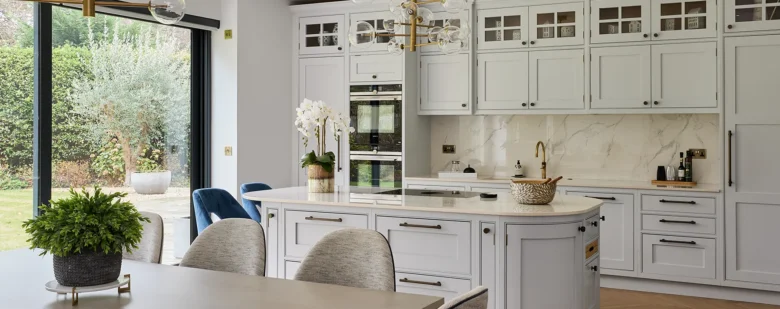
Enter the philosophy of soft luxury. This nuanced design movement represents a profound paradigm shift in interior architecture. It rejects both the aggressive opulence of high luxury and the theatrical patterns of nostalgic design, choosing instead to champion a quiet, understated elegance rooted in sensory engagement, warm tonal harmony, and timeless restraint. Soft luxury moves the design conversation away from what is merely “pretty” or “fashionable,” focusing instead on creating environments that are undeniably elegant without ever sacrificing usability. It is an approach explicitly tailored to those who seek an adult, highly refined, and beautifully organized kitchen that feels rich with soul, history, and genuine livability.
Understanding the Philosophy of Soft Luxury
To successfully execute a soft luxury kitchen, one must first understand that luxury, in this context, is defined not by price tag, rarity, or ostentation, but by the quality of the daily experience the space provides. High luxury asks you to look, admire, and maintain a respectful distance; soft luxury explicitly invites you to touch, linger, and live. It is a design philosophy that values how a drawer feels when it glides open, how a honed stone surface feels beneath your hands on a quiet morning, and how the evening light bounces softly off an aged metallic fixture.
The core tenets of soft luxury rest on two foundational principles: creating a space that feels collected, not cluttered, and ensuring the environment is elegant but completely livable. This requires a departure from standard, out-of-the-box showroom packages. A soft luxury kitchen does not look as though it was delivered in its entirety on a flatbed truck; it looks as though it has evolved over time, a thoughtful curation of materials, textures, and objects that have been brought together by a highly discerning eye.
Furthermore, soft luxury serves as an intentional antidote to the pervasive design frustration of the “sterile kitchen.” Throughout the past decade, the trend toward hyper-minimalism left many homeowners with kitchens that looked beautiful in architectural magazines but felt cold, industrial, and fundamentally uninviting in daily practice. By reintroducing depth, soft tonal shifts, and authentic organic materials, soft luxury reintroduces the soul into the kitchen. It bridges the gap between high design aspiration and the messy, beautiful reality of daily life, transforming the kitchen from a functional cooking zone into an integrated, cherished sanctuary.
The Sensory Foundation: Tactile Materials and Organic Textures
The sensory foundation of any soft luxury kitchen is built upon the meticulous selection of materials that engage the human sense of touch. When a kitchen is stripped of bright, reflective surfaces and high-gloss finishes, the eye is forced to look closer, focusing on the subtle, innate variations of the natural world. This tactile richness creates a psychological sense of calm and well-being, grounding the home in authenticity.
The Beauty of Matte and Honed Stone
In a soft luxury kitchen, high-polished surfaces—such as mirror-like granite or glossy synthetic composites—are replaced with stones that feature a soft, matte, or honed finish. Honed marble, soapstone, quartzite, or premium porcelain alternatives that mimic natural veins offer a deeply sophisticated, muted palette.
A honed finish diffuses light rather than reflecting it directly into the eyes, creating a velvety appearance that instantly softens the room’s architecture. Soapstone, with its naturally deep charcoal hue and unique talc-like texture, develops a beautiful, authentic patina over years of use, celebrating the passage of time rather than fearing it.
Rich Woods and Artisanal Cabinetry
Wood is the primary element used to inject organic warmth into the soft luxury kitchen. However, this is not the rustic, heavily knotted pine of country design, nor is it the glossy, uniform exotic wood of mid-century minimalism. Soft luxury utilizes premium hardwoods—such as European white oak, American walnut, or rift-sawn white oak—finished with matte, ultra-low-sheen sealants that preserve the natural, raw texture of the grain.
Whether integrated through custom island facing, full cabinetry runs, or solid open shelving, the presence of beautifully executed woodwork ensures that the kitchen feels connected to the natural landscape, offering a soft visual contrast to the harder stone surfaces.
Softening the Edges with Textured Textiles
A kitchen is inherently full of hard, unyielding surfaces: stone counters, metal appliances, wood doors, and plaster walls. To achieve true balance, soft luxury introduces high-quality, tactile textiles that break up these hard lines. This includes heavy, waffle-weave Belgian linen dish towels hung elegantly from a brass rail, hand-woven jute or sisal runners placed along the main cooking galley to provide texture and comfort underfoot, and custom linen Roman shades that frame the windows, filtering incoming natural light into a soft, romantic glow.
Sculpting with Light: The Art of Layered Illumination
Lighting is perhaps the most powerful, yet frequently misunderstood, tool in luxury interior design. All too often, modern kitchens are illuminated by an uniform grid of recessed ceiling spotlights—often referred to by designers as “ceiling acne.” This type of lighting creates a harsh, flat environment that exposes every flaw, casts aggressive downward shadows on human faces, and makes a space feel deeply institutional. Soft luxury completely rejects this single-source approach, relying instead on a highly sophisticated, multi-tiered system of layered illumination.
       [CEILING] ──> Ambient Light (2700K - 3000K Flush Mounts)
          │
          ├──> [WALLS/ART] ──> Accent Light (Picture Lights, LED Ribbons)
          │
          └──> [WORK ZONES] ──> Task Light (Under-Cabinet LEDs, Focused Pendants)
The Crucial First Layer: Focused Task Lighting
A kitchen remains a workplace, and safety during food preparation is paramount. The first layer of the lighting scheme is dedicated entirely to functionality. This involves the strategic installation of high-color-rendering LED strips hidden seamlessly beneath upper cabinetry to illuminate the countertops without creating glare.
Additionally, focused, directional spotlights or low-hanging pendant lights are positioned directly over the kitchen island and sink area, ensuring that every chop, pour, and wash is perfectly lit, eliminating shadows exactly where precision is required.
The Second Layer: Gentle Ambient Warmth
Once the functional zones are secure, the focus shifts to creating a welcoming atmosphere. Ambient lighting provides the general, soft glow that fills the room when the work is done and the evening begins. Instead of cold, blue-toned commercial bulbs, soft luxury utilizes warm-toned bulbs with a color temperature strictly between 2700K and 3000K.
This range replicates the soothing, golden-hour light of the setting sun, triggering the body’s natural relaxation response. Rather than relying on harsh downlights, ambient light can be introduced via elegant semi-flush ceiling fixtures crafted from frosted glass, alabaster, or woven materials that gently scatter light across the ceiling plane.
The Third Layer: Mood-Defining Accent Lighting
The final layer of lighting is where true theatricality and luxury reside. Accent lighting is entirely non-utilitarian; its sole purpose is to add depth, romance, and architectural interest to the kitchen. This includes installing low-voltage LED ribbons inside glass-front cabinets to highlight a collection of family ceramics, or placing brass picture lights directly above framed artwork hung on the kitchen walls.
One of the most defining signatures of the soft luxury kitchen is the inclusion of a small, low-wattage cordless lamp placed directly on the countertop corner or open shelving—bringing an unexpected element of living room comfort into the culinary environment.
Warm Metals: Introducing Subtle Radiance and Patina
To prevent a neutral, texture-driven color palette from feeling flat or sleepy, a soft luxury kitchen requires a thoughtful element of contrast. This is achieved through the intentional integration of warm metals. For decades, standard kitchen design relied on the clinical, industrial look of polished chrome and brushed stainless steel. While these metals are durable, they contribute heavily to a cold, sterile environment. Soft luxury turns instead to metals that offer a subtle gleam, a rich undertone, and an innate sense of history.
The Elegance of Unlacquered Brass and Brushed Gold
The undisputed champions of the soft luxury hardware world are unlacquered brass, aged bronze, and brushed gold. Unlike lacquered brass—which remains bright, shiny, and frozen in time—unlacquered brass is a living finish. As it is touched by human hands and exposed to air, it naturally oxidizes, developing a deep, organic patina that tells the story of the home.
This gradual aging process gives cabinet pulls, latches, and faucets a sense of timeless weight and soul. For those who prefer a finish that remains consistent, brushed gold or champagne bronze provides a similar visual warmth without the shifting character of a living finish.
+-------------------+---------------------------------------------------------+
| METALS COMPARISON | DESIGN IMPACT & CHARACTERISTICS                         |
+-------------------+---------------------------------------------------------+
| Chrome / Steel    | Cold, reflective, industrial; can create a sterile feel.|
| Unlacquered Brass | Living finish; oxidizes gracefully to create a rich     |
|                   | historical patina over time.                            |
| Brushed Gold      | Consistent, soft golden radiance without maintenance;   |
|                   | modern yet warm.                                        |
| Aged Bronze       | Deep, dark, grounded tone; provides excellent contrast  |
|                   | against light cabinetry.                                |
+-------------------+---------------------------------------------------------+
Carrying Metals Beyond Cabinet Knobs
The application of warm metals should not stop at the cabinet doors. To create a cohesive, designer-level environment, these finishes should be woven thoughtfully throughout the room’s entire landscape. Consider a high-end galley faucet executed in a striking brushed gold silhouette, aged brass plumbing escutcheons, or the delicate metal detailing on the stems of counter stools.
By scattering these warm, reflective elements across different heights and surfaces, the kitchen gains a subtle, rhythmic radiance that feels effortlessly luxurious.
Curated Styling: The Balance of Form, Function, and Art
A soft luxury kitchen is defined by its restraint. It explicitly avoids the cold, empty look of a minimalist kitchen where every item is hidden behind closed doors, but it is equally careful to avoid the visual chaos of an over-styled room. The goal is to achieve functional elegance—a state where the items you use every day are styled beautifully, and the decorative objects you display carry genuine personal meaning.
Art in the Kitchen: Elevating the Utilitarian Space
One of the fastest ways to signal that a kitchen is a sophisticated, adult room is to hang original art on the walls. For too long, kitchen art was limited to generic, mass-produced prints of fruit, wine bottles, or typographic coffee signs. Soft luxury breaks this rule entirely, treating kitchen walls with the same respect as a living room or gallery space.
A small, oil painted landscape in a vintage gilded frame resting on a countertop corner, an abstract charcoal sketch framed in clean black wood hung next to the pantry, or a collection of antique ceramic wall plates instantly introduces a cultured, intellectual layer to the home.
The Rule of Three and Intentional Vignettes
When styling open shelves or countertops, professional interior designers rely on the “Rule of Three” and the creation of intentional vignettes to prevent clutter. Rather than scattering oils, spices, and tools randomly across the workspace, items are grouped together with deliberate care.
   [THE COUNTERTOP VIGNETTE]
   ┌────────────────────────┐
   │  ┌───┐   ▲    ┌─────┐  │
   │  │Art│  / \   │ Jar │  │ <--- Grouped tightly on a solid wood
   │  └───┘ /Oil\  └─────┘  │      or marble tray to eliminate
   └──└───┘─└───┘───────────┘      visual noise.
For example, a solid marble tray can be placed next to the cooktop to hold a beautiful glass bottle of olive oil, a small wooden bowl filled with flaky sea salt, and a single branch of fresh rosemary in a stoneware vase. By grounding these items on a tray, the human eye perceives them as a single, organized design element rather than three separate pieces of counter clutter.
The Curation of Open Shelving
Open shelving in a soft luxury kitchen is not used for secondary plastic storage or a mismatched collection of promotional mugs. It is reserved exclusively for a highly edited display of your most beautiful, tactile culinary objects.
This is the place to showcase hand-thrown ceramic bowls with irregular, organic edges, a collection of vintage copper cookware passed down through generations, and beautifully bound, linen-covered cookbooks. Every object on display should be a celebration of form and material, contributing directly to the calm, collected atmosphere of the overall space.
Integrated Storage: Keeping Clutter at Bay Seamlessly
True luxury cannot exist without impeccable organization. An elegant kitchen loses its sense of tranquility the moment its drawers become jammed with plastic containers, or its counters become buried under mail, school papers, and tangled electronic charging cords. To maintain the serene environment required by soft luxury, the kitchen must feature highly functional, integrated storage solutions that elegantly contain the clutter of daily life.
The Elegance of Decorative and Concealed Storage
Storage should never be an afterthought; it should be treated as a core design feature. Woven natural-fiber baskets crafted from seagrass or willow can be placed on lower open shelves or inside deep pull-out drawers to elegantly house clean dishcloths, small counter appliances, or fresh root vegetables.
Within the pantry or behind glass cabinet doors, everyday staples—such as flour, grains, sugars, and pastas—should be transferred out of their loud, brightly colored commercial plastic packaging and placed into uniform glass, ceramic, or stoneware jars finished with minimalist, handwritten labels. This simple act eliminates massive amounts of visual noise, transforming a chaotic pantry into a space of pure, organized beauty.
+----------------------+-------------------------------------------------------+
| PACKAGING ELEMENT    | SOFT LUXURY TRANSFORMATION                           |
+----------------------+-------------------------------------------------------+
| Commercial Plastics  | Decant into heavy glass or ceramic jars with custom   |
|                      | minimalist labels.                                    |
| Cluttered Utensils   | Place inside an antique stoneware crock next to the   |
|                      | range for immediate access.                           |
| Small Appliances     | Conceal behind a dedicated "appliance garage" door    |
|                      | with integrated power outlets.                        |
+----------------------+-------------------------------------------------------+
Concealing the Chaos of Modern Technology
In the modern home, the kitchen counter frequently becomes a dumping ground for smartphones, tablets, laptops, and a chaotic web of plastic charging cables. A soft luxury kitchen elegantly solves this issue by integrating a dedicated, hidden charging drawer.
By installing power outlets directly inside a top cabinet drawer, devices can be plugged in and charged completely out of sight, keeping the main stone countertops completely clear and preservation-focused.
Architectural Details: The Subtle Markers of Quality
The beauty of soft luxury often lies in what is missing: there are no loud colors, no massive sparkling chandeliers, and no aggressive design statements. Instead, the luxury is hidden quietly within the architectural details—the subtle markers of expert craftsmanship and high-end design that give a room its structural integrity and sense of permanent quality.
Integrated Range Hoods and Plaster Finishes
One of the defining architectural hallmarks of a soft luxury kitchen is the transition away from standard stainless steel appliance range hoods. Instead, range hoods are built out structurally, integrated directly into the wall architecture, and finished with a soft, textured material such as Venetian plaster, micro-cement, or lime-wash paint.
This creates a clean, continuous line across the cooking wall, transforming a traditionally industrial appliance into a beautiful, sculptural element that catches the light with subtle, organic texture.
Seamless Architectural Integration
Inset Cabinetry Doors
Unlike standard overlay cabinets that sit on top of the cabinet frame, inset cabinetry is crafted so that the doors sit completely flush inside the frame. This classic construction method requires precision carpentry and delivers clean, architectural lines that feel historic, substantial, and incredibly refined.
Countertop Overhangs and Edge Profiles
Soft luxury steps away from sharp, aggressively squared countertop edges. Instead, it favors soft demi-bullnose, eased, or traditional ogee edge profiles. Furthermore, a slight, deliberate alteration to the countertop overhang—such as extending a stone top an extra inch over the cabinetry base—creates beautiful shadow lines that elevate the entire kitchen’s presence.
Implementation: Achieving Elegance Without Construction
One of the most empowering aspects of the soft luxury philosophy is that it does not demand a massive financial investment or a full structural home renovation. Because soft luxury is fundamentally an interior mindset rooted in quality, curation, and material warmth, you can transform an ordinary kitchen into an extraordinary sanctuary through a series of small, deliberate, and highly impactful stylistic changes.
- Step One (The Hardware Upgrade): Unscrew your existing, uninspired cabinet handles and replace them with high-quality pulls crafted from unlacquered brass or brushed bronze. This single change brings an immediate touch of warmth and historical weight to your daily touchpoints.
- Step Two (The Lighting Metamorphosis): Unscrew your cold, bright daylight bulbs and replace them with warm, soft-white alternatives (2700K). Turn off your overhead fixtures entirely in the evening, relying instead on a newly introduced small cordless countertop lamp and under-cabinet lighting to create an intimate, calming glow.
- Step Three (The Surface Edit): Clear your countertops of all non-essential appliances. Find a beautiful, large wooden cutting board, rest it against your backsplash to introduce organic texture, and place a simple stoneware crock next to it to organize your daily cooking tools.
- Step Four (The Textile Softening): Replace worn synthetic sponges and brightly colored microfiber cloths with high-quality linen hand towels in natural tones like oatmeal, olive, or soft charcoal. Add a small woven jute rug in front of the sink area.
By focusing on these deliberate, accumulation-based design choices, you honors the details, illustrating beautifully that luxury resides in intentionality, care, and comfort, rather than sheer scale or architectural expense.
Frequently Asked Questions (FAQs)
What is the primary difference between ‘soft luxury’ and traditional luxury?
Traditional luxury often relies on grand structural scale, highly rare or shiny materials, and an overt, conspicuous display of wealth designed to impress an outsider. Soft luxury is entirely inward-focused; it prioritizes quiet elegance, tactile comfort, and personal connection, creating a highly refined environment that is explicitly meant to be lived in, touched, and enjoyed effortlessly on a daily basis.
My kitchen is currently very modern and sterile. How can I transition it toward soft luxury easily?
The fastest way to counteract a cold, sterile kitchen is to systematically introduce warmth and texture. Swap any chrome or stainless steel hardware for brushed gold or unlacquered brass. Replace cool daylight bulbs with warm-toned bulbs (2700K). Finally, introduce organic elements such as heavy wood cutting boards, linen textiles, stoneware ceramics, and a small piece of framed art to instantly bring soul and character back into the space.
Is open shelving practical for a busy kitchen, or does it conflict with the soft luxury ethos?
Open shelving is highly practical in a soft luxury kitchen provided it is approached with strict restraint. It should never be used to house your entire collection of daily dinnerware. Instead, use a few beautifully crafted shelves to display an edited selection of your most aesthetically pleasing, tactile objects—such as artisanal ceramic bowls, wood canisters, and copper pots. Items that are visually chaotic or less attractive should remain hidden behind closed cabinetry doors or inside labeled storage baskets.
How do I choose the right color palette for a soft luxury kitchen?
Soft luxury relies heavily on a narrow, warm neutral palette that fosters a deep psychological sense of calm and well-being. Focus on soft tones derived directly from nature: cream, warm oatmeal, sandy taupe, dusty clay, muted sage green, and rich walnut. Avoid stark, clinical whites or cool, blue-toned greys, which can easily look sterile under artificial evening light.
Can soft luxury withstand the daily wear and tear of a family household?
Absolutely. Because soft luxury champions authentic, natural materials—like honed stone, solid wood, and genuine linens—it actually handles daily wear far more gracefully than pristine, high-gloss synthetic surfaces. Materials like unlacquered brass and honed soapstone are designed to develop a beautiful patina over time, meaning that the minor scratches and signs of daily use are absorbed into the material’s character, making the kitchen look more soulful and historic as the years progress.