Introduction
There is a particular kind of disappointment that comes from finally redoing a living room exactly the way you pictured it, only to walk in and feel something is slightly off. The furniture is beautiful. The lighting is soft. The color palette is exactly what you pinned and saved for months. And yet the room feels distant somehow, more like a polished showroom than a place you want to curl up in with a glass of wine and a good book. More often than you would expect, the culprit is underfoot. The floor sets the emotional temperature of a room before a single piece of furniture does, and choosing the wrong one is the quiet reason so many elegant living rooms end up feeling beautiful but unwelcoming.
The good news is that sophistication and warmth are not opposites, no matter how many minimalist interiors online might suggest otherwise. A floor can be polished, refined, even a little dramatic, while still inviting you to sit on it cross-legged with your morning coffee. The difference lies in understanding what each flooring material actually does to a room: how it reflects light, how it sounds underfoot, how it feels against bare feet on a Tuesday evening, and how it ages over the years you will spend living your life on top of it.
This guide walks through the flooring options that consistently deliver elegance without the chill, the ones that interior designers reach for again and again when a client says some version of the same thing: I want it to look beautiful, but I also want it to feel like home. Whether you are renovating completely or simply trying to decide whether that herringbone oak is worth the investment, what follows will give you the practical clarity to choose with confidence.
Why Some Elegant Floors Feel Cold (and Others Don’t)
Before looking at specific materials, it helps to understand exactly why a floor reads as cold or warm to the people standing on it, because the answer is rarely just about temperature.
- Color temperature does most of the work. Floors in cool grey, stark white, or icy blue-toned wood reflect light in a way that our eyes and brains register as clinical, even if the material itself is warm to the touch. Floors in honey, caramel, walnut, or terracotta tones reflect a warmer wavelength of light that the eye associates instinctively with comfort, the way firelight or candlelight does.
- Sheen level changes the emotional read entirely. A high-gloss floor bounces light sharply and creates the slightly sterile feeling of a hotel lobby or a showroom. A matte or satin finish absorbs more light and creates a softer, more lived-in glow that feels considerably more intimate, even in the exact same wood species and color.
- Pattern and grain visibility matter more than people expect. A floor with visible, irregular wood grain, natural knots, or handmade variation feels human and storied. A floor that is perfectly uniform edge to edge, with no visible texture or imperfection, reads as manufactured and impersonal, regardless of how expensive it actually was.
- What sits on top of the floor changes everything. Even the most elegant cold floor becomes warm with the right styling: a substantial area rug, woven textures, low warm lighting placed at lamp height rather than only overhead. The floor is the foundation, but it is rarely working alone.
Six Flooring Types at a Glance
| Flooring Type | Why It Works for a Warm, Elegant Living Room |
| 1. Wide-Plank Hardwood | Warm tones and natural grain bring depth and timeless sophistication |
| 2. Herringbone Parquet | Geometric pattern adds drama and craftsmanship without feeling cold |
| 3. Engineered Wood | All the warmth of hardwood with better stability and easier upkeep |
| 4. Luxury Vinyl Plank (LVP) | Realistic wood look, soft underfoot, ideal for busy, lived-in rooms |
| 5. Natural Cork Flooring | Genuinely warm and soft underfoot, with an understated organic elegance |
| 6. Warm-Toned Large Format Tile | Sophisticated and durable, made cozy through color and styling choices |
1. Wide-Plank Hardwood Flooring
The timeless choice that never reads as trendy or tired
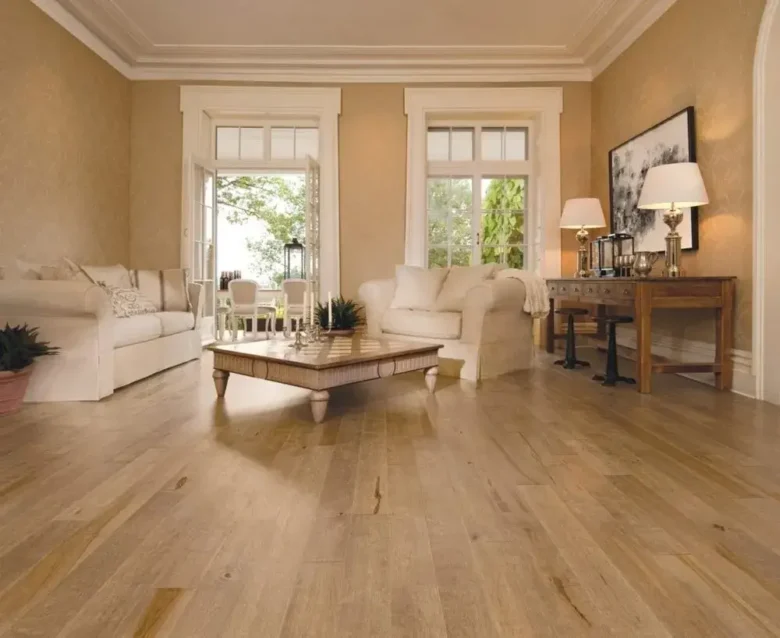
Wide-plank hardwood remains the gold standard for a reason that has very little to do with trend cycles. Unlike narrow strip flooring, which can feel busy and visually fragment a room, wide planks create a sense of calm, continuous flow across the floor. Fewer seams mean fewer interruptions to the eye, which makes a living room feel larger, more deliberate, and considerably more grown-up.
The warmth in this flooring comes almost entirely from species and finish choice. Oak in a warm honey or golden tone, walnut with its naturally rich chocolate undertones, or hickory with its varied caramel striations all bring an inherent coziness that pale, grey-washed hardwood simply cannot replicate. The visible grain pattern, especially in a wire-brushed or hand-scraped finish, adds the kind of texture that makes a floor feel like it has a story rather than looking factory-stamped.
Best woods and finishes for warmth without sacrificing polish:
- White oak with a natural or honey-toned matte finish — the most versatile option, pairing beautifully with both traditional and contemporary furniture
- American walnut, left in its natural deep brown tone rather than stained darker, for a richness that feels luxurious in low light
- Hickory or red oak with a hand-scraped or wire-brushed texture, which catches lamplight in a way that smooth boards simply cannot
- A satin or matte polyurethane finish rather than high-gloss, which keeps the warmth intact and resists the showroom effect
Designer’s note: If you already have pale or cool-toned hardwood and a full replacement is not in the cards right now, a professional refinish with a warmer stain can transform the entire feeling of a room for a fraction of the cost of new flooring. This is one of the highest-impact, lowest-disruption renovations available to a living room.
2. Herringbone Parquet
Old-world craftsmanship that photographs as beautifully as it lives
There is a reason herringbone floors appear so consistently in the elegant Parisian apartments and historic European homes that fill so many interior design boards. The diagonal, interlocking pattern carries an inherent sense of intention and craft that a plain plank floor, however beautiful, cannot quite match. It signals that real thought and care went into the room, which is precisely the quality that separates a merely nice living room from one that feels genuinely considered.
What keeps herringbone from feeling cold or overly formal is, again, almost entirely about tone and scale. A herringbone floor in a warm mid-tone wood, laid at a generous plank width rather than the tightly packed miniature pattern often seen in commercial spaces, feels expansive and rich rather than busy. The repeated geometry also has a wonderful side effect: it makes a living room feel more architecturally significant, almost like the floor itself is a piece of the room’s design rather than simply a surface beneath the furniture.
How to make herringbone feel warm rather than formal:
- Choose a wider, more substantial plank for the pattern rather than the narrow strips often used in period-correct restorations, which softens the geometric intensity
- Stick to mid-tone, warm woods such as oak or chestnut rather than pale ash or dark ebony stains, both of which push the room toward a cooler, more austere feeling
- Layer a substantial wool or jute rug over part of the pattern in the seating area, which lets the herringbone show at the edges while softening the central gathering space
- Avoid pairing herringbone with very minimal, cold-toned furniture; this combination is where the formal, chilly reading tends to creep in
Designer’s note: Herringbone parquet is genuinely one of the most resale-friendly upgrades you can make to a living room. It reads as a premium architectural detail to nearly every buyer, and it ages with remarkable grace because the pattern itself, rather than a passing color trend, is what carries the visual interest.
3. Engineered Wood Flooring
All the warmth of hardwood, with meaningfully less worry
Engineered wood often gets unfairly filed under the category of compromise, as though it were simply a budget stand-in for solid hardwood. In practice, for many living rooms, particularly those with underfloor heating, fluctuating humidity, or a concrete subfloor, engineered wood is genuinely the better choice on its own merits, not merely a substitute. It consists of a real hardwood veneer layered over a stable plywood or composite core, which means it expands and contracts far less with temperature and humidity changes than solid wood, while still delivering the identical warm visual texture and grain pattern at the surface.
The emotional warmth of engineered wood is, for all practical purposes, indistinguishable from solid hardwood, because the top layer genuinely is hardwood. The difference lives entirely in performance and installation flexibility: engineered wood can be installed over radiant heating systems with far less risk, and it tends to be more forgiving in rooms below grade or in climates with significant seasonal humidity swings.
What to look for when choosing engineered wood:
- A wear layer of at least 3 millimeters of real hardwood veneer, which allows for at least one or two future refinishing sessions over the floor’s lifetime
- Warm species such as oak, walnut, or acacia, finished in a matte or low-sheen topcoat for the same softening effect that benefits solid hardwood
- Wider boards, generally 7 inches or more, for the same expansive, calming visual effect described for solid hardwood above
- Click-lock installation systems for living rooms where you want the option of eventual replacement without disturbing the subfloor
Designer’s note: Do not assume engineered wood automatically means a lower-quality look. Many of the most beautiful, photograph-ready living rooms shown in design magazines are floored in high-quality engineered wood, simply because it gave the designer more flexibility for the specific conditions of that home.
4. Luxury Vinyl Plank (LVP)
The quietly practical choice that no longer looks like a compromise
It would have been almost unthinkable a decade ago to include vinyl flooring in a conversation about elegant living rooms, but the category has changed so dramatically that the comparison to older vinyl is no longer fair or accurate. Today’s luxury vinyl plank uses high-resolution printing and embossed texture to replicate the grain, knots, and even the slightly varied plank coloring of real hardwood with a level of realism that frequently fools people standing in the room.
Beyond the visual warmth, LVP brings a genuinely different kind of comfort that wood and tile cannot match: it is noticeably softer and quieter underfoot, thanks to its multi-layer construction, which often includes a cushioned underlayment. For a living room where people genuinely live, where children play on the floor, where a dog’s nails click across the surface daily, this softness translates into a room that feels more relaxed and forgiving, which is its own form of warmth.
Choosing LVP that reads as elegant rather than budget:
- Select a plank with a low-gloss or matte finish and a believable, irregular wood-grain embossing rather than a flat, repeating pattern, which is the detail that most quickly gives away a lower-quality product
- Choose warm mid-tone colorways inspired by white oak or walnut rather than the very pale, Scandinavian-style grey washes that have become heavily associated with rental properties and budget renovations
- Look for a wear layer of at least 20 mils for a living room, which ensures the surface holds up beautifully to years of daily use
- Invest slightly more in a wider plank format, which immediately elevates the perceived quality of the entire floor
Designer’s note: LVP has become a favorite among designers for clients who want the warmth of wood with genuinely worry-free living, particularly in homes with pets. The improvement in quality over the past several years means you are no longer trading elegance for practicality the way you once were.
5. Natural Cork Flooring
The most literally warm floor on this entire list
Cork is the flooring option most likely to surprise people, largely because it tends to be associated with bulletin boards rather than sophisticated living rooms. This reputation undersells it considerably. Cork is naturally warm to the touch in a way no hardwood, tile, or vinyl can match, because its cellular structure traps air, giving it genuine thermal insulating properties. Walking across a cork floor in bare feet on a cool morning feels noticeably different, in the most pleasant way, from walking across almost any other hard flooring material.
Visually, cork has evolved well beyond the speckled beige most people picture. Modern cork flooring is available in rich, swirling patterns that range from warm honey to deep cognac, often with a marbled, organic visual texture that feels closer to a fine natural stone than to a bulletin board. It also has a gentle give underfoot, similar to a firm cushion, which makes a living room feel inherently more relaxed and human.
Making cork feel elevated rather than overlooked:
- Choose a richly toned cork in deep amber or cognac rather than the pale, speckled varieties most associated with the material’s dated reputation
- Look for a floating floor system with a sealed, matte polyurethane finish, which protects the surface while preserving cork’s natural softness and warmth
- Pair with brass, warm wood, and richly textured furnishings, which complement cork’s organic, almost geological visual pattern
- Consider cork specifically for a reading nook or a media room corner within a larger living space, where its sound-dampening and soft-underfoot qualities are most appreciated
Designer’s note: Cork is also one of the most genuinely sustainable flooring materials available, harvested from the bark of cork oak trees without felling them, which regrows over time. For anyone building warmth and elegance around a home with environmental values, cork quietly accomplishes both.
6. Warm-Toned Large Format Tile
Proof that tile can feel inviting, not institutional
Tile carries the heaviest reputation for coldness on this entire list, and not without reason. Cold to the touch, often laid in stark white or grey, and frequently associated with sterile bathrooms or commercial entryways, tile has an uphill battle to climb in a conversation about warmth. And yet, handled correctly, large format tile in the right tone can bring a sophisticated, almost old-world Mediterranean warmth to a living room that few other materials can replicate, particularly in warmer climates where wood flooring is less practical.
The secret lies almost entirely in color and format. A large format porcelain tile in warm terracotta, sandy travertine, or a richly veined beige marble look brings a sun-baked, earthy warmth that immediately distances itself from the cold white bathroom association. Large format specifically matters here too: fewer grout lines mean a calmer, more continuous visual field, which contributes enormously to the room feeling expansive and considered rather than gridded and clinical.
How to choose tile that reads warm:
- Select warm-toned porcelain in terracotta, travertine, or warm beige marble-look finishes rather than cool grey or stark white
- Choose a matte or honed finish over polished, which softens reflections and avoids the glassy, institutional look
- Go as large format as your room reasonably allows, minimizing visible grout lines for a calmer, more expansive feeling underfoot
- Layer the tile generously with thick wool rugs in the seating area, both for warmth underfoot and to soften the overall visual temperature of the room
Designer’s note: If underfloor heating is an option during renovation, tile is the single material on this list that benefits most dramatically from it. Heated terracotta or travertine-look tile largely erases the temperature objection altogether while keeping every aesthetic advantage.
Styling Each Floor for Maximum Warmth
| Flooring Type | Best Rug Style | Best Lighting Approach |
| Wide-Plank Hardwood | Wool, Persian, or vintage-style rug | Warm-dimmed floor and table lamps |
| Herringbone Parquet | Plain wool rug, let pattern show at edges | Layered ambient and accent lighting |
| Engineered Wood | Soft jute or wool blend rug | Warm-toned recessed plus lamp light |
| Luxury Vinyl Plank | Plush shag or thick pile rug | Soft overhead with warm bulbs |
| Natural Cork | Light layering, cork is already soft | Low warm lamps to highlight texture |
| Warm-Toned Tile | Thick wool rug, generously sized | Warm under-cabinet and floor lighting |
How to Choose the Right One for Your Living Room
With six genuinely beautiful options on the table, the decision usually comes down to a few practical questions worth sitting with honestly before you commit.
- How much daily life happens in this room? A living room that hosts children, pets, frequent guests, and daily real life benefits enormously from the forgiving nature of engineered wood or luxury vinyl plank. A more formal, lightly used living room can comfortably support the slightly higher maintenance of solid hardwood or natural cork.
- What is the climate and subfloor situation? Homes with significant humidity swings, underfloor heating, or a concrete subfloor over a basement are generally better served by engineered wood, LVP, or tile than by solid hardwood, which is more sensitive to moisture and temperature changes.
- What is the existing color story in the room? Cool-toned existing furniture and walls can be beautifully warmed by a rich wood or terracotta tile floor. If you already have warm wood tones elsewhere, herringbone parquet or cork can add textural interest without competing for attention.
- How long do you plan to stay in this home? If you are renovating for the long term, solid hardwood and herringbone parquet offer the strongest long-term value and the most graceful aging. If your timeline is shorter, the lower upfront cost and easier installation of LVP may be the more sensible choice.
Common Mistakes That Make an Elegant Floor Feel Cold
- Choosing color before texture. Many people select a flooring sample purely by color swatch and forget to consider how the texture and sheen will look across an entire room under real lighting. Always view a large sample in your actual living room, in both daytime and evening light, before committing.
- Going too pale across the entire floor. Very light, blonde, or grey-washed wood can look stunning in photographs but often reads as visually flat and chilly in person, particularly in rooms that do not receive abundant natural light throughout the day.
- Forgetting the role of the rug entirely. An otherwise warm floor can still feel exposed and unfinished without a substantial rug anchoring the seating area. The floor and the rug should always be considered as a single decision, not two separate ones.
- Over-polishing a beautiful floor into a showroom finish. High-gloss finishes, while striking, tend to push a room toward looking like a hotel lobby rather than a home. A matte or satin finish almost always reads as more sophisticated and more comfortable simultaneously.
- Ignoring how the floor will look at night. A floor that looks beautiful under bright daytime light can feel completely different, and sometimes much colder, under the warm but dimmer light of evening lamps. Always evaluate flooring samples after dark as well as during the day.
Conclusion
The floor of a living room carries more emotional weight than almost any other single design decision in the home, precisely because it is the one surface that touches everything else in the room and everyone who walks through it. The good news, after all of this, is reassuringly simple: elegance and warmth were never actually in competition. Wide-plank hardwood in a honeyed tone, herringbone parquet laid generously, engineered wood chosen with care, luxury vinyl plank that finally earns its place in a sophisticated room, natural cork that quite literally feels warm underfoot, or terracotta tile that channels sun-soaked Mediterranean ease, every option on this list proves that a floor can be the most refined element in the room and still feel exactly like home.
Choose the material that fits your real life, not just your inspiration board. Pay close attention to tone, texture, and finish over trend. And remember that the floor is only the beginning of the story; what you layer above it, the rugs, the lighting, the furniture you finally settle into at the end of a long day, is what turns a beautiful surface into a room you never want to leave.
Frequently Asked Questions
1. Is dark hardwood flooring too formal or cold for a warm living room?
Dark hardwood, such as a deep walnut or ebony-stained oak, can absolutely feel warm rather than cold, but it depends heavily on undertone and styling. Dark wood with warm brown or red undertones, paired with warm lighting and richly textured furnishings, feels luxurious and cozy. Dark wood with cool, almost black-grey undertones tends to feel more austere and formal. When sampling dark wood, look specifically at the undertone in natural daylight before deciding.
2. What is the most budget-friendly option that still looks elegant?
High-quality luxury vinyl plank in a warm wood-look colorway is consistently the best value option on this list. The price point sits well below solid hardwood and often below engineered wood as well, while the visual quality of modern LVP has improved so significantly that it is frequently mistaken for real hardwood, particularly once styled with a rug and warm lighting.
3. Can I install any of these flooring types over an existing tile or hardwood floor?
Engineered wood and luxury vinyl plank can frequently be installed directly over an existing flat, stable floor, including some tile and hardwood, which significantly reduces renovation time and cost. Solid hardwood and large format tile generally require the existing floor to be removed first, due to height and structural considerations. Always have a flooring professional assess your specific subfloor before finalizing this decision.
4. How do I keep a light-colored floor from feeling cold without going dark?
The key is choosing a light floor with genuine warmth in its undertone, such as a honey-toned white oak rather than a grey-washed or blonde Scandinavian-style finish. Beyond the floor itself, warm lighting at lamp height, a substantial wool rug, and warm metal finishes such as brass or aged bronze in the room’s hardware and fixtures all work together to keep a pale floor feeling soft and inviting rather than sterile.
5. Is cork flooring durable enough for a living room with pets?
Quality cork flooring with a properly sealed polyurethane finish holds up well to normal pet activity, including foot traffic and the typical wear of daily life, though pet nails can occasionally leave small marks on the surface over time, similar to softwood floors. For households with very active or large dogs, a higher number of finish coats and more frequent resealing every few years will keep the floor looking its best. Many designers still recommend it for its comfort and warmth even in pet-friendly homes.