The modern culinary space, especially in compact homes, frequently grapples with a fundamental structural conflict: the deep desire for an elegant, uncluttered aesthetic versus the absolute necessity of integrating numerous functional appliances and high-capacity storage solutions. Traditional kitchen layouts often exacerbate this issue, presenting an exposed, highly visible array of microwaves, toasters, blenders, and other daily-use items that, while completely indispensable, contribute significantly to ambient visual noise.
This prevalent challenge of integrating utility without sacrificing personal style becomes particularly acute in smaller kitchens, where every single square foot is at a premium. A chaotic jumble of daily appliances can quickly overwhelm the room, directly impeding a sense of domestic calm and design sophistication.
Why are Pocket Doors the Secret to a Luxury Small Kitchen?
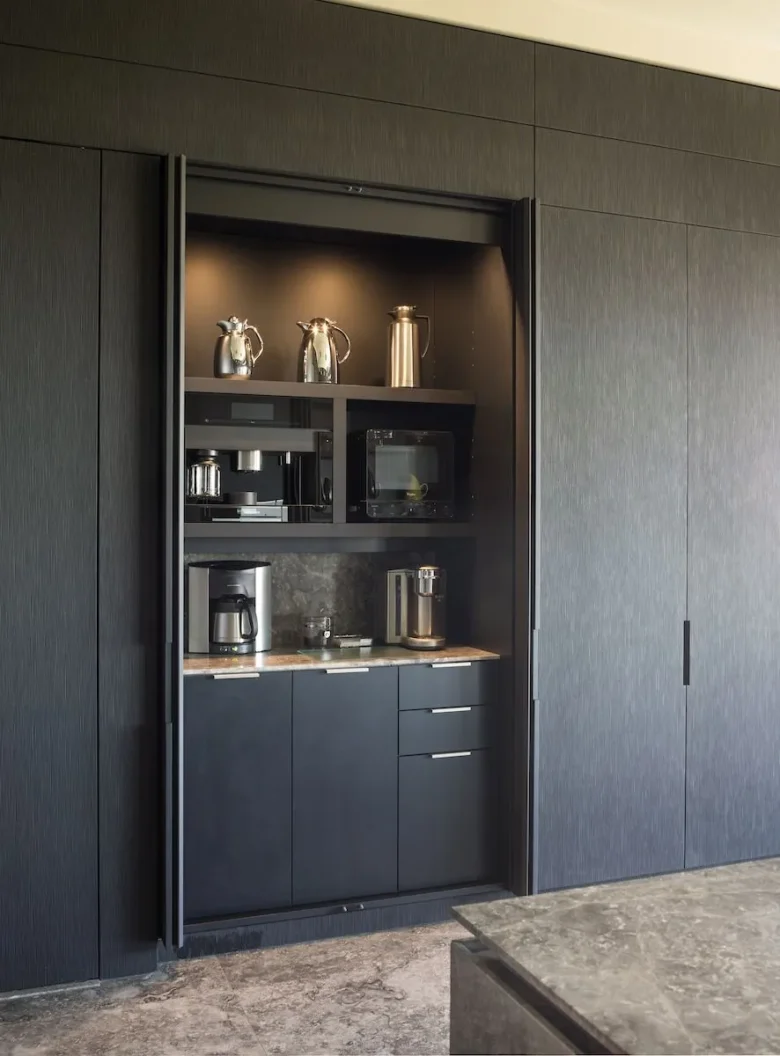
Pocket doors emerge as a highly refined architectural remedy to these common spatial pain points, transcending their historical role as simple room dividers to become integral components of high-end kitchen design. Instead of merely concealing a basic pantry, these innovative doors are now adeptly employed to hide larger elements such as integrated ovens, refrigeration units, or even entire hidden utility zones within a kitchen.
This strategic layout deployment transforms functional areas from exposed necessities into discreet, seamlessly integrated features. This promotes an aesthetic of uninterrupted surfaces and clean lines that is highly sought after in contemporary luxury interiors. The engineering ingenuity lies entirely in their ability to slide effortlessly into a wall cavity, disappearing completely and leaving no physical trace of their presence until needed.
   [ THE KITCHEN VISUAL EQUILIBRIUM ]

   TRADITIONAL EXPOSED LAYOUT:          ARCHITECTURAL POCKET DOOR:
   ┌──────────────────────────────┐    ┌──────────────────────────────┐
   │ [Toaster]  [Blender]  [Oven] │    │ █ Pocket Wall Cavity         │
   │ [Cords]    [Kettle]   [Clutter]│ ──> │ │                            │ │
   │ ❌ High Ambient Visual Noise │    │ │  [Clean, Flush Cabinetry] │ │
   └──────────────────────────────┘    └─┴────────────────────────────┴─┘
The Concept of Invisible Functionality
This “invisible functionality” is a definitive hallmark of truly luxurious compact kitchens, providing uninterrupted sightlines that contribute to an immediate perception of greater space and meticulous design. The seamless integration achieved through pocket doors directly addresses a strong desire for sophisticated, uncluttered environments, where the visual presence of essential kitchen tools can be effortlessly minimized.
Discussions across design communities frequently highlight how the complete absence of visible clutter, such as hard-to-hide small appliances, is paramount in creating a polished, adult living space. This affirms the immense value of unimpeded visual flow in enhancing a kitchen’s grandeur.
Redefining the Culinary Interaction
The immediate impact of incorporating pocket doors extends far beyond mere cosmetic concealment. It fundamentally redefines how an individual perceives and interacts with a small kitchen. By allowing entire banks of heavy appliances or messy pantry walls to vanish behind sleek, completely flush surfaces, pocket doors elevate what would otherwise be purely functional, utilitarian zones into deliberate architectural statements.
This clever concealment transforms the kitchen from a basic utilitarian space into a highly curated environment where structural order and elegance prevail. This reflects a conscious design choice that prioritizes aesthetic harmony alongside practical everyday utility. The result is a kitchen that feels not just organized, but intentionally engineered, with an inherent sense of spaciousness and a high-end, bespoke finish.
   [ THE SPATIAL FLOW INTERSECT ]

          TRADITIONAL SWING                     POCKET SLIDE
         ┌──────────────────┐                 ┌──────────────────┐
         │  ❌ Blocks Aisle │                 │  Clear Pathway   │
         │  ❌ Traps Corner │        VS       │  Barrier-Free    │
         │  ❌ Steps Back   │                 │  Low-Friction    │
         └─────────┬────────┘                 └────────┬─────────┘
                   ▼                                   ▼
         [ Spatial Friction ]                [ Architectural Luxury ]
Ultimately, the appeal of pocket doors in compact layouts resonates deeply with the desire for a grown-up and highly sophisticated ambiance, particularly among individuals seeking elegant, timeless interiors. This design approach contributes significantly to creating a polished aesthetic characterized by thoughtful refinement rather than passing youthful trends or excessive ornamentation.
By facilitating an environment entirely free from daily visual distractions, pocket doors enable residents to cultivate a living space that feels calm, composed, and effortlessly chic. This underscores that luxury in a compact setting is often defined by intelligent design solutions that prioritize both beautiful form and discreet function. The strategic use of pocket doors is not merely about hiding, but about revealing the true potential of elegant, efficient design.
How Can You Integrate Pocket Doors for Maximum Impact in Your Small Kitchen?
Integrating pocket doors judiciously can transform a compact kitchen into a highly functional and aesthetically pleasing space, moving beyond mere utility to a bold architectural statement. The strategic application of these doors allows for the concealment of specific high-traffic zones, fostering an environment of calm and visual order.
Material Execution and Minimalism
One primary consideration involves the selection of materials and hardware, which should align seamlessly with the kitchen’s overarching design. For instance, flush-mounted pocket doors that disappear completely into a wall cavity when open are ideal for achieving a minimalist aesthetic, making the kitchen appear visually larger and far less cluttered. This design approach is particularly effective when the door’s exterior finish perfectly matches adjacent cabinetry or wall treatments, rendering the hidden opening virtually invisible when closed.
   [ THE CONCEALMENT FOOTPRINT ]

   ┌────────────────────────────────────────────────────────┐
   │ [Hidden Laundry Stack] | [Coffee Station] | [Desk Nook] │
   └────────────────────────────────────────────────────────┘
   ▲ Vanishes behind bespoke millwork when the doors slide shut.
Pocket doors offer numerous concrete examples of what can be discreetly tucked away, effectively elevating the standard of “luxury infrastructure” in smaller homes. Beyond basic pantry concealment, these doors can skillfully hide:
- Entire Laundry Zones: Complete with stacked washer/dryer units and integrated detergent storage.
- Compact Home Office Nooks: Creating a temporary workspace that can be shut away at the end of the day.
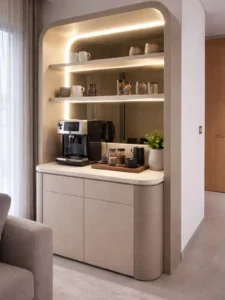
- Dedicated Beverage Stations: Featuring high-end coffee makers, grinder setups, and small under-counter refrigerators.
- Comprehensive Utility Walls: Safely containing cleaning supplies, brooms, and stick vacuum cleaners.
This unique capability to make utilitarian areas vanish from sight when not in use significantly contributes to the perception of a high-end, bespoke kitchen, directly solving the common pain point of visual clutter in small spaces. The deliberate choice to conceal such elements through sophisticated millwork—rather than traditional swinging doors or open shelving—underscores a deep commitment to design excellence and understated functionality.
Technical Performance: Kitchen Concealment Systems compared
To properly evaluate your kitchen infrastructure updates, analyze the structural and mechanical differences between pocket door solutions and traditional methods.
Spatial and Access Comparison Matrix
| System Feature | Pocket Door System | Traditional Swinging Door | Open Shelving / Exposed |
| Space Efficiency | Excellent Slides completely into wall cavity, freeing up floor space. | Poor Requires wide clearance for swing, obstructing pathways. | N/A Always physically exposed. |
| Visual Clutter Reduction | Superior Disappears completely, creating perfectly clean lines. | Moderate Can be closed, but the door panel itself is always visible. | Minimal Items are always visible, which can appear cluttered. |
| Accessibility / Aging-in-Place | High Barrier-free access with zero physical swing obstruction. | Moderate Requires physical maneuvering around the door swing. | High Items are exposed, but high shelves may be hard to reach. |
| Aesthetic Integration | Seamless Can perfectly match cabinetry or wall, creating a minimalist look. | Standard The selected door style heavily impacts the room’s aesthetic. | Dependent Relies entirely on constant organization and curation. |
| Installation Complexity | Moderate to High Requires wall cavity modification or specialized millwork. | Low to Moderate Standard rough framing using simple hardware. | Low Basic floating shelf installation. |
Practical Engineering & Low-Friction Living
Beyond their obvious aesthetic contributions, pocket doors provide significant, everyday practical benefits, particularly in improving circulation paths within compact kitchen layouts.
Traditional swinging doors can severely obstruct crucial walkways and reduce usable floor space, whereas a pocket door slides cleanly parallel to or inside a wall, freeing up areas that would otherwise be blocked.
This is especially pertinent in maintaining recommended kitchen aisle widths, such as the generally advised 42 inches for comfortable movement, allowing for easier accessibility and reducing the likelihood of physical bumps or accidents. Such improved circulation contributes directly to a safer and more efficient workflow, which is highly advantageous during complex meal preparation or when multiple individuals are simultaneously present in the kitchen.
   [ THE RECOMMENDED AISLE WIDTH ]

   ┌──────────────────┐               ┌──────────────────┐
   │  Cabinet Bank A  │ <─ 42 Inches ─> │  Cabinet Bank B  │
   └──────────────────┘               └──────────────────┘
   ▲ Pocket doors slide away to preserve this optimal clearance.
Supporting Longevity and Adaptive Design
Furthermore, the utility of pocket doors extends to supporting “aging-in-place” initiatives by facilitating much more accessible layouts and promoting low-friction daily living. As individuals age, unobstructed movement throughout the home becomes increasingly important; pocket doors completely eliminate the need to step back or awkwardy maneuver around a swinging door panel, simplifying access to essential areas like a primary pantry or a hidden appliance bank.
This intentional design choice contributes to an environment where daily household routines are far less physically demanding, allowing residents to safely maintain independence and comfort within their homes for longer periods. The ease with which these zones can be revealed and concealed supports an adaptive living space that can evolve with changing physical needs without necessitating a chaotic, complete structural renovation later in life.
Renter-Friendly & Custom Cabinetry Retrofits
For those seeking a premium “compact luxury” feel without undertaking a full-scale, wall-tearing renovation—especially renters or individuals managing limited budgets—strategically installed pocket doors through integrated millwork present an incredibly intelligent solution. Rather than executing permanent structural changes to the home’s walls, custom-built cabinetry can incorporate internal pocket door track mechanisms, creating high-end hidden compartments for microwaves, toasters, or even small dishwashers.
   [ THE APARTMENT CABINET RETROFIT ]

   ┌────────────────────────────────────────┐
   │ [Cabinet Frame]                        │
   │  ├── Slide Track (Top & Bottom)        │
   │  └── Door panel slides *inside* cabinet │
   └────────────────────────────────────────┘
   ▲ Zero wall modifications required. Renter-safe custom look.
This provides a bespoke, custom look that significantly reduces visual clutter and instantly enhances the perceived value and sophistication of the kitchen. Investing in quality millwork with integrated pocket doors can dramatically improve both the functionality and aesthetic appeal of a small kitchen without the extensive cost and disruption of a traditional remodel, offering a highly refined solution for modern urban living.
The Psychological Impact of Architectural Order
Ultimately, the integration of pocket doors can have a profound, positive impact on psychological well-being by reducing the visual stress and mental chaos that often accompanies cluttered environments. The ability to neatly tuck away small appliances, messy cleaning supplies, and other daily-use items instantly creates a deep sense of structural order and tranquility.
This aligns perfectly with the desire for elegant, calm, feminine interiors without a trace of clutter, fostering an atmosphere of serene control. By minimizing ambient visual noise, residents can experience a more peaceful domestic existence, which enhances overall comfort and contributes to a relaxing home environment. The emotional calm derived from these hidden zones successfully transforms a potentially stressful, cramped cooking space into a true sanctuary of organization and understated luxury.
Common Installation Pitfalls to Avoid
To ensure your pocket door system operates flawlessly for years, avoid these common design and installation mistakes:
- Buying Low-Grade Hardware Tracks: Cheaper pocket door tracks tend to sag or jump their rollers over time, causing the door to stick. Always invest in heavy-duty, commercial-grade ball-bearing tracks with smooth-gliding rollers.
- Neglecting Electrical Placement: If you are building a pocket door into an existing wall cavity, remember that you cannot easily run electrical wiring, light switches, or plumbing outlets through that exact same wall space. Plan your wiring paths carefully beforehand.
- Skipping the Soft-Close Mechanism: In a high-traffic kitchen, doors can easily get slammed open or shut. Omitting a soft-close/soft-open damper system risks damaging your custom millwork or causing unwanted rattling noises.
- Using Non-Moisture-Resistant Materials: Kitchens are high-humidity areas prone to steam from cooking and dishwashers. Using cheap, unsealed particle board for your door panels can lead to warping inside the wall cavity, causing the doors to jam.
Conclusion
Pocket doors are an invaluable architectural solution for elevating small kitchens, offering both aesthetic refinement and incredible practical benefits. By enabling true “invisible functionality,” they seamlessly transform cluttered cooking spaces into serene, luxurious environments that cater beautifully to modern living while actively enhancing your psychological well-being.
Summary Guidelines:
- Prioritize Flush Mounts: Opt for flush-mounted pocket doors that perfectly blend with surrounding cabinetry for a clean, minimalist look.
- Expand Your Concealment: Think beyond the pantry; use pocket systems to mask laundry stacks, coffee stations, and home office nooks.
- Invest in Custom Millwork: Use integrated cabinet tracks to achieve a custom luxury look without knocking down structural walls.
- Choose Durable Materials: Select moisture-resistant, easy-clean materials that coordinate with your existing kitchen finishes.
- Maximize Room Circulation: Embrace pocket slides to eliminate door swing bottlenecks, improve traffic flow, and create a calm home sanctuary.
Frequently Asked Questions
How do pocket doors enhance kitchen aesthetics?
Pocket doors greatly enhance kitchen aesthetics by concealing cluttered appliances, raw pantry shelving, or entire utility zones behind perfectly flush surfaces. This creates clean, unbroken sightlines, slashes visual noise, and contributes to a sophisticated, uncluttered architectural design that makes the kitchen appear significantly more spacious and curated.
Can pocket doors hide large kitchen appliances?
Yes, pocket doors are increasingly engineered to hide large kitchen appliances, including integrated ovens, refrigerators, stacked laundry units, and compact dishwashers. Their ability to slide completely into a wall cavity or cabinet recess allows for the seamless concealment of major functional elements without blocking the room’s traffic paths.
What exactly is ‘invisible functionality’ in kitchen design?
“Invisible functionality” refers to a sophisticated interior design principle where essential kitchen operations, tools, and appliances are completely concealed within the surrounding environment when not actively in use. This minimizes their everyday visual impact while retaining full utility, contributing to an uncluttered, minimalist, and deeply luxurious spatial feel.
Can pocket doors be installed in existing walls without a major renovation?
While they are ideal for new construction, you can retrofit pocket systems into existing homes. For true in-wall concealment, some modification to your wall studs is required. However, if you want to avoid a major wall overhaul, you can use a custom millwork solution where the pocket tracks are integrated directly into your new or existing kitchen cabinetry.
What regular maintenance is required for pocket door hardware?
Modern pocket door hardware is engineered to be highly durable and exceptionally low-maintenance. Occasional lubrication of the top rollers and tracks may be required over the years, and keeping the floor or wall track completely free of dust and debris will prevent operational jams. Investing in premium hardware is essential for achieving long-term, silent movement.
Are there any material limitations for pocket doors in a kitchen environment?
Pocket doors can be constructed from a wide array of materials, including solid wood, tempered glass, sleek metals, and lightweight composite panels. Because kitchens are high-moisture environments, it is best to select materials that are highly durable, moisture-resistant, and easy to clean. Matching the door panel’s material to your cabinetry ensures a cohesive, integrated look.