The daily struggle with kitchen chaos represents far more than a mere visual inconvenience; it is a significant, compounding drain on time, cognitive energy, and mental peace, particularly for individuals managing demanding schedules. Millions of households grapple with the exact same practical pain points: cavernous lower cabinets that swallow cookware whole, countertops perpetually buried under a cascading sea of small appliances and loose items, and a pervasive sense of being completely overwhelmed by an unmanageable culinary environment.
These issues are not simply minor aesthetic complaints. They act as physical bottlenecks that directly impede the critical, high-frequency daily routines that begin and end our days. From the frantic race of early morning breakfast preparation to the exhausting chore of evening meal cleanup, a dysfunctional kitchen layout actively creates friction.
Without a structured architectural framework, the kitchen—which should inherently function as a grounding hub of nourishment, creativity, and daily productivity—frequently transforms into a persistent source of domestic frustration, leaving occupants feeling demoralized, defeated, and short on time.
Why Do Busy Lives Demand Strategic Kitchen Zones for Organization?
Embracing a zone-based organization system is deeply rooted in the fundamental need for optimized operational efficiency. Minimizing physical friction in daily tasks, particularly those performed multiple times a day, reclaims valuable minutes and mitigates stress for those who are already heavily pressed for time.
Zone-based organization, therefore, becomes not just a method of surface tidiness, but a strategic imperative to support balanced daily living.
   [ THE KITCHEN WORKFLOW TRIANGLE ]

               ┌─────────────┐
               │   ZONE 1:   │
               │ Storage/Ref │
               └──────┬──────┘
                      ▲
                      │
        ┌─────────────┴─────────────┐
        ▼                           ▼
 ┌─────────────┐             ┌─────────────┐
 │   ZONE 2:   │             │   ZONE 3:   │
 │ Prep/Wash   │ ◄─────────► │ Cooking/Hot │
 └─────────────┘             └─────────────┘
The Psychological Toll of Kitchen Chaos
Disorganized environments exact a heavy psychological price, contributing significantly to a hidden accumulation of mental load and severe decision fatigue. The constant, ambient visual noise of cluttered surfaces paired with the repetitive cognitive effort required to locate an item or decide where to place it adds layers of unseen stress to an already taxing day.
Traditional home organization methods frequently fail because they prioritize external, picture-perfect aesthetics over genuine, long-term functional utility. They mistakenly design for how a room looks on camera rather than how human beings naturally behave within it.
For instance, a beautifully arranged pantry filled with uniform, hard-to-open jars that are organized alphabetically—rather than by cooking workflow—will still lead to frustrating, frantic searches for essential seasonings mid-meal. This stark disconnect means that while a kitchen space may appear beautifully styled in a photograph, it fails to support an intuitive, low-effort experience, thereby perpetuating the mental burden on the household.
The Shift to Behavior-Based Design
The transition from purely aesthetic-focused organization to behavior-based, highly practical spatial engineering represents a fundamental paradigm shift in home management. Instead of forcing human behavior to bend to the will of a rigid layout, the emphasis is placed on creating systems that align seamlessly with real-world usage patterns. This approach lowers resistance and supports natural, fluid movements.
An organization system is only truly effective if it is sustainable, low-maintenance, and easy to interface with during moments of high stress or exhaustion. Grassroots digital communities frequently emphasize that modern kitchen management must rely entirely on “frequency of use” frameworks and “logical proximity zones” to survive daily life.
This practical orientation moves completely past aspirational, delicate tidiness to construct durable environments that actively enhance daily function while reducing physical effort.
   [ THE FREQUENCY OF USE PYRAMID ]

                 /\
                /  \     TIER 1: Rarely Used (High Cabinets)
               /────\
              /      \   TIER 2: Weekly Use (Mid Shelves)
             /────────\
            /          \ TIER 3: Daily Essentials (Counter/Prime)
           └────────────┘
A zone-based approach directly combats the universal complaints voiced by frustrated homeowners:
- The Memory Gap: Forgetting where specialized tools or pantry items are stored.
- Financial Waste: Making accidental duplicate purchases of ingredients already hidden in dark corners.
- System Collapse: Watching a beautifully organized cabinet fall back into total disarray within forty-eight hours.
By assigning rigid, unyielding physical “homes” for distinct categories of items—such as a self-contained coffee station for morning brewing essentials or a specialized baking zone that houses all flour, sugar, and mixing bowls together—the system eliminates daily guesswork and minimizes redundant searching. This systematic placement establishes clear physical boundaries and logical placements, saving time, preventing the accumulation of unnecessary duplicate grocery items, reducing household food waste, and saving money.
Ultimately, the goal of strategic kitchen zoning is to establish a functional workflow that drastically reduces the physical steps taken across the room, cultivating a calm, deeply restorative culinary experience.
How Can Specific Kitchen Zones Solve Deep Cabinet Dilemmas and Counter Clutter?
Building upon the necessity of strategic kitchen zoning, addressing the twin issues of deep cabinet inefficiency and persistent counter clutter requires a practical, hands-on architectural strategy that prioritizes accessibility. Deep cabinets, while generous in raw volume, are notoriously problematic due to their dark, cavernous nature. They easily become organizational black holes.
However, these spaces can be transformed into highly efficient storage engines by implementing dedicated zones paired with the right mechanical components.
Conquering the Cavernous Pots and Pans Zone
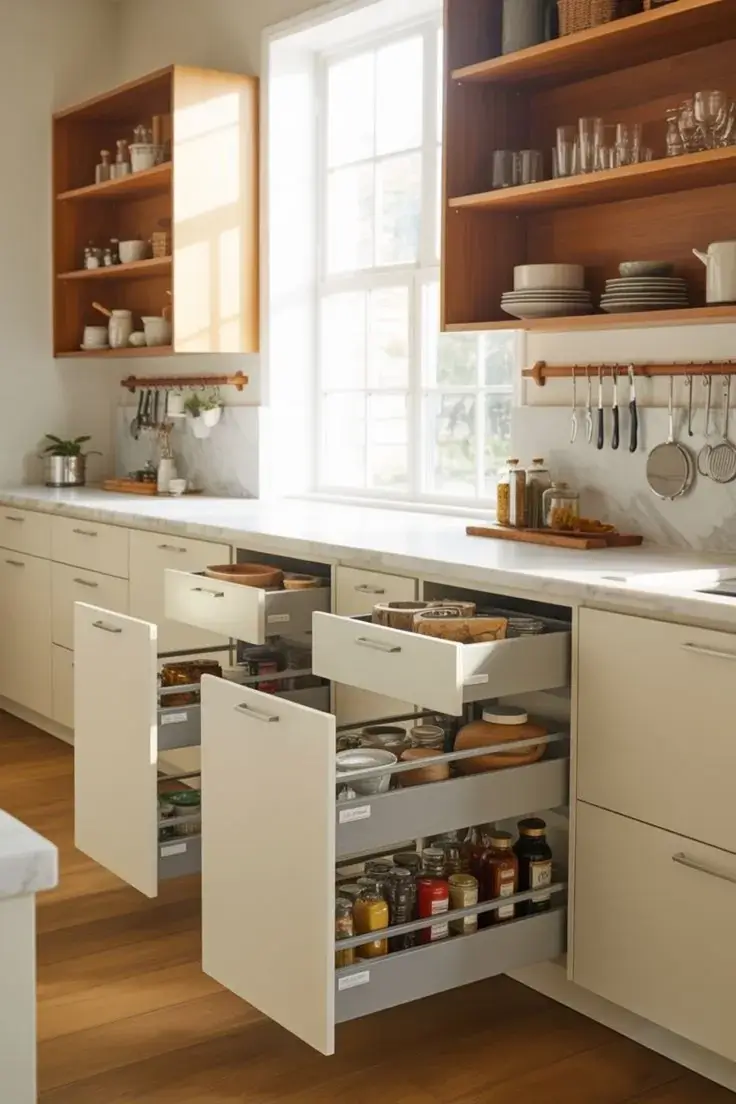
Creating a high-functioning “Pots and Pans Zone” within a deep lower cabinet involves a complete rejection of stack-and-pray storage. Instead of piling heavy cookware on top of each other—requiring you to lift five items just to reach a single skillet—you must employ vertical lid organizers and heavy-duty pull-out shelves or aftermarket rollout drawers.
   [ DEEP CABINET REMODEL: LOWER ZONE ]

   OLD SYSTEM:                         NEW SYSTEM:
   ┌──────────────────────────────┐    ┌──────────────────────────────┐
   │ [Stacked Pots]  [Hidden Lids]│    │ █ Pull-Out Drawer Glides     │
   │ [Heavy Pan]     [Dark Abyss] │    │ │  [Pot] [Pan] [Lid Rack]  │ │
   └──────────────────────────────┘    └─┴────────────────────────────┴─┘
This simple engineering update ensures that every single item is fully visible and instantly retrievable with a smooth, single-handed pull motion, completely eliminating the need to reach blindly into a dark cabinet. This systematic placement significantly reduces the physical effort required during high-stress cooking tasks, streamlining meal preparation and clean-up simultaneously.
Engineering the Ultimate Baking Supplies Zone
Similarly, a “Baking Supplies Zone” located within a deep pantry or a tall upper cabinet benefits immensely from modular, clear, stackable containers and tiered structural risers. Bulk flour, white sugar, brown sugar, and baking powder should be decanted into uniform, airtight canisters labeled with clean, high-contrast text. This completely eliminates visual clutter and makes inventory tracking straightforward.
Furthermore, integrating specialized pull-out organizers or heavy-duty revolving turntables (Lazy Susans) for small spice jars, food colorings, and extracts prevents older items from getting lost at the back of the shelf. This methodical organization contrasts sharply with the typical disorganized state where ingredients are haphazardly stacked, leading to wasted time searching for components and financial loss due to food spoilage.
Designing Focused Workstations to Control Counter Chaos
To permanently combat countertop chaos, you must establish highly focused, self-contained workstations. The most vital example of this is a dedicated “Coffee and Beverage Station.”
This zone groups every single item required to make a morning drink—the espresso machine or coffee maker, mugs, pods, filters, stirrers, and various sweeteners—into a highly compact, defined footprint.
   [ COUNTERTOP WORKSTATION DESIGN ]

   ┌────────────────────────────────────────────────────────┐
   │ [Coffee Machine]  [Pod Box]  [Mug Tree]  <─── Tray Rim │
   └────────────────────────────────────────────────────────┘
   ▲ Surface Bound: Tray contains spills and defines the zone footprint.
By containing these regularly used items within a physical boundary, such as a low-profile decorative tray or a dedicated shelf unit mounted directly above the counter, you curtail the natural tendency of coffee accessories to slowly spread across your kitchen surfaces. The strategic addition of a small caddy for minor items like spoons or sugar packets further prevents clutter from scattering, successfully maintaining clear visual order even in high-traffic zones.
Accelerating the Morning Routine: The Lunch Prep Zone
Another critical zone for daily operational efficiency is a designated “Lunch Prep Zone,” engineered specifically to reduce stress during the morning rush by consolidating everything needed for packed meals. This zone typically encompasses a single deep drawer or an easily accessible pantry shelf dedicated exclusively to lunch boxes, reusable sandwich bags, water bottles, and non-perishable snack items like granola bars or fruit pouches.
Organizing plastic or glass containers in neatly nested sets paired with adjustable vertical dividers ensures immediate access, eliminating the frantic morning search for matching lids. This methodical grouping significantly reduces preparation times because all components are readily available in one square foot of space. It also promotes healthier eating habits by making home-packed meals a quick and convenient option, while preventing the need to clutter countertops with multiple open ingredient boxes during assembly.
The Foundational Step: Ruthless Decluttering Before Spatial Design
The persistent challenge of having too much stuff and too little space can only be mitigated by prioritizing ruthless decluttering as an absolute, non-negotiable foundational step before any organizing containers are purchased. It is imperative to critically assess every single culinary item for its genuine utility and actual frequency of use. You must discard broken tools and donate duplicate gadgets or items that are rarely deployed.
Once your kitchen footprint has been purged of dead weight, you can implement consistent and transparent storage solutions, such as matching glass containers or stackable clear acrylic bins. This uniformity dramatically enhances visibility and promotes orderly arrangements, which is incredibly effective for maintaining long-term food pantries. This visual consistency fosters an environment where every item has an assigned, instantly identifiable home, significantly reducing the likelihood of items accumulating on open counters due to a lack of proper storage space.
Advanced Structural Solutions for Kitchen Organization
To execute a flawless zone layout, use the following structural breakdown of problem areas and their engineered mechanical solutions.
Deep Cabinet Structural Engineering
| Problem Area | Recommended Solution | Specific Mechanical Tools |
| Deep Lower Cabinet (Pots, pans, and heavy skillets) | Establish a dedicated, high-access Pots and Pans Zone utilizing vertical storage theories. | Aftermarket pull-out metal shelves, vertical wire lid organizers, adjustable heavy pan dividers. |
| Deep Pantry / High Upper Cabinet (Baking ingredients, grains, and spices) | Construct a high-density Baking Supplies Zone utilizing clear modular stacking systems. | Airtight uniform canisters, tiered acrylic step risers, heavy-duty turntables, clear stackable bins. |
| Cavernous Corner Cabinets (The unreachable blind corner) | Convert the dead space into an automated Ergonomic Storage Hub. | Mechanical swing-out “blind corner” organizers, heavy-duty interlocking kidney-shaped Lazy Susans. |
| Excessive Volumetric Inventory (Too much product, limited deep shelving) | Perform a comprehensive purge, followed by the deployment of consistent, fully transparent storage. | Matching glass storage jars, clear stackable bins with integrated handles for fast pulling. |
Countertop and Daily Prep Workflow Optimization
| Problem Area | Recommended Solution | Specific Mechanical Tools |
| Sprawling Countertop Clutter (Coffee makers, beans, filters, and syrups) | Engineer a self-contained Coffee Station Workstation that strictly bounds peripheral items. | Structured low-profile trays, dedicated wall-mounted shelving, specialized sugar/spoon caddies. |
| Slow, Inefficient Meal Prep (Frantic morning lunch packing, scattered lids) | Implement a high-speed Lunch Prep Zone to streamline early morning packing routines. | Deep drawer dividers, nested container storage racks, clear bins for grab-and-go non-perishables. |
| Small, Cramped, or Awkward Kitchens (Zero built-in storage drawers, renter limits) | Maximize underutilized Vertical and Secondary Facets without structural alterations. | Over-the-door storage racks, ultra-narrow rolling utility carts, magnetic wall-mounted tool strips. |
Designing ‘Family-Proof’ Systems for Multi-User Households
Maintaining rigorous organization in a household with multiple users requires the intentional creation of “family-proof” systems designed to simplify daily reset routines and minimize the ongoing “maintenance cost” of organization. Clear, high-contrast labeling, easily accessible storage heights, and designated, obvious homes for items are paramount to success.
   [ THE KID-FRIENDLY SNACK ZONE ]

   =============================================
   HIGH SHELVES: Adult Cooking Ingredients (Oils, Spices)
   ─────────────────────────────────────────────
   LOW OPEN BIN: [ SNACKS ]  <─── Clear Label, No Lids
   =============================================
   ▲ Accessible height allows self-service and effortless returns.
For instance, using open, lidless bins for frequently accessed snacks in a dedicated, low-elevation kid-friendly zone allows children to retrieve items independently and return them with ease. This drastically reduces reliance on constant adult supervision and prevents kids from tearing apart a high pantry shelf in search of food.
Furthermore, incorporating smart solutions for small or awkward kitchen spaces—such as hanging interior door organizers to hold aluminum foils and plastic wraps, or narrow rolling carts to handle pantry overflow—offers flexible, renter-friendly options that maximize vertical and underutilized areas without requiring permanent structural changes or massive financial investments. This ensures that the organization system remains completely sustainable and universally adopted by every member of the home.
Common Tactical Mistakes to Avoid in Kitchen Zoning
To prevent your newly zoned kitchen from reverting to its previous chaotic state, carefully avoid these common behavioral and design errors:
- Prioritizing Visual Matching Over Accessibility: Placing frequently used everyday items inside beautiful, opaque ceramic jars with tight, hard-to-open silicone seals creates a barrier to use. If an item is used daily, keep it visible and accessible in a single step.
- Neglecting the Dirty Dish Pipeline: Designing a pristine prep area but forgetting to leave an open, functional zone next to the sink for dirty pots means your counters will inevitably get blocked during cooking. Always account for the lifecycle of dirty cookware.
- Buying Beautiful Organizing Bins First: Running to the store to buy trendy baskets before decluttering your inventory and measuring cabinet depths always results in mismatched, underutilized containers that waste space. Purge first, measure second, buy last.
- Storing Heavy Items in High Cabinets: Placing heavy stand mixers, cast-iron Dutch ovens, or large ceramic serving platters on top shelves makes them dangerous and exhausting to retrieve. Store heavy items low, ideally in pull-out bottom drawers.
Conclusion
Implementing a highly strategic, zone-based organizational system in the kitchen offers a permanent, structural solution to deep cabinet inefficiencies and persistent counter clutter. By prioritizing real-world function, aligning layouts with actual human behavior, and focusing heavily on specific, bounded activity workstations, busy individuals can successfully transform their kitchens from overwhelming stress-points into efficient hubs of domestic calm.
With the right spatial design framework in place, you can drastically reduce your daily mental load, streamline your workflow, and reclaim your time, ensuring that long-term kitchen tidiness becomes an effortless, sustainable reality.
Frequently Asked Questions
What exactly is ‘zone-based organization’ in a kitchen context?
Zone-based organization is a strategic spatial layout method where a kitchen is intentionally mapped and divided into distinct, self-contained areas or workstations, each dedicated to a specific type of daily activity or set of related items. Instead of storing items by physical object type alone, they are stored precisely where they are used. Common examples include a self-contained coffee station, a baking prep zone, a primary cooking zone centered around the stove, and a daily lunch prep drawer.
How does a disorganized kitchen actively increase a person’s ‘mental load’?
Kitchen disorganization adds to your daily mental load by forcing your brain to exert constant, micro-level cognitive effort every time you enter the room. Visual clutter triggers subconscious stress signals, while a lack of structure forces you to constantly search for hidden tools, make annoying decisions about where to place items, and navigate physical obstacles. Over the course of a busy day, this avoidable expenditure of mental energy accumulates, leading to decision fatigue and feelings of overwhelm.
Why is behavior-based organization more sustainable than aesthetic-focused systems?
Behavior-based organization prioritizes daily functionality, speed, and ease of use over mere surface appearance, tailoring the physical system to how human beings naturally move and act in a space. For busy individuals, this means creating low-friction layouts that drastically reduce physical steps, eliminate multi-layered storage boxes, and make putting things away completely effortless. Aesthetic-focused systems look great in photos but fall apart during a busy week because they require too much maintenance time and energy.
What is the absolute first step I should take to organize my messy kitchen?
The initial, non-negotiable step is a comprehensive and thorough decluttering of your entire inventory. Before you buy a single organizer or label a shelf, you must physically evaluate every item for its condition, utility, and actual frequency of use. Discard expired pantry items, throw away broken kitchen tools, and donate duplicate gadgets. Reducing the overall volume of items makes organizing the remaining essentials infinitely easier and far more effective.
How can I get my spouse and children to actually maintain a kitchen zone system?
To build a family-proof system, you must lower the physical and cognitive effort required to put things away. Use clear, high-contrast text labels on drawers and shelves so there is zero confusion about where items belong. Use open, lidless bins for kid-accessible snacks and daily items so they can grab food and return containers in a single motion. When a system is intuitive and requires only one step to navigate, the maintenance cost drops, and compliance from multiple users naturally increases.
Are there effective kitchen organization solutions that work well for renters on a tight budget?
Absolutely. If you cannot install permanent custom pull-out drawers, focus heavily on maximizing your underutilized vertical space using temporary, non-destructive tools. Excellent budget solutions include hanging over-the-door organizers for spices and wraps, deploying ultra-narrow rolling storage carts that slide into empty gaps between appliances, and using heavy-duty magnetic strips on the wall to hold knives and metal utensils without sacrificing precious counter space.