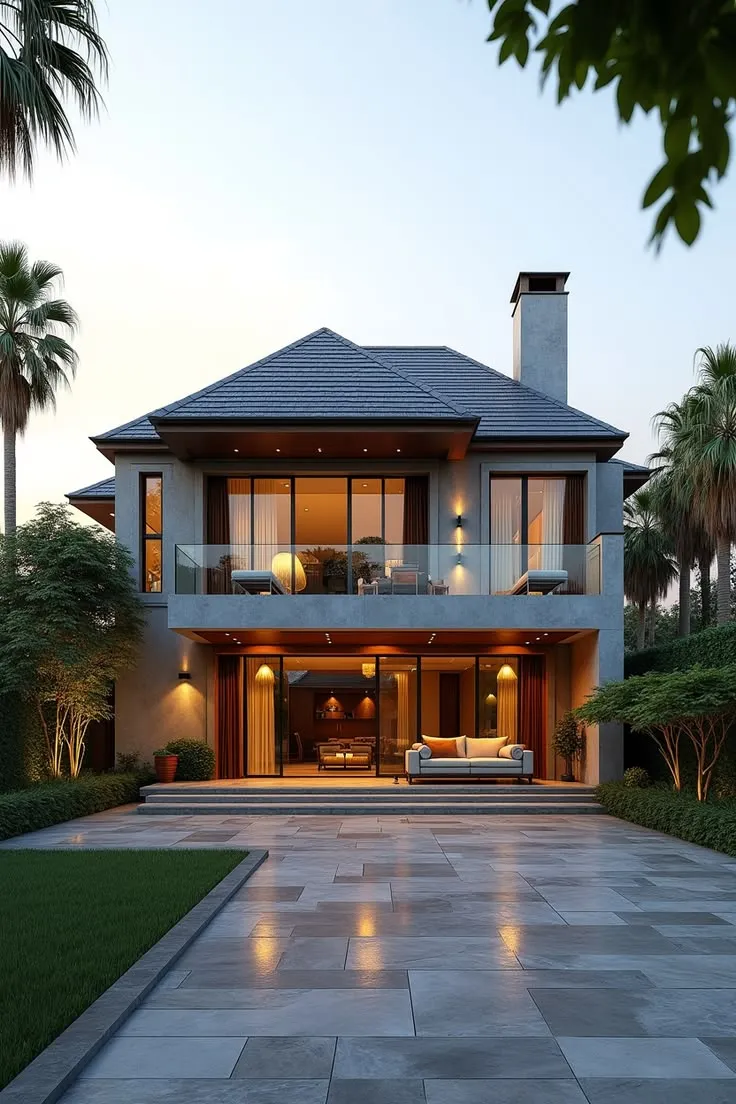
There is a moment in the renovation of a truly elegant home when everything shifts — when the project moves from cosmetic improvement to genuine architectural transformation. That moment almost always involves the roof. Because while a fresh coat of paint changes how a room feels and new flooring changes how it sounds underfoot, a roof renovation changes how a home is seen from the street, how it sits in relation to the sky, and how light and space move through every room beneath it. The roof is not just a shelter. It is the defining silhouette of your home.
For the woman who approaches her home with both practicality and genuine aesthetic ambition — who wants a residence that functions beautifully and looks like a considered, intentional piece of architecture — the roof renovation is the project that delivers more impact per investment than almost anything else. It adds value. It changes the character of the entire property. It creates new interior possibilities — from soaring cathedral ceilings to light-flooded rooms with glass lanterns — that were simply not possible before. And when done with the right materials and the right design approach, a renovated roof gives a home the quality of permanence and refinement that is the hallmark of truly elegant architecture.
This guide is for the woman who is ready to think about her home at the level of structure as well as style — who wants to understand not just what materials to choose but why certain roof forms feel elegant and others feel merely functional, how light can be introduced through the roof to transform the interior, and how to brief an architect and builder so that the result reflects her vision rather than a generic contractor default. From the timeless beauty of natural slate to the sculptural drama of a contemporary mono-pitch, from glass roof lanterns to exposed timber cathedral ceilings — this is your complete guide to roof renovation done with elegance and intention.
What Is Elegant Structural Renovation? Defining the Approach
Elegant structural renovation is a philosophy as much as a methodology. It begins with the premise that structural changes to a home — changes to its bones, its silhouette, its relationship with light and space — should be approached with the same level of aesthetic consideration as any interior design decision. The structural is not separate from the beautiful. The structural IS the beautiful, when it is done with intelligence and care.
The opposite of elegant structural renovation is what might be called purely functional renovation: a roof is replaced because it is leaking, with the cheapest available materials that meet building codes, with no consideration of how the new roof profile, material, or color affects the character of the home. This approach solves the immediate problem but misses the transformation opportunity entirely.
Elegant structural renovation asks a different set of questions at the outset: What could this roof do for this home beyond protecting it from rain? What form gives this building the most beautiful silhouette? What material weathers most gracefully over decades? What structural interventions — a dormer window, a roof lantern, an extended eave — would add both beauty and function? How can this project be the foundation for the home this property was always capable of being?
The three principles of elegant structural renovation:
- Permanence over economy — choose materials and forms that improve with age rather than degrade. The premium paid for natural slate over composite tile is repaid in beauty and longevity over decades.
- Integration over addition — every structural element should feel like it belongs to the building’s logic, not like it was added as an afterthought. A well-designed dormer looks like it grew from the roof; a poorly designed one looks like a box placed on top of it.
- Light as a structural consideration — the most elegant roof renovations always consider how light enters the building from above, treating skylights, roof lanterns, and glass gables as integral architectural features rather than optional extras.
Why the Roof Is the Most Impactful Structural Element to Renovate
Of all the structural elements of a home — foundations, walls, floors, roof — the roof is the one that has the greatest visible impact on the character of the building and the greatest potential for transformative improvement through thoughtful renovation.
The silhouette defines the architecture: The roofline is the element that determines whether a home reads as elegant or generic from the street. A well-proportioned pitched roof with quality materials, clean guttering lines, and considered detailing makes even a modest home look considered and refined. A flat roof with the right parapet detailing and material choices can look strikingly modern and sophisticated. The roof form IS the architectural statement.
The roof determines interior spatial possibility: A low, flat ceiling creates a fundamentally different spatial experience from a vaulted ceiling with exposed timber beams. A roof renovation that introduces dormers creates entirely new habitable space. A roof lantern over a kitchen extension transforms the quality of daily life in that room. The structural decisions made at roof level have direct, significant consequences for how every room beneath it feels and functions.
Roof quality signals overall home quality: Real estate professionals and experienced buyers assess the quality of a home’s construction and maintenance through the roof before almost any other element. A beautiful, well-maintained roof in quality materials communicates that the entire property has been cared for and invested in. A poor or visually undistinguished roof creates a negative impression that requires significant interior quality to overcome.
The ROI is exceptional: A quality roof renovation — particularly one that adds habitable space through dormers or a loft conversion, or that upgrades materials to natural slate or standing seam metal — consistently delivers strong returns on investment at resale, in addition to the daily quality-of-life benefits it provides while you live in the home.
Roof Renovation Styles: Finding the Aesthetic That Defines Your Home
Before choosing a single material or contacting a single contractor, the most important decision to make is the form of the roof — its geometry, its relationship to the walls, its profile against the sky. Here are the five most elegant roof styles available for residential renovation, with the design principles that make each one work:
The Flat Roof Transformation: Clean Lines and Modern Elegance
The flat roof has undergone a remarkable transformation in the perception of architectural quality over the past two decades. Once associated with budget construction and maintenance problems, the contemporary flat roof — executed with modern materials, proper drainage engineering, and considered detailing — is now one of the most sought-after signatures of high-end modern architecture.
The key to a flat roof that reads as elegant rather than utilitarian is in three elements: the parapet detailing, the material choice, and the integration of roof-level features. A flat roof with a well-proportioned parapet (the low wall that runs around the perimeter of the roof), finished in the same render or cladding as the building’s exterior walls, creates a clean, unified architectural form that is quietly extraordinary. Add a glass parapet detail, a single roof lantern bringing light into the space below, and a roof deck finished in premium composite decking or natural stone pavers, and the flat roof becomes one of the most sophisticated spaces the property has to offer.
- Best for: Contemporary and modernist homes, urban townhouses, single-storey extensions
- Premium material: EPDM rubber membrane with standing seam metal parapet cap; alternatively, inverted warm roof with premium stone ballast
- Elegant detail to add: A full-width roof lantern or a series of frameless glass skylights flush with the roof surface — these introduce extraordinary quality of natural light to the rooms below
- Common mistake to avoid: Neglecting proper drainage design — a flat roof that retains standing water creates maintenance problems regardless of membrane quality
The Pitched Roof with Dormer Windows: Classic Refined Beauty
The pitched roof with dormer windows is the most universally applicable elegant roof form — appropriate for homes ranging from Victorian terraces to new-build country houses, and capable of delivering both additional habitable space and extraordinary architectural character when designed with intelligence.
The dormer window is the element that most transforms the character of a pitched roof renovation. A well-designed dormer — proportioned correctly in relation to the roof, detailed with quality materials, and positioned with architectural logic — adds a quality of considered elegance that makes a home look far more valuable and distinguished than its square footage would suggest. The worst dormers are boxy, oversized, and positioned without regard for the rhythm of the roof. The best dormers look as though they grew from the building’s original design intent.
- Best dormer style for elegance: The eyebrow dormer (a low, curved dormer that flows organically from the roof slope) and the shed dormer (a single-plane dormer that spans the full width of the roof section) — both of which have a quality of architectural integration that box dormers almost never achieve
- Best for: Victorian, Edwardian, Georgian, and traditional new-build properties
- Premium material combination: Natural slate roof with timber-framed dormers and zinc or lead flashing details
- Elegant interior result: A bedroom or home office space with angled ceilings, dormer window seat, and the intimate quality of living close to the roofline
| Design Intelligence The most common error in dormer window design is making them too large relative to the roof. A dormer should feel like a feature of the roof, not a floor added on top of it. The general rule is that dormers should occupy no more than one-third of the roof width and should maintain a significant expanse of uninterrupted roof slope on either side. When in doubt, make the dormer smaller — elegance almost always favors restraint. |
The Mansard Roof: The Parisian Standard of Architectural Elegance
The Mansard roof — named after the 17th-century French architect François Mansart — is one of the most beautiful and most distinctively elegant roof forms in European domestic architecture. Characterized by a double pitch on all four sides (a steep lower slope and a shallow upper slope), the Mansard roof creates a full additional story of habitable space within the roof volume while giving the building a silhouette of extraordinary architectural refinement.
The Mansard is the roof form that defines Haussmann’s Paris, the elegant Nash terraces of Regent’s Park in London, and the great residential architecture of the Belle Époque throughout Europe. On a contemporary home, a well-designed Mansard addition transforms an ordinary two-story building into something that reads as a genuine piece of architecture — with the kind of streetscape presence that makes passers-by slow down to look.
- Best for: Georgian, Victorian, and Edwardian properties in urban settings; period row houses and terraces where additional height is desired
- Premium material: Natural Welsh or Spanish slate on the steep lower slope; zinc or lead on the shallow upper slope — this combination is the definitive Mansard material palette
- Key design detail: The dormers within the steep lower slope of the Mansard should be tall, elegant, and generously proportioned — these are the windows of the habitable rooms created within the roof volume
- Planning consideration: Mansard additions in conservation areas often require detailed planning applications and may need to match specific materials and proportions to receive approval
The Butterfly and Mono-Pitch Roof: Contemporary Sculptural Drama
For contemporary homes or bold modern renovations, the butterfly roof (two slopes that pitch inward to a central valley, creating a V-profile) and the mono-pitch roof (a single slope, like a shed roof extended to residential scale) offer the most striking and architecturally distinctive silhouettes available. Both have been used by some of the world’s leading contemporary architects to create homes of extraordinary sculptural beauty.
The butterfly roof, when executed with quality materials and integrated drainage design, creates a home with a profile unlike any other on the street — immediately identifiable as a piece of considered contemporary architecture. The central valley allows for large clerestory windows that flood the interior with diffused northern light, and the upswept eaves create a dramatic sense of enclosure and shelter. The mono-pitch roof is simpler and more applicable to extensions and renovation additions — its single, clean slope against the sky is one of the most powerful contemporary architectural gestures available to the home renovator.
- Best for: Contemporary new builds, bold modernist renovation additions, single-storey extensions
- Premium material: Standing seam zinc or Corten weathering steel for the butterfly; standing seam zinc or aluminium for the mono-pitch
- Key design detail: The drainage system is both a structural and visual element in a butterfly roof — a well-designed central gutter in copper or zinc becomes an architectural feature
- Interior benefit: Clerestory windows at the high points of both butterfly and mono-pitch roofs introduce exceptional quality of diffused light
The Exposed Beam Cathedral Ceiling: Interior Roof as Design Feature
The cathedral ceiling — a vaulted interior ceiling that follows the slope of the roof rafters, often with exposed structural timber beams — is one of the most transformative interior changes available to the home renovator. It takes a standard bedroom, living room, or kitchen-diner and turns it into a room of genuine spatial drama and warmth, combining the intimacy of sloped ceilings with the grandeur of revealed structure.
The exposed beam cathedral ceiling works in any architectural style. In a contemporary home, steel or laminated timber beams create a sophisticated industrial-elegant aesthetic. In a traditional country home, rough-sawn oak beams give the room a sense of age and craft. In a converted barn or agricultural building, the original timber structure revealed in full becomes the defining feature of the entire interior — a piece of living architectural history that no decorator’s budget could replicate.
- Best for: Bedrooms and living spaces in properties with sufficient roof height; barn conversions; single-storey extensions with pitched roofs
- Premium material: Douglas fir, oak, or engineered timber beams with clean machine-cut or hand-finished profiles depending on the aesthetic
- Key structural consideration: The introduction of a cathedral ceiling removes the structural tie between opposing rafters — engineering input is required to ensure the roof structure remains stable without these ties
- Lighting integration: Recessed spotlights mounted between the beams, or pendant lights suspended from the ridge beam, are the most elegant lighting solutions for cathedral ceilings
Premium Roofing Materials: What Distinguishes an Elegant Finish
The material you choose for your roof makes a more significant and more permanent statement about the character of your home than almost any other single decision in the renovation process. Here are the four premium material families — what makes each one elegant, how each one ages, and where each one is most appropriate:
Natural Slate: The Gold Standard of Refined Roofing
Natural slate is the material against which all other roofing materials are measured. It is the choice of the finest residential architecture across centuries and continents — the covering of French chateaux, Scottish manor houses, the elegant row houses of Boston and Philadelphia, and the grand civic buildings of cities around the world. Its qualities are extraordinary: it is naturally waterproof, fire-resistant, virtually immune to thermal expansion, and under normal conditions lasts 75 to 150 years. A slate roof laid in the Victorian era is still performing perfectly on thousands of homes today.
The visual quality of natural slate is the result of its extraordinary variation — no two slates are identical in color, texture, or thickness, and this variation creates a roof surface of remarkable depth and character. In morning light, a slate roof can appear almost blue-black. In overcast winter light, it reads as a deep charcoal. At golden hour, it glows with a warmth that no synthetic material has ever successfully replicated.
| Origin | Color Character | Best Application | Approximate Cost |
| Welsh Heather Vein | Blue-grey with subtle purple tones | Traditional British architecture; Gothic and Victorian styles | £60–85 per m² |
| Spanish Roofing Slate | Blue-black; consistent and smooth | Contemporary and traditional; widely available and excellent quality | £45–70 per m² |
| Vermont Green Slate | Distinctive green-grey; unique character | Country houses; shingle-style architecture; feature roofs | £80–120 per m² |
| Portuguese Silver Grey | Silver with warm grey undertones | Mediterranean and contemporary contexts; very elegant aging | £55–80 per m² |
| Reclaimed Victorian Slate | Varied blue-grey; already weathered beautifully | Period renovation; the most authentic choice for original slate properties | £65–95 per m² |
Standing Seam Metal: The Sophisticated Modern Choice
Standing seam metal roofing — panels of metal joined by raised seams that run vertically up the roof slope — is the material that defines the aesthetic of contemporary high-end residential architecture. It is used on everything from Nordic summer houses to cutting-edge urban homes, from mountain chalets in Switzerland to beachside pavilions in Australia. Its appeal is both aesthetic and practical: the long, clean vertical lines of the standing seams give any roof a quality of graphic precision and modernity that no other material achieves, while the interlocked seam joints create a completely weathertight surface without reliance on exposed fixings or sealants.
- Zinc: The most architecturally sophisticated standing seam material. Zinc weathers from its initial bright silver to a beautiful blue-grey patina (pre-weathered zinc is available if the patina effect is desired from day one). Expected lifespan: 80–100 years.
- Aluminium: Lighter than zinc and more affordable; excellent corrosion resistance; available in a wide range of factory-applied colors including matte black (currently among the most sought-after roofing finishes). Expected lifespan: 40–70 years.
- Copper: The most luxurious and most expensive standing seam option. Copper weathers from bright gold to the magnificent verdigris green patina that defines historic roofs from London’s West End to the Copenhagen waterfront. Expected lifespan: 100+ years.
- Corten / Weathering Steel: Develops a rich, warm rust-brown patina that stabilizes and protects the steel beneath. Extraordinary visual character for contemporary rural and country properties. Expected lifespan: 40–80 years with proper detailing.
Clay and Terracotta Tile: Timeless Mediterranean Warmth
Clay and terracotta roofing tiles carry centuries of Mediterranean architectural tradition — the warm, earthy tones of Italian pantiles, the elegant interlocking Roman tiles of Provence, the richly varied handmade tiles of Catalonia and Andalusia. For homes with a Mediterranean character, or for any property where warmth and a quality of organic beauty are priorities, clay tile is the material of choice.
The key distinction between elegant clay tile and generic concrete tile (which mimics clay’s appearance but achieves none of its character) is the variation in color, texture, and form that only fired natural clay provides. A clay tile roof catches light differently on its curved upper surface versus its shadowed underside, creating a constantly shifting surface of warm color that is alive in a way that no flat material can match. Over decades, clay tiles weather and develop moss and lichen in ways that only add to their beauty — they become, genuinely, more beautiful with age.
- Best material for elegance: Handmade or hand-finished clay pantiles in warm terracotta or aged grey-brown; or traditional Roman/barrel tiles in warm ochre
- Premium option: Original reclaimed French or Italian clay tiles — these have the patina of decades and look extraordinary on both traditional and contemporary buildings
- Color considerations: The warmest options (terracotta red, golden ochre) suit south and west-facing elevations; cooler grey-brown clay suits north-facing aspects and more contemporary contexts
- Maintenance reality: Clay tiles require periodic inspection and occasional individual tile replacement; a properly maintained clay roof has a design life of 50–100 years
Zinc and Copper: The Luxury Patina Option
Beyond their use in standing seam applications, both zinc and copper deserve special attention as materials for architectural features within the roof: dormers, bay roof coverings, mansard slopes, turrets, and the various small-scale elements that give a roof its character and detail. These materials bring a quality of craft and permanence to architectural details that is immediately recognizable as a mark of serious investment and genuine quality.
A zinc dormer on a slate roof gives the building a quality of material contrast and precision that reads from the street as genuinely architectural. A copper bay roof that has weathered to verdigris green against rendered white walls is one of the most beautiful details available in domestic architecture — a combination that has been used in the finest buildings in cities from Dublin to Dubrovnik for centuries.
| Investment Perspective The cost premium of natural slate over composite tile, or standing seam zinc over standard metal sheet, is typically 40–80% higher at the point of installation. Over a 30-year period, when the composite tile has required two replacement cycles and the zinc or slate has required nothing beyond routine maintenance, the premium material has not only paid for itself — it has delivered a superior aesthetic experience every single day in between. |
Structural Roof Features That Add Elegance and Value
Beyond the basic form and material of the roof itself, a number of specific structural features consistently add both architectural elegance and measurable property value. Here are the most impactful:
Extended Eaves: The overhang of the roof beyond the wall line — eaves — is one of the most significant determinants of a roof’s architectural elegance. A generous eave (40–60cm overhang or more) creates deep shadow lines that give a building weight and dignity. It also protects the wall below from weathering, reducing maintenance over time. Contemporary architecture often features dramatically extended eaves as a signature design element — a roof that appears to float above the walls beneath it is one of the most striking spatial effects available to the residential architect.
Exposed Rafter Tails: In timber-framed roofs, allowing the ends of the rafters to be visible beneath the eave — rather than boxing them in with fascia boards — creates a quality of honest structural expression that reads as both traditional craft and contemporary architectural intelligence. Exposed rafter tails, particularly in oak or Douglas fir, give a building a quality of warmth and materiality that no applied decoration can replicate.
Ridge and Hip Details: The ridge (the apex of a pitched roof) and the hips (the diagonal junctions between roof slopes) are the elements that define a roof’s precision and quality of execution. A hand-formed lead ridge or a traditional clay ridge tile executed with skill and care gives a roof a quality of craftsmanship that is visible from a considerable distance. These details are where the difference between a competent roofer and a truly skilled one becomes apparent.
Parapet Walls: A parapet — a low wall that continues the exterior wall above the roofline — is one of the most elegant ways to give a building a refined, finished silhouette. Well-proportioned parapets with quality stone or rendered coping are the detail that defines the urban row house and the Georgian townhouse, and they are equally powerful on contemporary architecture. The parapet hides guttering and roof equipment from street view, giving the building a clean, architectural profile.
Chimney Stacks: For properties with existing chimney stacks, the quality and condition of the chimney is a significant contributor to the overall elegance of the roofline. A chimney stack in quality brick, stone, or render — with well-formed lead flashing at its base and a considered chimney pot — is a genuine architectural feature. Removing a chimney entirely often makes a roofline less interesting; renovating it and treating it as a design element is almost always the more elegant choice.
The Roof and Natural Light: Skylights, Roof Lanterns, and Glass Extensions
The introduction of natural light through the roof plane is, arguably, the single most transformative thing that a roof renovation can do for the interior of a home. Rooms that receive direct sunlight from above have a quality of luminosity and vitality that no amount of artificial lighting can replicate. The ability to see sky from inside a room changes how that room feels at every hour of the day and in every season of the year.
Flush Skylights: The most architecturally refined skylight option — a glass panel set flush or near-flush with the roof plane, with a minimal visible frame. Flush skylights maintain the clean geometry of the roof from the exterior while delivering exceptional light quality to the interior. In a bathroom, a flush skylight above the shower creates a transcendent daily experience. In a bedroom, a flush skylight above the bed connects the room to the sky in a way that is deeply restful and beautiful.
Roof Lanterns: A roof lantern — a glazed structure that rises above the roof plane, traditionally used to bring light into the centre of deep-plan buildings — is one of the most beautiful and most valuable features you can add to any single-storey extension or flat roof area. The quality of light that falls from a centrally positioned roof lantern creates the feeling of natural abundance — that the sky itself has been invited into the room. In a kitchen-diner, a kitchen-living space, or any large open-plan room, a well-proportioned roof lantern is transformative.
Glass Gable Ends: In a mono-pitch or pitched roof extension, replacing the triangular gable end wall entirely with structural glazing creates a room of extraordinary transparency and light — the sky visible at the apex of the room, the garden or landscape beyond framed like a living artwork. This approach is most powerful in contemporary architecture and in rooms that connect to outdoor spaces.
Sun Tunnels / Solar Tubes: For rooms where a conventional skylight is not structurally possible — internal bathrooms, hallways, rooms below other floors — a sun tunnel (a reflective tube that channels daylight from a roof-mounted dome to a diffuser in the ceiling below) delivers genuine natural light to spaces that would otherwise be entirely dependent on artificial illumination. The effect is subtle but extraordinarily beneficial for the quality of daily life in those spaces.
| Product Type | Best Application | Light Quality | Approx. Cost Installed |
| Flush Fixed Skylight | Bedrooms, bathrooms, hallways | Direct sun, highly variable | £800–£2,500 per unit |
| Opening Skylight (Manual/Electric) | Kitchens, studies, attic rooms | Direct sun + natural ventilation | £1,200–£3,500 per unit |
| Roof Lantern | Flat roof extensions, kitchen-diners | Diffused overhead abundance | £3,500–£12,000 depending on size |
| Structural Glass Gable | Extensions, contemporary additions | Panoramic ambient + direct | £8,000–£25,000+ |
| Sun Tunnel / Solar Tube | Internal rooms, hallways, bathrooms | Diffused, constant quality | £400–£900 per unit |
Insulation, Ventilation, and the Hidden Layer of Luxury
The most visible elements of an elegant roof renovation are the materials, the form, and the light features. But the hidden layer — the insulation and ventilation strategy — is what determines whether the elegance of the roof is something you experience through appearance alone or something you feel in the quality of your daily life inside the home.
Roof insulation and thermal performance: A well-insulated roof is the most important factor in the thermal comfort of a home, the energy efficiency of the building, and the reduction of heating and cooling costs. Modern roof insulation standards require significantly higher performance than roofs built before 2000, and a roof renovation is the ideal opportunity to upgrade insulation to current or beyond-current standards. The best approach for an elegant renovation is a warm roof construction — where insulation is placed above the roof structure rather than between the rafters — which eliminates the thermal bridging that reduces insulation effectiveness and prevents cold spots that can lead to condensation.
Acoustic insulation: Often overlooked in residential renovation, acoustic insulation at roof level has a dramatic effect on the quality of life inside the home. Rain on a roof with inadequate acoustic insulation is disruptive and surprisingly loud. A roof with proper acoustic insulation — dense mineral wool, for example — creates a profound sense of quiet and separation from external weather that feels deeply luxurious. For any bedroom or living space with a roof directly above, acoustic insulation is as valuable as thermal insulation.
Ventilation strategy: A properly ventilated roof prevents moisture accumulation within the roof structure, which is the primary cause of timber decay, mold growth, and premature failure of roofing materials. For the highest quality renovation, a building physicist or specialist contractor should specify the ventilation strategy based on the specific construction type, climate, and occupancy patterns of the home. This is not glamorous work but it is the difference between a roof that performs beautifully for 50 years and one that develops problems within a decade.
| The Comfort Dividend Upgrading roof insulation during a renovation to significantly above minimum standards costs relatively little in the context of the overall project — typically £2,000–£5,000 additional on a full roof renovation. The annual energy saving from superior insulation, combined with the daily comfort benefit of a consistently warm, quiet interior, makes this one of the highest-return investments available within any renovation project. |
Working With an Architect: How to Brief for Elegance
A roof renovation of any significant scope — adding dormers, converting a loft, changing the roof form, or adding structural glazing — benefits enormously from architectural input. The question is not whether to work with an architect but how to brief one effectively so that the result reflects your vision of elegance rather than a generic professional default.
Brief for feeling, not just function: The most important thing you can communicate to an architect is how you want the renovation to feel — both from the street and from inside the new spaces. ‘I want the roof addition to look like it has always been there’ is a more useful brief than ‘I want a dormer.’ ‘I want the loft conversion to feel like the most intimate and beautiful room in the house’ is more useful than ‘I need a bedroom and an ensuite.’
Bring visual references: Collect photographs — from architecture magazines, Instagram, Pinterest, books — of roofs and interiors that achieve the quality you are seeking. A folder of ten reference images communicates your aesthetic sensibility more precisely than any verbal description. Your architect will understand your vision more quickly and more accurately from images than from words alone.
Specify material preferences early: If you want natural slate rather than synthetic tile, standing seam zinc rather than aluminium sheet, or exposed timber rather than plasterboard — say so at the briefing stage, not after the design is developed. Material specifications significantly affect both design decisions and budget planning, and the best architects welcome early clarity on material preferences as a constraint that helps rather than limits their design thinking.
Ask about light: Ask your architect specifically: ‘How will natural light enter this new space, and at what time of day will it be best?’ This single question will reveal whether they have thought about the interior experience of the renovation or only its exterior form. The architect who answers this question with enthusiasm and detail is the one whose work will transform your daily experience of the home.
Request material boards and renderings: Before work begins, ask for a physical material sample board — actual samples of the proposed slate, timber, zinc, or tile — placed alongside the paint colors and interior materials. This physical presentation reveals incompatibilities and unexpected harmonies that drawings and digital renderings never capture.
Budget, Timeline, and ROI: What to Expect
Elegant roof renovation is a significant investment. Understanding the realistic range of costs, the typical project timeline, and the financial return helps you plan with clarity and make decisions that balance aesthetic ambition with practical wisdom.
| Project Type | Typical UK Cost Range | Typical Timeline | Expected Value Added |
| Like-for-like roof replacement (quality materials) | £8,000–£22,000 | 1–3 weeks | 5–10% property value increase |
| Velux skylights addition (2–4 units) | £3,000–£8,000 | 2–5 days | Quality of life; modest value increase |
| Single dormer window addition | £10,000–£20,000 | 3–6 weeks | 10–15% depending on usable space added |
| Full loft conversion (dormer style) | £35,000–£65,000 | 6–14 weeks | 15–25% property value increase |
| Mansard roof addition | £45,000–£80,000+ | 10–20 weeks | 20–30% property value increase |
| Flat roof with roof lantern | £15,000–£35,000 | 3–6 weeks | Significant; lifestyle transformation |
| Full structural roof renovation + insulation upgrade | £25,000–£55,000 | 4–10 weeks | 15–20% value + energy cost savings |
These figures represent UK market costs but are broadly indicative for North American, Australian, and Western European markets with appropriate exchange rate adjustments. The ‘value added’ figures represent typical increases based on estate agent assessments and should be treated as directional rather than guaranteed.
| The Highest-Return Decision Of all the roof renovation options available, loft conversion — transforming unused roof space into a habitable bedroom, bathroom, or home office — consistently delivers the highest return on investment of any residential renovation project. Adding a bedroom and ensuite to a property through a quality loft conversion with dormer windows adds measurably more value than the cost of the work in most urban and suburban markets worldwide. |
Planning Permission and Building Regulations
Roof renovation projects vary significantly in their planning and regulatory requirements depending on the extent of the work, the location of the property, and local planning policy. Here is the general framework — though always verify with your local planning authority, as rules vary by country, region, and even by street in some conservation areas:
Like-for-like replacement: Replacing a roof in the same material and form generally does not require planning permission in most jurisdictions. However, if the property is listed or in a conservation area, even material changes may require consent — always check before proceeding.
Skylights and Velux windows: Most skylight and roof window additions fall under permitted development rights in the UK and similar rights in other countries, provided they do not project excessively above the roof plane and are not on the principal elevation. Larger roof lanterns and structural glazing features may require planning permission.
Dormers and loft conversions: In the UK, rear dormers on non-listed, non-conservation-area properties typically fall under permitted development rights up to a specific volume limit. Front dormers visible from the street almost always require planning permission. In most countries, a structural loft conversion will require building regulations approval regardless of planning status.
Mansard roofs and roof form changes: Any change to the overall form or height of the roof requires full planning permission in virtually all jurisdictions. Mansard additions in conservation areas are subject to particularly detailed scrutiny and must typically demonstrate that the addition is sympathetic to the character of the area.
- Always appoint a planning consultant or architect to manage the planning process for significant roof alterations — the cost of professional guidance is negligible compared to the risk of proceeding without consent and being required to remove the work.
- In the UK, use the Planning Portal (planningportal.co.uk) to research permitted development rights for your specific property type before briefing any contractor.
- Building regulations approval (separate from planning permission) is required for structural work, changes to insulation, and anything that affects fire safety or structural integrity — this applies to most significant roof renovations regardless of whether planning permission is required.
The Designer’s Checklist: 10 Questions Before You Start Your Roof Renovation
- What is the current roof form, and is there a better form that would give this building a more elegant silhouette and more useful interior space?
- What material is on the roof now, and is it the right material for this building’s architecture and for the lifespan I want from this renovation?
- Is there an opportunity to introduce natural light from above — through skylights, a roof lantern, or glass features — that would transform the interior spaces beneath?
- Does this property have unused roof space that could become habitable through a loft conversion or dormer addition?
- Have I considered the insulation performance carefully — not just the minimum required standard but what level of thermal and acoustic performance would genuinely improve daily life in this home?
- Do I need planning permission, and have I verified this with the local planning authority rather than relying on a contractor’s assurance?
- Have I briefed at least one architect to provide a design input, even if I intend to manage the project myself?
- Have I specified the exact materials I want — and tested physical samples against the building’s exterior materials and interior color palette?
- Do I understand the full project timeline and have I made appropriate arrangements for any period when the building will be temporarily unwatertight?
- Have I set a realistic contingency budget of at least 15% above the quoted project cost to account for structural discoveries and specification changes during the work?
Conclusion
The roof renovation is the project that separates a home from a house — the intervention that transforms a building you live in into a residence you genuinely love from the pavement to the ridge beam. Every decision made at roof level — the material, the form, the light features, the structural details — has consequences that cascade through the entire building and through every year of your life inside it.
The woman who approaches her roof renovation with the same care and aesthetic consideration that she brings to the interior of her home discovers something remarkable: that the architectural quality of the exterior, the quality of natural light inside, and the warmth of well-insulated, well-detailed spaces all contribute to daily wellbeing in ways that are difficult to quantify but impossible to ignore once experienced. A beautiful, well-built roof over your head is not a luxury — it is the foundation of everything else.
Choose materials that will improve with age. Design forms that give your home an architecture it deserves. Invite light through the roof plane and watch how it changes every room beneath it. Work with people who understand elegance as a structural consideration, not a superficial one. And then live, every day, in a home that is genuinely worthy of the woman inside it.
Frequently Asked Questions
1. How do I know if my existing roof needs full replacement or can be repaired? A qualified roofing surveyor (not a contractor, who has a financial interest in recommending replacement) can assess the condition of your existing roof objectively. Key indicators that favor full replacement over repair include: more than 20–25% of tiles or slates damaged or missing; evidence of widespread batten failure beneath the tiles; insulation that does not meet current standards; a roof that has already been repaired multiple times; or a material — particularly concrete tile installed before 1990 — that has reached the end of its reliable design life. A professional survey typically costs £200–£500 and is the best investment you can make before committing to any roof expenditure.
2. Can I mix roof materials on the same house — for example, slate on the main roof and zinc on a dormer? Absolutely — and this combination (natural slate on the main roof, standing seam zinc on dormer cheeks and flat-roof sections) is one of the most sophisticated and widely used material combinations in high-end residential architecture. The key is that the materials should be chosen to complement rather than compete with each other. Slate and zinc are natural partners — both are grey, both weather beautifully, and both speak the same architectural language of permanence and quality. Other successful combinations include slate with lead, clay tile with copper flashing details, and standing seam zinc with timber cladding.
3. How long does a typical loft conversion take, and what disruption should I expect? A standard dormer loft conversion typically takes between 6 and 10 weeks from scaffolding erection to final finishing, depending on the complexity of the design and the specification of finishes. The most disruptive period is the initial structural work — typically the first two weeks — during which the roof is opened, the dormer structure is formed, and the new roof covering is applied. During this period, dust and noise are significant. Most homeowners choose to remain in the property but prepare accordingly: dust sheets throughout the upper floors, ear protection available, and realistic expectations about evening disruption. A well-organized contractor will minimize the period during which the roof is open to weather and will provide temporary weatherproofing at every stage.
4. Is natural slate significantly more expensive than composite tile, and is the premium justified? Natural slate typically costs 40–80% more than quality composite (fiber cement or polymer-modified) tile at the material level, and may require slightly more labor to lay due to the need to individually sort and grade the slates. Over a 30-year period, however, the calculation changes significantly: natural slate requires no replacement within this period under normal conditions, while composite tile has a typical design life of 20–25 years and will require a full re-roofing during this timeframe. The total cost of ownership of natural slate over 30 years is therefore comparable to or lower than composite tile, while the aesthetic experience and property value contribution of natural slate is consistently superior.
5. What is the best way to find a roofing contractor for an elegant renovation? The best route to a quality roofing contractor is through an architect or a satisfied client referral — not through internet search or comparison websites, which tend to surface volume contractors rather than specialist craftspeople. Ask your architect for recommendations. Ask neighbors whose roofs you admire who did their work. Contact the National Federation of Roofing Contractors (UK) or equivalent national trade body in your country for a list of accredited members specializing in natural materials. When meeting contractors, ask to see completed examples of similar work in the specific material you are specifying — a contractor who cannot show you a completed natural slate roof or standing seam zinc job they have done previously is not the right contractor for an elegant renovation, regardless of their price.