Picture this scenario: You are driving down the interstate at 70 mph, heading toward your well-deserved vacation. In the back seat, your 75-pound Golden Retriever is sleeping peacefully, completely unrestrained, taking up the entire row. Suddenly, debris falls off a truck ahead of you, and you are forced to slam on the brakes.
In that split second, the laws of physics are unforgiving. An unrestrained 75-pound dog transforms into a projectile carrying thousands of pounds of kinetic force. The harsh reality is that the vast majority of pet parents are driving with a ticking time bomb in their back seat, falsely believing that love and cautious driving are enough to prevent a tragedy.
At Top Curiosities, we believe that taking your Golden Retriever on a road trip requires more than just opening the car door and letting them jump in. It requires transport engineering, logistical planning, and rigorous risk management.
In this definitive guide, we are going to upgrade your mindset. You are transitioning from a casual “dog owner” to a Pet Logistics Expert. We will cover the vital upgrades your vehicle needs to ensure your best friend travels with the same level of ballistic safety and thermal comfort as any human passenger in your family.
Phase 1: Ballistic Anchoring (Crash-Tested Retention Systems)
The first rule of large-breed travel logistics is secure confinement. The cheap seatbelts sold by amateur online retailers use weak carabiners that will instantly snap under the weight of a Golden Retriever during a high-speed impact. You need real, certified equipment.
The Crash-Tested Safety Harness
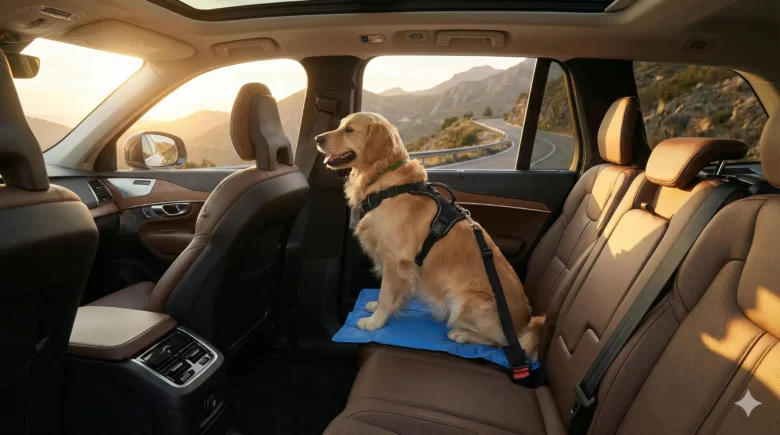
Forget standard walking leashes or flimsy aesthetic harnesses. For the car, your dog needs an automotive safety harness that has been rigorously crash-tested (look for brands certified by the Center for Pet Safety, such as Sleepypod or Kurgo).
- Kinetic Force Distribution: A premium harness distributes the kinetic energy across the Golden’s broad chest, protecting their fragile cervical spine and trachea from snapping.
- The Short-Tether Rule: Your dog should have just enough room to sit up and lie down, but not enough slack to hit the front seat in the event of a crash. The tether must be anchored directly into the vehicle’s ISOFIX/LATCH system, or the seatbelt must pass directly through the harness loops.
The Cargo Fortress (Premium Travel Crates)
If you drive an SUV and prefer your dog in the cargo area, a simple metal wire divider is not enough (dividers protect the humans from the flying dog, but they don’t protect the dog).
- Double-Walled Crates: Invest in a heavy-duty, double-walled polymer or aluminum travel crate (like Gunner Kennels or Ruff Land). These crates are engineered to withstand vehicle rollovers, essentially creating a survival cell for your Golden.
- Ratchet Strap Anchoring: The crate must be permanently anchored to the vehicle’s heavy-duty cargo tie-down hooks using high-tension ratchet straps. A loose crate is just a heavier projectile.
Expert Tip: Never attach a seatbelt tether to your Golden Retriever’s neck collar. In a sudden stop, 100% of the force will be absorbed by their neck, which is invariably fatal. Always use a crash-tested chest harness.
Phase 2: Thermal Management and Climate Control
Golden Retrievers have a dense double coat originally designed to insulate their bodies in the freezing waters of the Scottish Highlands. Inside a closed vehicle under direct sunlight, they overheat dangerously fast—even with the air conditioning blasting.
Solar Radiation Blocking
Your car’s AC cools the ambient air, but it does not stop UV rays from baking your dog’s dark, thick fur through the window glass.
- Ceramic Window Tinting: If your budget allows, install ceramic heat-rejection tint on your rear windows. This blocks 99% of UV rays and rejects infrared heat before it enters the cabin.
- Magnetic Mesh Sunshades: Alternatively, use custom-fit magnetic sunshades for the rear passenger doors. This allows you to roll down the windows for fresh air while keeping the blinding sun off your dog.
The Active Cooling Platform
Dogs cool themselves primarily by panting and through the paw pads, but they also desperately seek out cold surfaces for their bellies when stressed.
- Active Cooling Mats: Place a pressure-activated gel cooling mat on the back seat or inside their travel crate. These mats absorb the dog’s body heat continuously for hours without needing electricity or freezing.
- Breathable Seat Covers: Avoid cheap plastic or non-breathable polyester seat covers. Opt for high-quality microfiber or 3D mesh hammock covers that allow air to circulate beneath your dog.
Phase 3: The Gastrointestinal Travel Protocol
One of the biggest destroyers of road trips is motion sickness (car sickness) and stress-induced diarrhea. Feeding your Golden Retriever on travel days requires strict precision.
Strategic Fasting
Never feed your Golden Retriever a full meal immediately before a long drive. The constant motion mixed with a full stomach is a guaranteed recipe for vomiting.
- The 3-Hour Rule: Their last solid meal should occur at least 3 to 4 hours before the engine turns on.
- Fractional Feeding: If your road trip is longer than 8 hours, do not give them a massive meal at a rest stop. Divide their daily kibble into micro-meals (1/4 of their normal portion) to facilitate easy digestion on the road.
Hydration Management
Dehydration spikes a dog’s stress levels, but letting them gulp down a gallon of water will result in emergency bathroom stops on the shoulder of the highway.
- Familiar Water: Bring a large jug of water from your own tap at home. Sudden changes in the mineral composition of local water can disrupt a Golden’s sensitive gut flora.
- The Spill-Proof Bowl: Use a floating disk or spill-proof travel water bowl. Offer them small, controlled sips of water at every gas station stop (every 2-3 hours) rather than leaving an open bowl in the back seat.
Phase 4: Anxiety Mitigation and Immune Support
Even if your Golden loves car rides, 10-hour road trips cause prolonged spikes in cortisol (the stress hormone). Over time, this suppresses their immune system. As a responsible guardian, you must chemically and environmentally plan for their comfort.
The Role of Pet Insurance and Supplements
Do not wait for an emergency to happen 500 miles from home to realize you are financially unprepared.
- Comprehensive Pet Insurance: Before crossing state lines, ensure you have an active, high-coverage Pet Insurance policy. The cost of an emergency gastric torsion surgery (bloat)—which stressed, large-breed dogs are highly prone to—can exceed $8,000 at an out-of-state emergency clinic.
- Natural Calming Agents: For dogs with mild travel anxiety, consult your veterinarian about administering high-quality Pet CBD oil or valerian root treats 45 minutes before departure to naturally lower their heart rate.
The Expert’s “First Aid Tactical Bag”
Your trunk should contain a dedicated canine emergency kit featuring:
- Self-adhering bandages and sterile gauze.
- Hydrogen peroxide (to induce vomiting in case they ingest toxins, only under a vet’s phone guidance).
- A tick removal tool (essential for rest stops near wooded areas).
- Physical copies of their updated vaccination records and rabies certificate.
Phase 5: Pit Stop Logistics and Hotel Arrival
The most dangerous moments of a road trip do not happen on the highway; they happen at crowded gas stations and when arriving at an unfamiliar environment.
The Gas Station Protocol
Rest stops are filled with moving vehicles, loud diesel trucks, and dangerous discarded food (like cooked chicken bones) on the asphalt.
- Double Security: Never open your car door without the leash already firmly clipped to the dog’s chest harness. A sudden blast from a semi-truck horn can cause a normally calm Golden to bolt into traffic.
- The Decompression Sniff-Walk: Do not just let them pee and shove them back in the car. Walk them for 10 to 15 minutes on a patch of grass. The act of sniffing (olfactory work) naturally lowers a dog’s blood pressure and resets their brain for the next leg of the journey.
The Pet-Friendly Hotel Check-In
When you arrive at your Airbnb or hotel, do not let the dog explore freely right away.
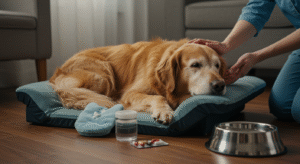
- The Pre-Sweep: Enter the room first without the dog. Check for dropped pills on the carpet, exposed electrical wires, or rat poison in the corners.
- Establishing the Basecamp: Immediately set up your Golden’s orthopedic bed and water bowl in a quiet corner of the room. By creating this “basecamp” with the smells of home, you are clearly signaling to your dog: “This is our new safe territory.”
Conclusion: The Golden Road Ahead
Traveling with a Golden Retriever demands much more than packing a bag and hitting the gas. It requires an investment in crash-tested safety gear, a deep understanding of canine digestion, and a strict protocol for stress management.
When you implement these five structured phases, you eliminate the chaos, the mess, and the lethal risks associated with large-breed travel. You stop being an anxious driver constantly checking the rearview mirror, and you become the architect of a seamless, unforgettable adventure.
The open road is waiting. And now, your Golden Retriever is truly ready to ride shotgun with safety and excellence. Safe travels!
FAQ: Golden Retriever Travel Logistics
1. Can I just attach a regular walking leash to my car’s seatbelt?
Absolutely not. Attaching a seatbelt to your Golden Retriever’s neck collar is incredibly dangerous. In an emergency braking situation at just 35 mph, all the kinetic energy will be projected into the animal’s neck, which can cause fatal strangulation or cervical fractures. You must always use a reinforced chest harness certified through actual automotive crash tests.
2. My Golden Retriever drools excessively and vomits during car rides. How can I fix this?
Excessive drooling is the first sign of profound nausea and motion sickness. To mitigate this, make the vehicle a sensory-safe zone: restrict food intake for 4 hours prior to the trip, lower the AC temperature, and use window shades to block the rapidly moving shadows that cause vertigo. If the problem persists, consult your veterinarian for dog-specific anti-nausea medications (like Cerenia).
3. What is the absolute safest way to transport a Golden Retriever in an SUV: back seat or trunk?
From a strictly ballistic safety perspective, the safest method is placing the Golden Retriever in the cargo area inside a premium double-walled aluminum or polymer travel crate that is strapped down to the vehicle’s anchor points. However, if you choose the back seat, the dog must be equipped with a high-quality safety harness and lie on a non-slip hammock cover to prevent joint injuries.
4. Is the car’s air conditioning enough to keep my dog cool in the back seat?
Often, it is not. The AC cools the cabin air, but direct solar radiation hitting the Golden Retriever’s dark, thick undercoat through the window causes severe localized heating. It is imperative to use window tints (or magnetic sunshades) and active cooling mats underneath the dog’s body for proper thermal management.
5. Does Pet Insurance cover emergency vet visits in other states during a road trip?
The vast majority of premium Pet Health Insurance policies offer comprehensive nationwide coverage (and sometimes international coverage). Because Golden Retrievers are highly prone to ingesting foreign objects or developing stress-induced gastric torsion (bloat) while traveling, having active travel insurance is a vital investment to protect yourself from unexpected, massive veterinary bills on the road.