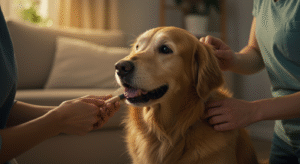
Taking a Golden Retriever to the ocean is a bucket-list experience for any pet owner. The sight of a Golden charging through the surf is pure joy, but for large, double-coated breeds, the beauty of a beach day hides invisible, compounding risks.
The Golden Retriever’s coat is a biological marvel—composed of a dense, insulating undercoat and a water-repellent topcoat. However, this structure acts as a literal magnet for salt crystals, abrasive sand, and microscopic marine organisms.
When these elements settle deep within the fur, they don’t just stay there; they begin a chemical and mechanical attack on the dog’s skin. If left untreated, salt crystallizes against the dermis, leading to severe osmotic dehydration and relentless pruritus (chronic itching). This is the primary trigger for acute canine dermatitis, a condition that often results in emergency, high-cost visits to specialized veterinary clinics.
A beach day with your Golden is an unforgettable bonding experience, but the chemical residue left behind is anything but harmless. Without a precise, veterinary-approved cleaning protocol, salt and minerals become trapped in the “pocket” of the dense undercoat.
This environment, combined with the dog’s body heat, causes rapid inflammation and opportunistic secondary infections. Many owners underestimate the corrosive nature of sea salt on a dog’s natural lipid barrier—the “shield” that protects them from allergens.
Failing to decontaminate the coat properly is not just a hygiene issue; it is a financial risk. Neglect can lead to medical expenses and specialized dermatological treatments that quickly exceed standard pet health insurance deductibles and annual limits.
To ensure your companion remains comfortable and free from the dreaded, lingering “wet dog” odor, a professional-grade, deep-cleansing method is non-negotiable.
Investing in premium pet hygiene supplies and high-potency surfactants is the most effective way to protect your dog’s long-term epidermal health. Below is the expanded “Professional WikiHow” method, designed to turn a chaotic post-beach bath into a therapeutic recovery session, ensuring every single grain of silica and salt crystal is purged from the skin.
The Science of Salt: Why It’s a Threat to Your Dog’s Health
The Golden Retriever’s skin is significantly thinner and more sensitive than human skin, with a specific pH balance usually hovering between 6.5 and 7.5. Sea salt is highly hygroscopic, meaning it aggressively pulls moisture out of the skin cells to reach equilibrium.
This process causes the skin to lose elasticity and crack. These microscopic fissures are “open doors” for environmental bacteria and yeast (Malassezia) to enter, leading to the rapid onset of “Hot Spots.” Furthermore, sand acts as a mechanical abrasive. Each time your dog moves, thousands of tiny sand particles rub against the sensitized skin like sandpaper. This creates a cycle of irritation that explains why dermatology for dogs and allergy relief for Goldens are top-trending searches for coastal pet owners.
Step 1: The Pre-Wash Barrier (Proactive Protection)
The best post-beach bath actually starts before you even leave the house. Professional groomers and breeders recommend applying a pet-safe leave-in conditioner or organic, cold-pressed coconut oil to the “feathers” (long hair on the legs) and the tail.
This creates a temporary hydrophobic film. This barrier prevents salt and minerals from bonding to the hair shaft’s keratin layer. By prepping the coat, you make the eventual cleanup 50% faster and prevent the hair from becoming brittle and prone to “salt-burn” breakage.
Step 2: The High-Volume Fresh Water Rinse (The Mechanical Purge)
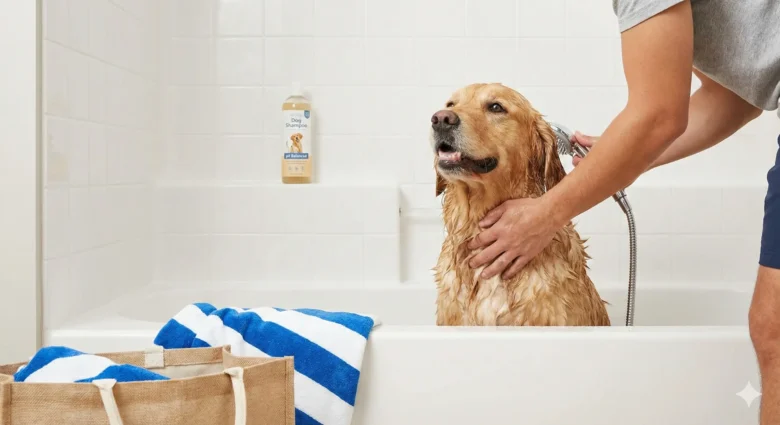
Before you even touch a bottle of soap, you must perform an exhaustive mechanical flush of the coat.
- Water Pressure over Heat: Use cool to lukewarm water. Never use high heat on salt-irritated skin, as it dilates capillaries and increases discomfort. Focus on high volume (gallons per minute) rather than high pressure, which can push sand deeper into the pores.
- The “Layering” Technique: Golden fur is designed to repel water. Use your hands to part the hair in sections, ensuring the water saturates the skin. If the skin isn’t soaking wet, the salt crystals are still actively dehydrating the cells.
- Target Friction Zones: Focus for at least 3 to 5 minutes exclusively on the “High-Rub” areas: the armpits, the groin, the chest, and the base of the tail. These are the zones where sand friction causes the most painful canine beach rashes.
Step 3: Choosing a Medicated or Hypoallergenic Shampoo
Stop using human shampoos or “budget” grocery-store brands immediately. These products often have an acidic pH that strips the remaining sebum, leaving the dog defenseless. For a post-beach recovery, you need specific active ingredients:
- Colloidal Oatmeal: The gold standard for soothing salt-irritated skin and reducing immediate redness.
- Aloe Vera & Vitamin E: Crucial for restoring the lipid barrier and providing “after-sun” relief for the dermis.
- Chlorhexidine or Ketoconazole: If your dog has a history of skin infections, a medicated veterinary wash may be necessary to kill marine bacteria before they colonize the skin.
Step 4: The 5-Minute Saturation Rule
A common mistake is rinsing the soap off too quickly. To effectively neutralize oceanic minerals and lift heavy sand, the surfactants in the shampoo need “dwell time.”
Gently massage the product into the coat, working against the grain of the hair to reach the undercoat. Let it sit for a full five minutes. This allows the formula to encapsulate the microscopic debris. This step is vital for preventing folliculitis, a painful inflammation of the hair follicles common in large breeds after swimming.
💡 Specialist Tip: Systematic Coat Recovery & Nutrition The long-term health of your Golden’s coat depends on internal hydration as much as external washing. Exposure to salt, wind, and UV rays causes significant oxidative stress.
Supplementing your dog’s diet with High-Quality Omega-3 Fatty Acids (EPA/DHA), such as wild-caught salmon oil, is essential to rebuild the skin’s natural defenses from the inside out. Choosing holistic pet nutrition rich in antioxidants reduces the likelihood of chronic inflammatory conditions, keeping your pet insurance claims low and your dog’s comfort high during the summer months.
Step 5: Ear Decontamination (Otitis Prevention)
Golden Retrievers have heavy, pendulous ears that create a dark, moist, and warm environment—the perfect incubator for infection. Salt water trapped in the “L-shaped” ear canal is a recipe for chronic yeast infections.
- Chemical Drying Agents: Use a professional ear cleaning solution that contains a drying agent (like salicylic acid or boric acid) to evaporate trapped ocean water.
- The Cotton Ball Guard: During the bath, place a large cotton ball at the entrance of the canal (never push it in) to block water from entering.
- Identify the Signs: If you notice a “yeasty” or sweet smell, or if your dog is tilting their head, contact an emergency veterinarian immediately. Ear infections can become permanent if the eardrum is compromised by salt-water debris.
Step 6: Paw Pad and Interdigital Care
The area between a Golden’s toes is a “trap” for jagged shell fragments and hot, abrasive sand.
- Debris Check: Inspect each paw for micro-cuts or “interdigital cysts” caused by sand irritation.
- Healing Balms: After the bath and once the paws are dry, apply a veterinary-grade paw wax or healing balm. This prevents the “pads” from cracking—a common entry point for hookworms and other beach-borne parasites.
Step 7: The “No-Air-Dry” Policy (Preventing the Hot Spot Disaster)
This is the most critical stage of the entire process. Never let a Golden Retriever air-dry after a beach trip.
The combination of a damp undercoat and residual salt creates a “greenhouse effect” for bacteria. Within 4 to 6 hours, a minor itch can escalate into Acute Moist Dermatitis (Hot Spots)—a weeping, bloody, and infected sore that can spread across the dog’s body with terrifying speed.
- High-Velocity Blow Dryer: If you live near the coast, invest in a professional-grade dog blower. These machines “blast” the water and any remaining sand out of the coat without using extreme heat.
- Cool Setting Only: If using a human dryer, keep it on the “cool” or “low” setting. Sensitized skin can burn easily, leading to further veterinary dermatology complications.
- The Deep Dryness Test: Feel the base of the tail and the dense fur behind the ears. If it feels even slightly cool or damp to the touch, you must continue drying until the skin itself is warm and dry.
Final Summary for Owners
Maintaining a Golden Retriever’s coat post-beach requires a level of diligence that goes beyond a simple garden hose rinse. By following this professional-grade protocol—focusing on pH restoration, ear decontamination, and absolute moisture removal—you are doing more than just cleaning your pet.
You are actively protecting them from painful, chronic skin conditions and safeguarding your finances from expensive veterinary dermatology bills. A clean, dry Golden is a healthy Golden.
FAQ: Frequently Asked Questions (Expanded)
1. Can I use dish soap to remove sea salt or beach oil? Absolutely not. Dish soap is a degreaser designed to strip oil from silicone and glass. It will incinerate your dog’s natural protective oils, leading to “rebound” oil production and severe, painful dryness. Stick to pH-balanced canine formulas.
2. How do I know if my dog has an emerging “Hot Spot”? Look for a red, localized area where the hair appears “matted” or wet with clear fluid. If your dog is obsessively licking or biting a specific spot, it is a dermatological emergency. Early intervention with a veterinarian can save you hundreds of dollars in treatment.
3. Does salt water help with dog fleas or ticks? This is a dangerous myth. Salt water does not kill fleas or their eggs effectively. In fact, the damage salt does to the skin’s barrier makes it easier for parasites to cause allergic reactions. Always maintain your monthly flea and tick prevention regardless of beach visits.
4. Should I brush my Golden before or after the beach bath? Rinse first, brush later. Brushing a dry, salty, and sandy coat is like using a wire brush on a car’s paint—it will shatter the hair cuticles and irritate the skin. Only brush once the coat is clean and either slightly damp (with a detangler) or fully dry.
5. What is the best way to protect my dog’s paws from hot sand? The sand temperature in mid-day can cause second-degree burns. Use all-weather dog boots or apply a thick, protective layer of “musher’s wax” before they step onto the beach. If the sand is too hot for your bare feet, it is too hot for their paws.
6. Is the “Wet Dog Smell” normal after the beach? No. A strong, foul odor usually indicates that bacteria or yeast are reacting to the moisture and organic matter trapped in the coat. A proper bath following the steps above should leave your Golden smelling clean, not “musty.”