
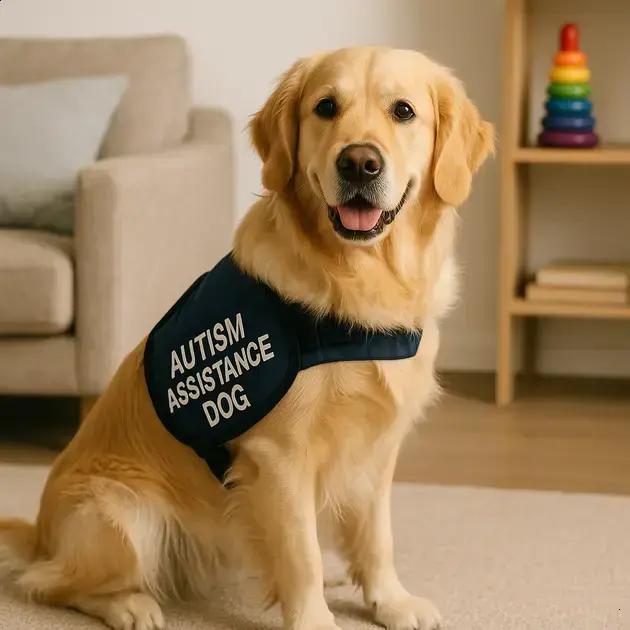
Have you ever wondered how a furry friend can transform the life of someone with autism? The bond with an autism assistance dog golden retriever goes beyond simple companionship; it’s about crucial support and security.
Many families seek ways to enhance daily living and communication for loved ones on the spectrum, often facing challenges that seem overwhelming. That’s where these dogs come in, offering a unique connection that calms, alerts, and comforts.
This article dives into why golden retrievers shine in this role, revealing how they’re trained and cared for to offer life-changing assistance without which many would struggle to achieve such independence.
Understanding autism assistance dogs and their role
Autism assistance dogs are specially trained to support individuals on the autism spectrum by enhancing safety, communication, and independence. These dogs provide a reliable and calming presence, helping reduce anxiety and sensory overload in everyday situations.
Such dogs are trained to perform crucial tasks like interrupting repetitive behaviors, providing deep pressure therapy, or alerting caregivers to distress signals. Their role goes beyond companionship; they form a core part of the support system for many families.
The training process for these dogs is rigorous and tailored to the specific needs of the person they will assist. Trainers focus on socialization, obedience, and specialized commands that address unique challenges faced by people with autism.
Moreover, autism assistance dogs foster inclusion by helping their handlers engage more confidently in social and public settings. Their presence often opens communication channels and promotes emotional regulation.
Key Benefits of Autism Assistance Dogs
- Providing continuous safety supervision to prevent wandering or elopement
- Helping manage sensory overload and meltdowns with calming techniques
- Encouraging social interaction and communication skills
- Offering emotional support that decreases feelings of isolation
Families considering an autism assistance dog should connect with accredited organizations that specialize in matching dogs to individual needs. This ensures a compatible and effective partnership, enhancing quality of life for both the individual and their family.
Why golden retrievers stand out as assistance dogs
Golden retrievers are widely recognized for their friendly nature, intelligence, and gentle temperament, making them ideal candidates for autism assistance dogs. Their ability to remain calm in various environments helps individuals with autism feel secure during challenging or overwhelming situations.
One key trait of golden retrievers is their exceptional trainability. They quickly learn complex commands and adapt to personalized routines that cater to the handler’s unique needs. This adaptability strengthens the bond between the dog and handler.
Their strong social instincts also make golden retrievers excellent at reading human emotions and responding appropriately. This skill allows them to provide timely support, such as interrupting repetitive behaviors or offering comforting pressure during moments of distress.
Moreover, golden retrievers have the stamina and focus needed to work throughout the day without losing their calm demeanor. This reliability is crucial for maintaining continuous support in daily life.
Many organizations specializing in autism assistance dogs prefer golden retrievers due to their consistent performance and affectionate nature. Their coat’s visibility and recognizability make them an important symbol of assistance, often facilitating smoother social interactions for their handlers.
Training essentials for golden retrievers assisting autism
Training a golden retriever to assist individuals with autism involves a well-structured and specialized program that focuses on obedience, behavior adaptation, and task-specific skills. The process typically starts with comprehensive socialization to ensure the dog remains calm and confident in various environments.
Key components of the training include:
- Basic obedience commands such as sit, stay, come, and heel, ensuring the dog listens reliably under distractions.
- Specialized tasks tailored to the handler’s needs, like interrupting repetitive behavior or providing sensory pressure to calm anxiety.
- Training to recognize the handler’s signs of distress and respond appropriately, acting as an emotional support during meltdowns.
- Public access training, preparing the dog to behave politely in crowded places, public transport, and other social settings.
Professional trainers use positive reinforcement methods, rewarding desired behaviors with treats, praise, or play. This approach fosters trust and a strong working bond between dog and handler.
Training can last from several months to over a year, depending on the dog’s temperament and the complexity of needed skills. Continuous reinforcement and regular practice ensure the dog remains sharp and effective in its assistance role.
Essential Steps in Training a Golden Retriever for Autism Assistance
- Begin with early socialization to expose the dog to various sights, sounds, and people.
- Establish solid basic obedience to build a foundation of trust and control.
- Introduce task-specific training tailored to the individual needs of the person with autism.
- Conduct public access training to adapt the dog to real-life situations and distractions.
- Implement ongoing training sessions and assessments to maintain skills and adapt to evolving needs.
How to care for and maintain a healthy assistance dog
Proper care and maintenance of an autism assistance dog like a golden retriever is essential to ensure the dog’s health, effectiveness, and longevity in its role. Regular veterinary checkups are crucial for monitoring the dog’s overall well-being and preventing diseases.
Basic daily care involves:
- Feeding a balanced diet formulated for large, active breeds to maintain optimal energy and health levels.
- Daily exercise to promote physical fitness and mental stimulation; activities should be appropriate to the dog’s age and workload.
- Regular grooming, including brushing the golden retriever’s coat to prevent matting and reduce shedding, as well as cleaning ears and trimming nails.
Hydration is vital, especially during training or assistance tasks in warm weather, to avoid heat stress. Providing a quiet, comfortable resting space assures the dog has ample opportunity to recover after working hours.
Health monitoring should include: observing for any signs of fatigue, behavioral changes, or injuries that might affect performance. Promptly addressing such issues helps maintain the dog’s well-being and prevents interruption in assistance.
Families with assistance dogs should establish a routine that balances the dog’s needs with its working responsibilities, ensuring the animal remains happy and effective. Partnering with veterinary clinics familiar with service dogs can also provide specialized support and advice tailored to these unique animals.
The lasting impact of golden retrievers as autism assistance dogs
Golden retrievers provide invaluable support to individuals with autism, enhancing safety, comfort, and independence every day. Their natural temperament and training make them the perfect partners for this important role.
Caring for these dogs with proper training, health maintenance, and emotional support ensures they remain effective and happy companions. The bond they create is truly life-changing, offering hope and a brighter future for many families.
Choosing a golden retriever as an autism assistance dog is not just about the dog’s skills but the deep connection and trust that helps improve quality of life. These dogs show us the power of empathy and dedication in transforming lives.
FAQ – Common Questions About Autism Assistance Dogs and Golden Retrievers
What makes golden retrievers suitable as autism assistance dogs?
Golden retrievers have a calm temperament, high intelligence, and strong social instincts, making them ideal for providing support to individuals with autism.
How long does it take to train a golden retriever for autism assistance?
Training typically lasts from several months up to a year, depending on the dog’s temperament and the specific tasks needed to assist the individual.
What daily care does an autism assistance golden retriever require?
They need a balanced diet, daily exercise, grooming, hydration, and regular health checkups to stay healthy and effective in their role.
Can any golden retriever be trained as an autism assistance dog?
Not all golden retrievers are suited for assistance work; candidates undergo evaluations for temperament, health, and behavior to determine suitability.
How do autism assistance dogs help reduce anxiety and meltdowns?
They perform tasks like providing deep pressure therapy, interrupting repetitive behaviors, and offering calming companionship to help regulate emotional responses.
Where can I find organizations that provide autism assistance dogs?
There are accredited organizations specializing in autism assistance dogs that match trained dogs with individuals’ specific needs, ensuring effective partnerships.